Vista aérea de Cevico Navero
Instituto Geográfico Nacional · CC-BY 4.0 scne.es
Castilla y León · Cradle of Kingdoms

Cevico Navero

The church bell tolls twice and every dog in Cevico Nero barks back. It's eleven o'clock on a Monday, the sacristan has just turned the key, and th...

175 inhabitants · INE 2025
820m Altitude

Why Visit

Mountain Church of Our Lady of Peace Route of the Árbol Guapo

Best Time to Visit

summer

Our Lady of La Paz (January) agosto

Things to See & Do
in Cevico Navero

Heritage

  • Church of Our Lady of Peace
  • Pillory of Justice
  • Guapo Tree (centuries-old holm oak)

Activities

  • Route of the Árbol Guapo
  • Hiking
  • Cycling

Festivals
& & Traditions

Fecha agosto

Nuestra Señora de la Paz (enero), Fiestas de verano (agosto)

Las fiestas locales son el momento perfecto para vivir la autenticidad de Cevico Navero.

Full Article
about Cevico Navero

A town in a Cerrato valley; it keeps a medieval pillory and a transitional Romanesque church; surrounded by holm oaks and oaks.

Ocultar artículo Leer artículo completo

The church bell tolls twice and every dog in Cevico Nero barks back. It's eleven o'clock on a Monday, the sacristan has just turned the key, and the only other sound is the grain dryer humming in a farmyard on the edge of town. This is rural Castilla at 820 m above sea level: wide, quiet, stubbornly itself.

Horizon Practice

Stand on the small rise behind the football pitch and the view stretches forty kilometres without a single wood to break it. Wheat, barley, fallow; the colours switch between bronze stubble and the pale green of new shoots depending on the month. The plateau is not dramatic—no cliffs, no corkscrew roads—yet the scale is quietly startling if you arrive from Cantabria after the overnight ferry. Locals call the tree-lined gullies that scar the plain vallejos; walk ten minutes down any of them and the temperature drops a degree, stone pines replace cereal stalks, and you understand why shepherds still use the old droving tracks that link Cevico with neighbouring villages.

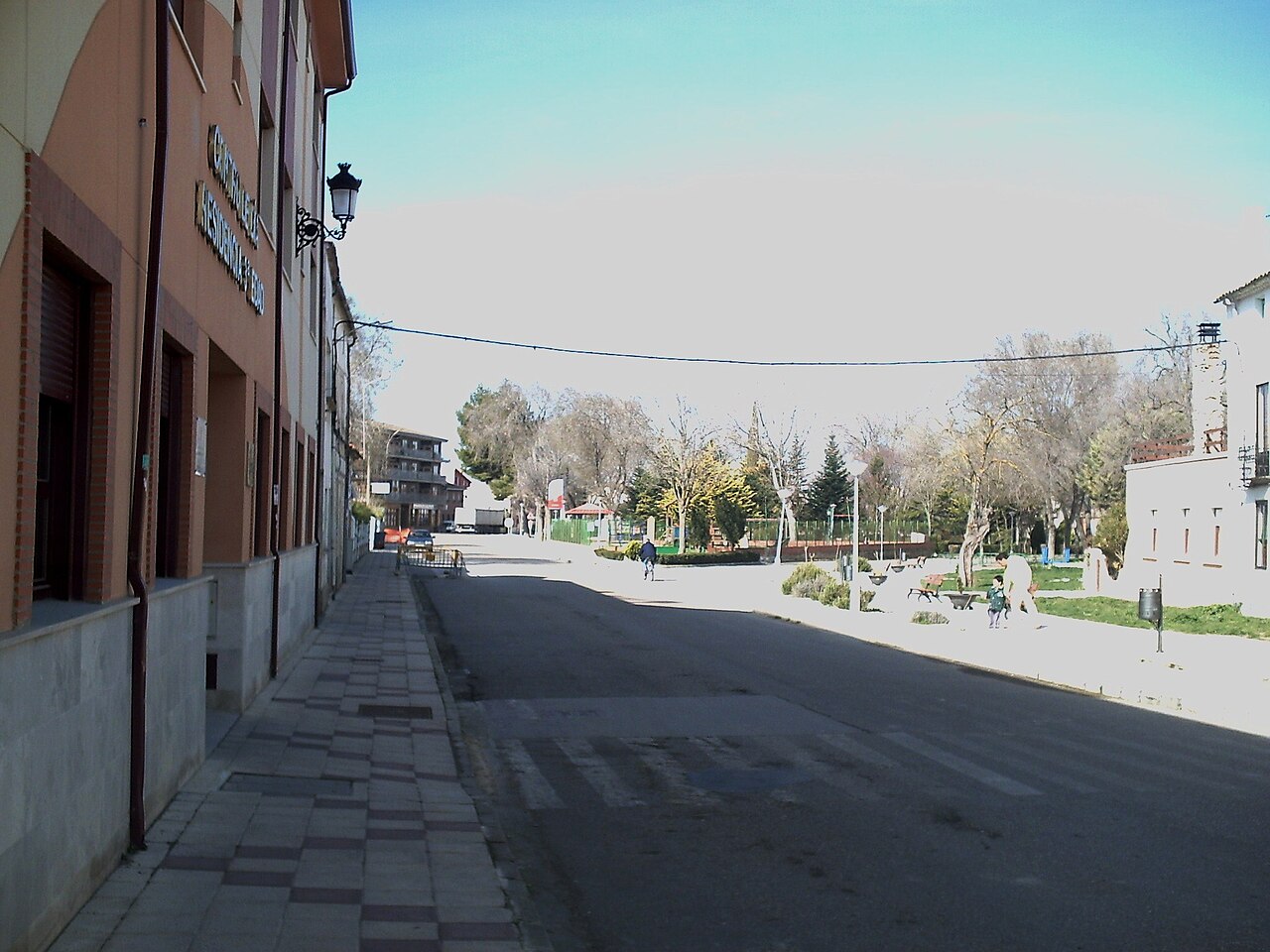
Inside the settlement the streets are too narrow for pavements; traffic is so scarce that children pedal bikes in perfect loops outside the lone supermarket. Houses are two-storey, whitewashed, built from the same limestone that ridges the fields. Timber doors are painted ox-blood or indigo, and many still open into cobbled courtyards where a single vine offers shade. Nothing is postcard-ready—paint flakes, satellite dishes bloom—yet the fabric feels alive rather than preserved. The council has resisted the urge to sand-blast; instead walls lean, roofs sag, and the place looks its age (earliest mention 1156).

What Passes for Sightseeing

The parish church of San Andrés is open for perhaps two hours a day. Step inside and the temperature falls another notch; beeswax and dust mingle under a sixteenth-century panel of the Last Judgement that still keeps its original reds thanks to the dry plateau air. The tower is the only vertical punctuation for miles, so use it to regain your bearings after you wander off the irregular grid of lanes. That is essentially it for monuments. The pleasure here is micro-detail: a hand-painted street-sign in 1950s serif, the iron knocker shaped like a hare on an abandoned barn, the way swallows stitch the sky at dusk.

If you need a target, ask at Bar La Paz for directions to the ruined monastery of San Pelayo. A gravel track south-east of the village leads three kilometres through wheat to a roofless Romanesque apse standing alone in a wheat ocean. Take wellies after rain; the farmers' tractor ruts turn to brown icing and you'll be scraping your shoes with a stick for days.

Food that Forgives a Long Drive

Castilians eat lunch early by Spanish standards—14:00 sharp—because farm work resumes with the cooler late afternoon. Bar La Paz (there really is only one) lays Formica tables under a television permanently tuned to horse-racing. The menú del día costs €11.50 and runs to three courses plus half a bottle of house wine; choose the garlic soup followed by roast suckling lamb, finish with arroz con leche thick enough to hold a spoon upright. Vegetarians will survive on judiones—buttery white beans stewed with paprika—but should not expect a separate menu; this is meat country and even the green peppers arrive garnished with chorizo. Bread is proper country barra baked fifty kilometres away in Palencia and delivered before dawn; order an extra portion because it disappears fast.

Supper is lighter and later. Stand at the counter and you'll see locals chase a shot of orujo with a small beer, then head home before eleven. The nearest alternative eatery is in Baltanás, twelve minutes by car; if you haven't hired one, book a taxi in the afternoon or prepare to fast.

Walking the Dry Ocean

Cevico sits on the northern rim of the Cerrato, a raised sea of gently rolling grain-land. Marked footpaths exist on the regional map but way-marking is sporadic; download an offline track from the Federación Española de Montañismo before you leave Wi-Fi. A rewarding loop heads west along the old sheep-drove to Rezmondo (6 km), then returns on a lane edged with poplars. In May the wheat still carries dew at nine o'clock and larks rise in pairs; by July the same fields rasp like sandpaper and shade is non-existent—carry two litres of water per person and start at dawn. September adds a purple seam of saffron thistle along the verges and temperatures drop back to the low twenties.

Autumn also brings mushroom hunters. The woods in the vallejos hold níscalos (saffron milk-caps) but Spanish foraging law is strict: no plastic bags, a five-kilo limit, and you must carry the free permit downloaded from the Junta de Castilla y León website. Nobody patrols openly; instead a local farmer in a green pickup may ask to see your paperwork—produce it or face a €300 spot fine.

Getting There, Getting Cash, Getting Out

From the Santander ferry port follow the A-67 south for 110 km, peel off at Osorno onto the CL-615 and reach Cevico in twenty minutes. The drive is quicker than reaching the Picos but feels longer because the landscape empties as you climb onto the plateau. Petrol is cheaper at the supermarket pump in Osorno; fill up—after Cevico garages are scarce and they close for siesta.

There is no cash machine in the village and Bar La Paz accepts cards only if the data signal cooperates. Withdraw euros in Santander, Palencia, or at the BP station south of Osorno; otherwise you'll be washing dishes. Public transport is essentially fictional: two school buses leave for Palencia at 07:20 and 13:10 on weekdays, none at weekends. Taxis from Palencia railway station cost €55 if you book ahead—worth considering if you fly into Madrid and take the fast train north (1 h 15 min).

When to Come, When to Leave

April and late-September give you eight hours of comfortable walking weather and skies clear enough to see the Gredos peaks 150 km away. August is oven-hot; thermometers brush 38 °C and the only breeze comes from lorries heading to the grain cooperative. Winter is crisp, often sunny, but nights drop to –5 °C; if snow arrives the village is cut off for a day until a single plough clears the CL-615. Book then only if you enjoy silence so complete you can hear your own pulse.

Stay one night and you will have walked every street by supper; stay three and the barman will greet you like a neighbour. Either is fine. Cevico Navero does not reveal secret Spain—it simply offers the Spain that never went away once the souvenir shops left for the coast. Catch the bell tolling twice, add your own bark to the chorus, then drive on or stay awhile; the plateau will still be there, patient and unflinching, whenever you need horizon therapy.

Key Facts

Region
Castilla y León
District
El Cerrato
INE Code
34058
Coast
No
Mountain
Yes
Season
summer

Livability & Services

Key data for living or remote work

2024
Connectivity5G available
Housing~5€/m² rent · Affordable
CoastBeach 16 km away
January Climate4.4°C avg
Sources: INE, CNMC, Ministry of Health, AEMET

Official Data

Institutional records and open data (when available).

  • ROLLO DE JUSTICIA
    bic Rollos De Justicia ~0.6 km
  • IGLESIA DE NUESTRA SEÑORA DE LA PAZ
    bic Monumento ~0.6 km

Planning Your Visit?

Discover more villages in the El Cerrato.

View full region →

More villages in El Cerrato

Traveler Reviews