Full Article
about Cobos de Cerrato
Municipality on the border with Burgos; set in the Franco river valley; noted for its quiet and its riverside and farmland scenery.
Hide article Read full article
Arriving in the quiet of the Cerrato
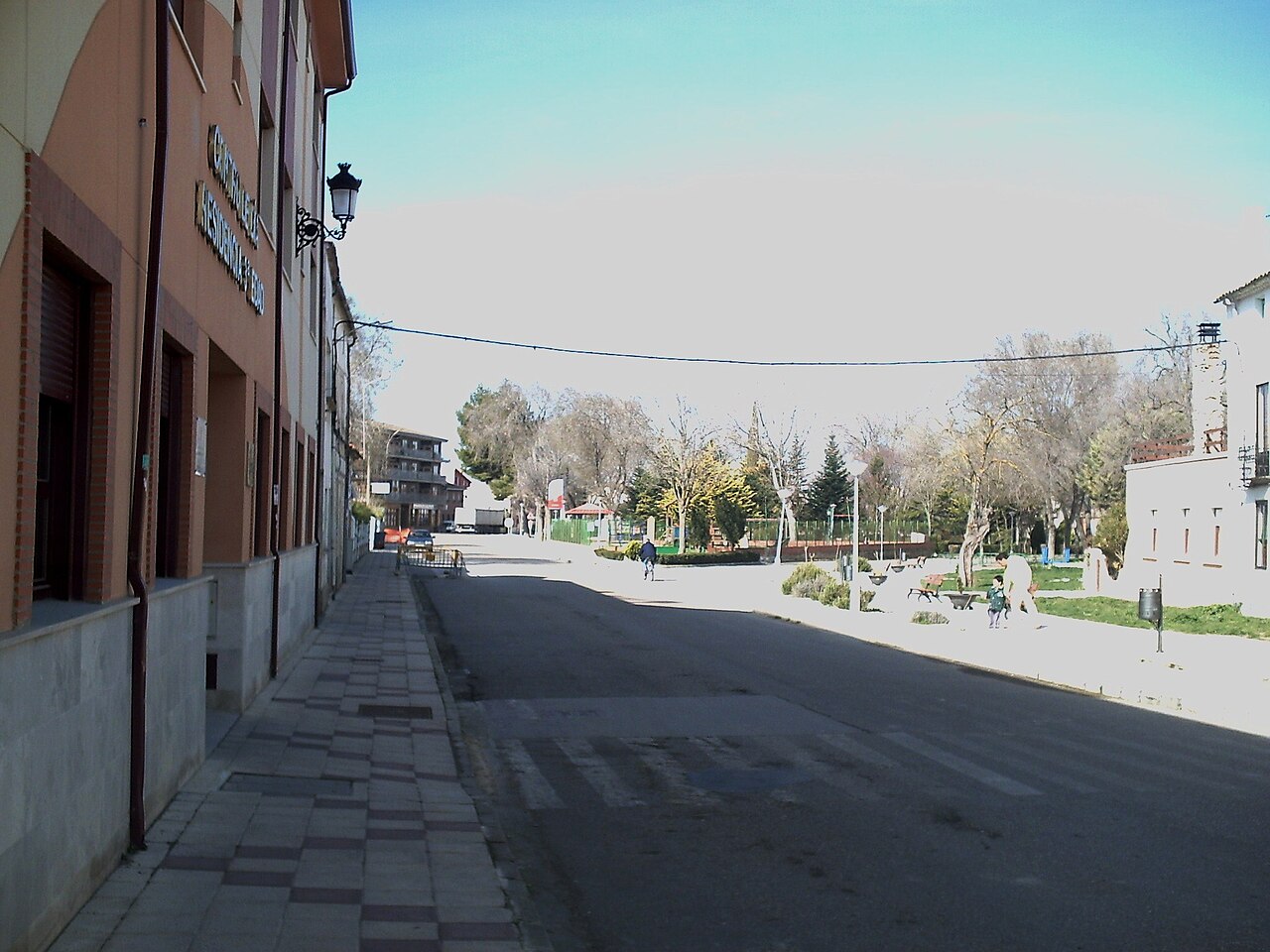
On the edge of the village, when the sun is still low, the wheat fields turn almost white with reflected light. The wind moves slowly through the ears of grain and, looking towards the centre, the bell gable of the church stands out against the flat plateau. This is often how arrival begins in Cobos de Cerrato, with no traffic and that wide, early-morning silence found across many villages in the Cerrato region.
This small settlement, with barely a hundred residents, sits among cereal plots and farm tracks that fade into gentle hills. The houses combine adobe, stone and more recent brick. Some façades still have large wooden gates and enclosed yards at the back, clear signs of a time when most families kept livestock or worked the land directly.
There are no grand monuments or imposing squares. What appears instead is something quieter: short streets, thick walls that keep interiors cool in summer, and a compact layout that offers shelter from the winds of the plateau.
The rolling hills around Cobos de Cerrato
The landscape surrounding Cobos de Cerrato reflects the wider character of the Palencia Cerrato: rounded hills, open farmland and colours that shift noticeably through the year. In April, the first greens emerge. By July, everything turns the intense yellow of ripening grain, followed later by ochre tones as the season moves on.
Not far from the village centre, several wine cellars can be seen carved into the slopes. From above, only their doors and ventilation shafts are visible. For years, these spaces were part of everyday life in the village. Today, many are used as storage or as places to gather when groups of friends meet up.
Walking along the tracks that lead out of the village helps make sense of the terrain. Long straight stretches run between cultivated plots, with the occasional almond tree standing alone. With a bit of luck, steppe birds can be seen lifting off close to the ground.
The parish church
The parish church has medieval origins, although what stands today reflects several later alterations. Its bell gable dominates the village skyline and acts as a reference point when approaching along the surrounding paths.
The doorway and parts of the interior retain older features, fairly plain in style. The building is not always open. Anyone hoping to go inside will usually need to ask a local resident, as small villages often rely on an informal system of shared keys.
Streets shaped by the wind
Walking through Cobos de Cerrato reveals a pattern seen in many plateau settlements: houses cluster closely together and streets avoid long straight lines. This is not accidental. The wind blows strongly here for much of the year, and the layout helps reduce its impact.
Inside the yards, old tools, chicken coops and small vegetable plots can still be seen. Agricultural life continues to shape the rhythm of the village, though with fewer people involved than in past decades.
Tracks and routes across El Cerrato
From Cobos, it is possible to connect with other nearby villages in the Cerrato region. Many of them feature Romanesque churches or small hermitages standing alone among the fields. It is worth checking the route before setting out, as many of the agricultural tracks are not signposted and it is easy to take a wrong turning at a junction.
After recent rain, the mud clings firmly to boots and vehicle tyres. This is something to bear in mind when travelling along dirt tracks.
Night skies over the plateau
When the few village lights go out, the sky opens up clearly above. Light pollution is minimal, and the stars are easy to see, especially when stepping a little away from the houses.
Summer evenings tend to stretch on outdoors. In winter, the situation changes quickly, as the cold of the plateau sets in as soon as the sun disappears.
Before setting off
Cobos de Cerrato does not have dedicated tourist services. It is usually visited as part of a wider route through the surrounding area, before continuing on to nearby towns where there is more activity.
In the height of summer, it makes sense to arrive early in the morning or later in the afternoon. At midday, the sun falls directly on many parts of the village and the surrounding paths, with little shade to soften it.