Full Article
about Palenzuela
Medieval town declared a Historic Site; noted for its Romantic ruins.
Hide article Read full article
A quiet place that wasn’t always quiet
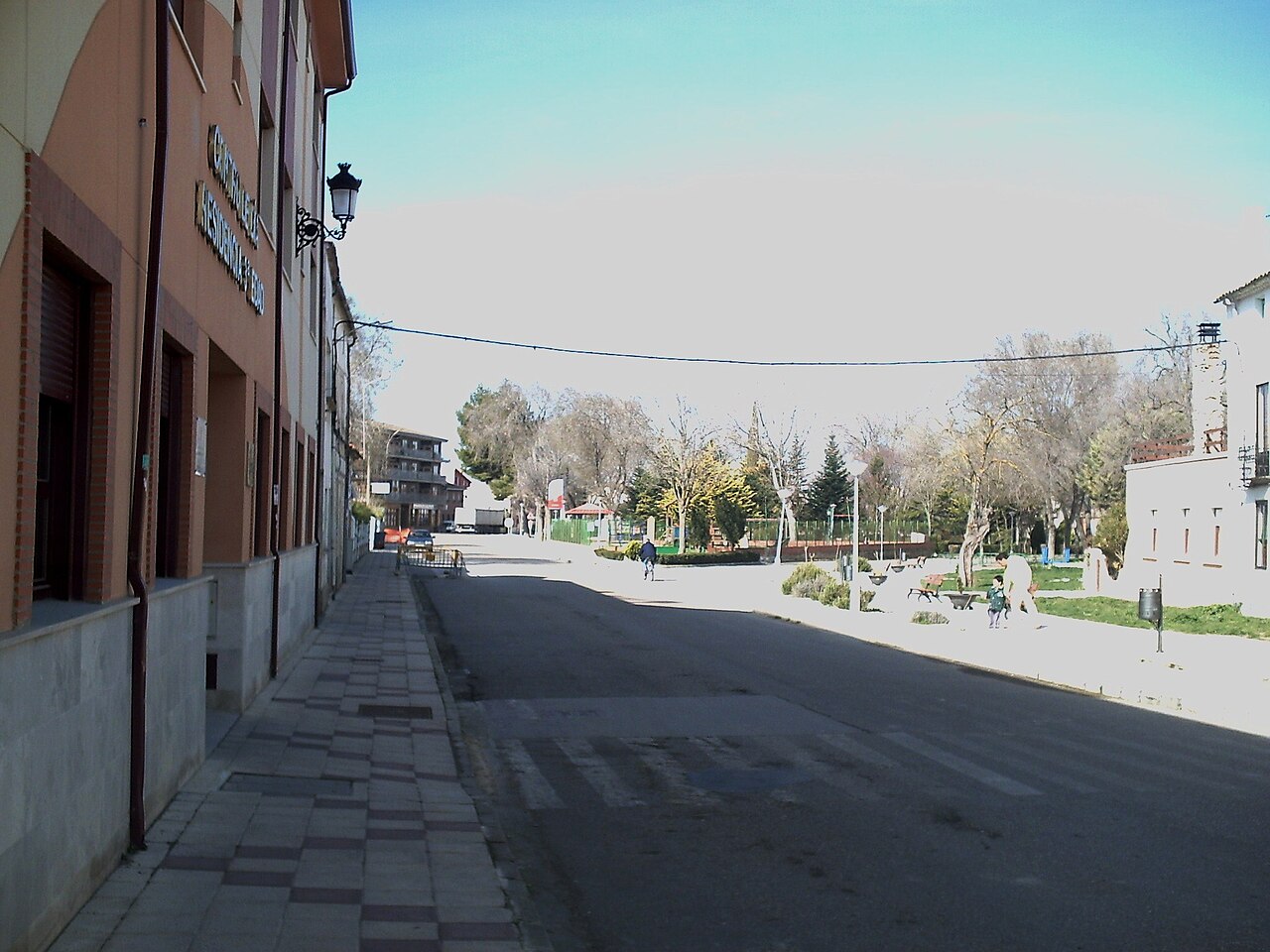
Some villages seem straightforward at first glance. Palenzuela is not one of them. It looks like the sort of place you might walk through in half an hour, a few streets, a church, a quick look around. Then the details begin to stack up: stretches of medieval wall, several sizeable churches, and a sense that this was once far more than a small rural settlement.
Tourism in Palenzuela revolves around that contrast. Today, it has around 200 residents. Centuries ago, it held a different kind of importance. That shift is still visible in the stonework, in the layout, in the scale of buildings that feel slightly oversized for the population they now serve.
It doesn’t take much effort to read the place. The clues are everywhere.
Walking the line of the medieval wall
The medieval wall is usually the first thing that catches attention. It hasn’t been restored into something polished or uniform, and that works in its favour. Some sections are clearly defined, while others require a closer look to trace where the perimeter once ran.
Following the edge of the old town reveals subtle changes in the stone. Parts feel older, rougher, while others show later interventions. The effect is similar to a building altered over time, except here it happens on the scale of an entire village.
There are still visible gates and fragments that help piece together its former defensive role. It is not a perfect, continuous structure, but it doesn’t need to be. The gaps and irregularities make it easier to imagine how the place functioned in the Middle Ages, when protection and control of movement mattered.
Three churches, one small village
For a settlement of this size, the number of churches stands out. It suggests a past in which the population, or at least the activity, was considerably greater.
The church of San Juan Bautista is the easiest to spot from a distance, thanks to its tower. Its structure combines Romanesque elements with later additions, a common pattern in this part of Castile and León. When open, the main altarpiece tends to draw attention for how well it has been preserved.
Santa Eulalia presents a Gothic structure with Renaissance additions. It is not monumental in scale, but walking through it reveals how the village adapted its religious buildings over time. Changes in style and construction reflect broader shifts across the centuries.
San Pablo adds another layer, with Baroque altarpieces and details that reward a slower look. As in many small villages, opening times are not always fixed, so access can depend on the moment.
Together, these three churches give a clear sense that Palenzuela once had both the resources and the need for multiple religious spaces.
Traces of care and decline
Among the historical buildings is the Hospital de Santo Domingo, founded in the medieval period. It functioned as a place of assistance along commercial and travel routes, serving people passing through the area. Although altered over time, the building still shows clear signs of its original purpose.
A different kind of presence appears in the convent of San Francisco, now in ruins. There are no polished displays or curated paths here. What remains are open walls, broken arches and sections where the sky replaces what used to be roofing.
It is the kind of place that invites a pause. The structure is incomplete, but that absence makes it easier to imagine its earlier form. The contrast between what stands and what has disappeared gives it a quiet, reflective quality.
Views over El Cerrato
Palenzuela sits on elevated ground, and that position shapes the experience of the surrounding landscape. From points near the wall or along the edge of the hill, wide views open out over the fields of El Cerrato, a rural region known for its rolling terrain.
The colours shift with the seasons. In summer, the fields take on the golden tones typical of Spain’s central plateau. In spring, or after periods of rain, the landscape turns greener and softer. Birds of prey are often visible overhead, gliding across the open sky.
There are no marked viewpoints or formal platforms. The views appear naturally as you move through the village and approach its edges.
Food that reflects the region
Daily life in Palenzuela feels grounded rather than staged. The food available in the area follows the traditions of Castile, where dishes tend to be hearty and rooted in local produce.
Legumes, slow-cooked stews and substantial meat dishes are common. Roast lamb, known as lechazo asado, appears frequently in the wider region. It is one of those meals closely associated with the culinary identity of Castile.
Nearby areas also produce wines with recognised designations within Castile and León, so pairing food with local wine is part of the broader experience.
How long to spend in Palenzuela
In practical terms, the village can be covered in a morning without difficulty. Its size makes it easy to explore on foot in a relatively short time.
That said, the pace can shift depending on how closely you look. The wall, the churches, small architectural details and streets that slope gently towards the surrounding countryside all invite a slower approach. The visit often stretches beyond initial expectations.
Palenzuela also fits naturally into a wider route through the Romanesque heritage of Palencia or the villages of El Cerrato. It works well as a stop along the way rather than the main focus of a full day, though it tends to leave a stronger impression than its scale might suggest.