Full Article
about Reinoso de Cerrato
Small Cerrato village with rural charm; noted for its church and traditional earth-carved cellars.
Hide article Read full article
A Village That Barely Raises Its Voice
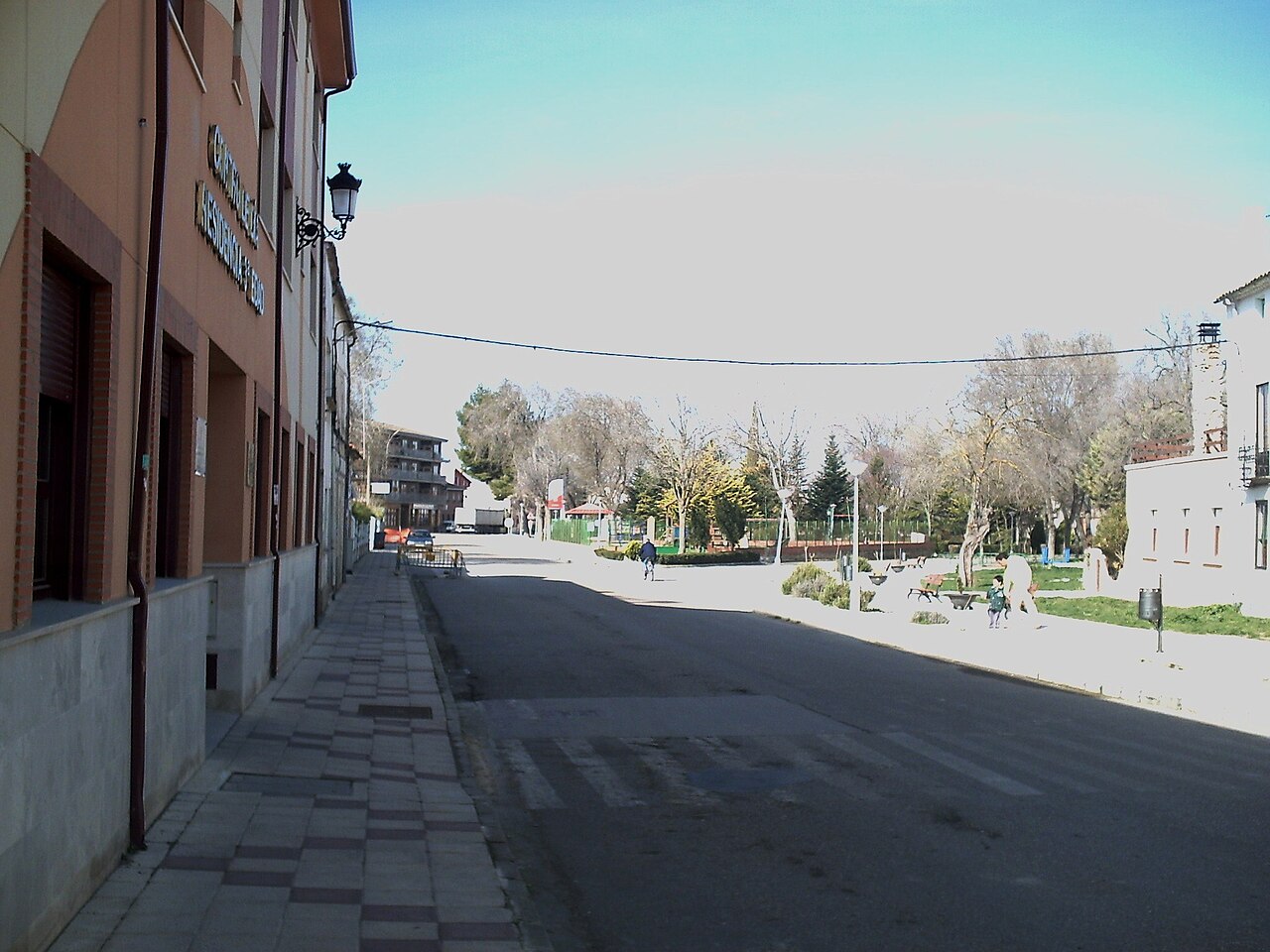
Reinoso de Cerrato is the sort of place you could drive past without noticing. A couple of streets, a church marking the centre, and fields stretching as far as the eye can see. It brings to mind the small settlements glimpsed from a train window crossing Castilla, places that seem almost motionless, as if time has chosen to slow its pace here.
Only a few dozen people live in the village. Silence carries more weight than traffic or any kind of urban noise. There are no shops, no accommodation options and no visible tourist activity. What you find instead is a compact cluster of houses surrounded by farmland, with the long horizons and ever-present wind that define the Cerrato landscape in the province of Palencia.
Coming here means accepting that reality from the outset. Reinoso de Cerrato is not a destination packed with attractions or organised activities. It works better as a brief stop, a way to understand what many small villages in the Cerrato region look like once the map runs out of bigger names.
The Heart of the Village
At the centre stands the parish church, built from local stone and topped with a tiled roof. It is a solid, sturdy structure that looks designed to withstand harsh winters and watch generations pass. The building is neither monumental nor particularly large, yet in villages like this the church effectively acts as the main square. Everything is arranged around it.
A slow walk around the exterior reveals details that are easy to miss in a hurry. The stone blocks are irregular, the windows small, and the overall appearance compact and heavy, typical of rural Castilian architecture. Function and durability clearly mattered more than ornament.
The houses in Reinoso de Cerrato largely retain the traditional Cerrato style. Walls made of adobe or rammed earth sit behind large wooden gates. Many properties include enclosed yards that once sheltered animals or stored tools. Some homes are well maintained, others show clear signs of age and gradual decline. This contrast forms part of the visual landscape in many small villages where the population has steadily decreased.
On the outskirts, it is common to spot wine cellars dug into the earth and dovecotes perched on roofs or within courtyards. These structures are closely tied to the agricultural life that sustained communities here for centuries. Even when they are no longer used as they once were, they remain embedded in the setting.
A short walk beyond the last houses opens onto wide fields. Wheat and barley dominate, planted in large plots that transform with the seasons. In spring the fields are green and fresh. As harvest approaches, they turn golden and dry. For anyone interested in understanding how the Castilian agricultural landscape functions, the pattern is clear and easy to read here.
Reinoso de Cerrato also sits within reach of other villages with more visible heritage, particularly towards the section of the Camino de Santiago that crosses the province. In that sense, it fits naturally into a broader route through the Palencia Cerrato rather than standing alone as a headline destination.
Spending a Few Hours Here
A visit works best without hurry or elaborate expectations. Arrive, park, wander through the streets, take in the church, and then head out along the agricultural tracks that surround the village.
These dirt paths are mostly straight, cutting across cereal fields for long distances. Walking or cycling along them has an unexpected effect. At first it can feel as if there is nothing to see. After a while, small details begin to emerge: subtle changes in the terrain, an isolated dovecote, agricultural machinery working in the distance.
There are no bars or shops in the village, something quite common in settlements of this size. Anyone planning to stay for a while should come prepared with water or something to eat. Services are simply not part of daily life here.
For landscape photography, the area has its own appeal. The fields create striking geometric patterns, especially when viewed from slightly higher ground. Sunsets tend to linger, and the low light casts long shadows across the cereal crops. The openness of the terrain means the sky often feels as important as the land itself.
What stands out most is the scale. The horizon appears far away in every direction. Buildings remain low. The wind moves freely across the fields without interruption. The overall impression is one of space and continuity rather than spectacle.
Traditions That Still Mark the Year
Like many small villages in the Cerrato, Reinoso de Cerrato sees its busiest moments during the summer patron saint festivities. At that time, people with family ties to the village return, even if they now live elsewhere. For much of the year the atmosphere is quiet. During those weeks, there is a noticeable increase in activity.
These celebrations are modest in scale. Expect gatherings of neighbours, mass in the church, long conversations in the street and a general sense that, for a few days, the village recovers something of the atmosphere it had decades ago. The focus is on community rather than on large events or packed programmes.
This rhythm, calm for most of the year and livelier in summer, reflects the broader pattern found in many rural parts of Castilla Leon. Agricultural cycles and family connections continue to shape the calendar more than tourism does.
In the end, Reinoso de Cerrato feels almost like a small capsule of what rural life in this part of Castilla once was. Open fields, simple houses and a pace that has little to do with city life define the experience. A short walk of half an hour is enough to grasp its character.
For travellers exploring the Palencia countryside or tracing routes near the Camino de Santiago, it offers a moment of pause. There may be little to tick off a list, but there is clarity in the landscape and honesty in the built environment. Sometimes that is reason enough to stop, look around and then continue on.