Full Article
about Tabanera de Cerrato
A Cerrato village known for its honey and cheese; a landscape of hills and valleys with holm oaks.
Hide article Read full article
A pause among the cereal fields
Some villages are places you tick off a map. Others appear unexpectedly and make you ease off the accelerator. Tabanera de Cerrato belongs firmly in the second category.
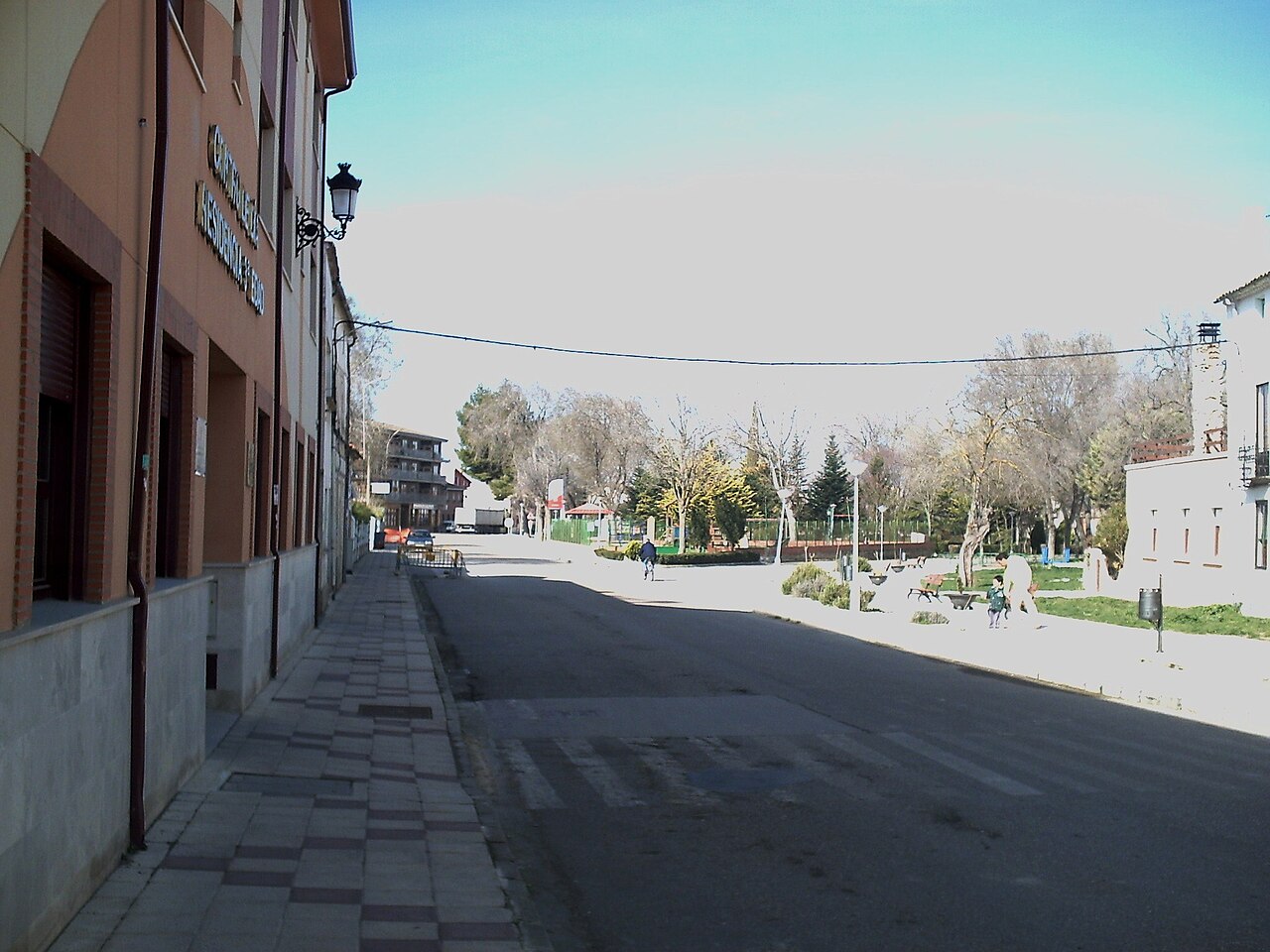
Driving through El Cerrato, in the province of Palencia, the road runs between wide cereal fields that seem to stretch on without end. Then the village comes into view, its adobe and stone houses rising slightly above a small hill. Just over a hundred people live here, so the pace is exactly what you would expect: unhurried, quiet and largely indifferent to what most would describe as tourism.
There is no headline monument and no single viewpoint that draws the crowds. What matters instead is the overall feel: the silence, the dry air of the Castilian countryside and that sense of open space so typical of this part of Spain. A walk through the narrow streets, past wooden gates and animal pens attached to houses, feels less like sightseeing and more like catching a glimpse of everyday life in a small rural community.
In the rolling landscape of El Cerrato
Tabanera de Cerrato sits squarely within the undulating scenery that defines the comarca of El Cerrato. If you have driven through this area before, the pattern will be familiar: gentle hills, vast fields of grain and secondary roads where tractors are sometimes more common than cars.
From the slightly higher points in the village, the folds of the land are easy to see. The seasons change the colours dramatically. In spring, the fields are often still green, with patches of wildflowers along the edges of tracks. By early summer, the tones shift towards the gold of ripening wheat and the whole landscape takes on a different character. Autumn brings ochres and browns that blend naturally with the clay soils typical of El Cerrato.
Light plays an important role here. Early in the morning and towards the end of the day, the low sun casts long shadows across the hills, giving the terrain more texture and depth. It is a simple landscape, but not a flat or monotonous one.
Earth-built houses and quiet details
The village centre can be covered quickly. In half an hour you can walk along nearly every street. The interest lies in the details rather than in any grand attraction.
Many of the houses still have thick walls made of adobe or rammed earth, traditional materials designed to insulate against the cold winters and the heat of summer. Subterranean cellars are also common. In this area they were the traditional way to store wine and preserve food. Look closely and you may spot small vents or modest doorways that hint at what lies underground.
On some rooftops there are dovecotes, and near the houses you will see enclosed yards that once sheltered animals. This is architecture shaped by necessity. The buildings were not designed to impress, but to make daily life work in a rural setting.
The parish church, dedicated to San Andrés, defines much of the village skyline. The structure visible today dates back several centuries. In this part of Castile and León, many churches were built or expanded between the 16th and 17th centuries, and Tabanera’s follows that broad pattern. It remains the most recognisable landmark within the compact urban area.
Simple walks across open ground
If you feel like stretching your legs, several agricultural tracks lead out from the village into the surrounding countryside. These are straightforward paths rather than signposted hiking routes. There are no major climbs and no marked itineraries to follow.
Walking here usually means moving between plots of cereal crops, passing the occasional seasonal stream and scattered patches of holm oak or broom. The terrain is very open, and the sky becomes a dominant feature of the view.
Birdlife is part of the experience. Birds of prey can often be seen circling above the fields, taking advantage of the thermals. It is also not unusual for a hare to dart away at the sound of approaching footsteps or a car door closing. This is less about ticking off a route on a map and more about wandering without a strict plan, enjoying the scale and stillness of the surroundings.
Eating in the area
Tabanera de Cerrato itself does not have facilities aimed specifically at visitors, so it is normal to head to nearby villages if you are looking for somewhere to eat. In several of them you will find traditional bars or simple eateries serving dishes rooted firmly in local cooking.
In this part of Palencia, the food is hearty and closely tied to agricultural life. Stews are common, along with morcilla, a type of Spanish blood sausage, and dishes based on pulses such as lentils or chickpeas. There are also straightforward recipes made with products from the traditional matanza, the annual pig slaughter that historically supplied families with preserved meats for the year ahead. It is the sort of cooking that calls for bread on the table and time set aside afterwards for conversation.
Festivities and village life
As in many small villages, the calendar becomes livelier in summer. That is when the main fiestas are usually held and when people who spend the rest of the year elsewhere return. The square regains some bustle, with open-air dances and activities organised by the residents themselves.
There is also a celebration linked to San Andrés, the village’s patron saint, towards the end of autumn. On these dates, relatives who now live in other towns and cities often come back, and the population briefly swells beyond its usual size. These moments offer a glimpse of how strong the ties to the village remain, even for those who no longer live there permanently.
How long to spend in Tabanera de Cerrato
If your aim is simply to see the village itself, an hour is enough to walk its streets without rushing. Allow two if you plan to linger, look closely at the architecture and take a short stroll along one of the surrounding tracks.
Tabanera de Cerrato works best as a stop along a wider route through El Cerrato. It is the kind of place where you pause, wander slowly, take in the view from the edge of the village and then continue your journey across the rolling fields of this quiet corner of Castilla Leon.