Full Article
about Torquemada
Historic town known for its 25-arch bridge and its peppers; a stop for kings and court; rich cuisine.
Hide article Read full article
A Hill Full of Cellars
Some towns seem designed for cars to pass straight through. Torquemada is one of them, with a twist: slow down and you discover that beneath the tarmac lies a maze of caves that smell of wine and history. Literally.
At first glance it looks like Castilla in its purest form. A welcome sign, wide open plains, cereal crops stretching out and the River Pisuerga moving along at its own unhurried pace. The wind feels as though it settled here long ago and never left. Nothing appears dramatic. Then you step out of the car and realise there are more metres below your feet than in front of your eyes.
The town stands on a hill riddled with hundreds of underground bodegas carved into the rock. They line up one after another, as if someone had been arranging caves in a game of Tetris. Many are still in use. They are not staged attractions but what they have always been: places to store the household wine.
You push open a wooden door, descend a few steps and suddenly find yourself in a cool gallery with compacted earth walls. Above, a مخروط-shaped chimney rises to ventilate the space. The same system repeats across the area. Some say it inspired solutions that later appeared in more famous buildings, although here no one makes much fuss about that. What matters is simple: inside, it stays cool all year round. A kind of traditional fridge built into the hill.
Quiet Streets, Royal Footsteps
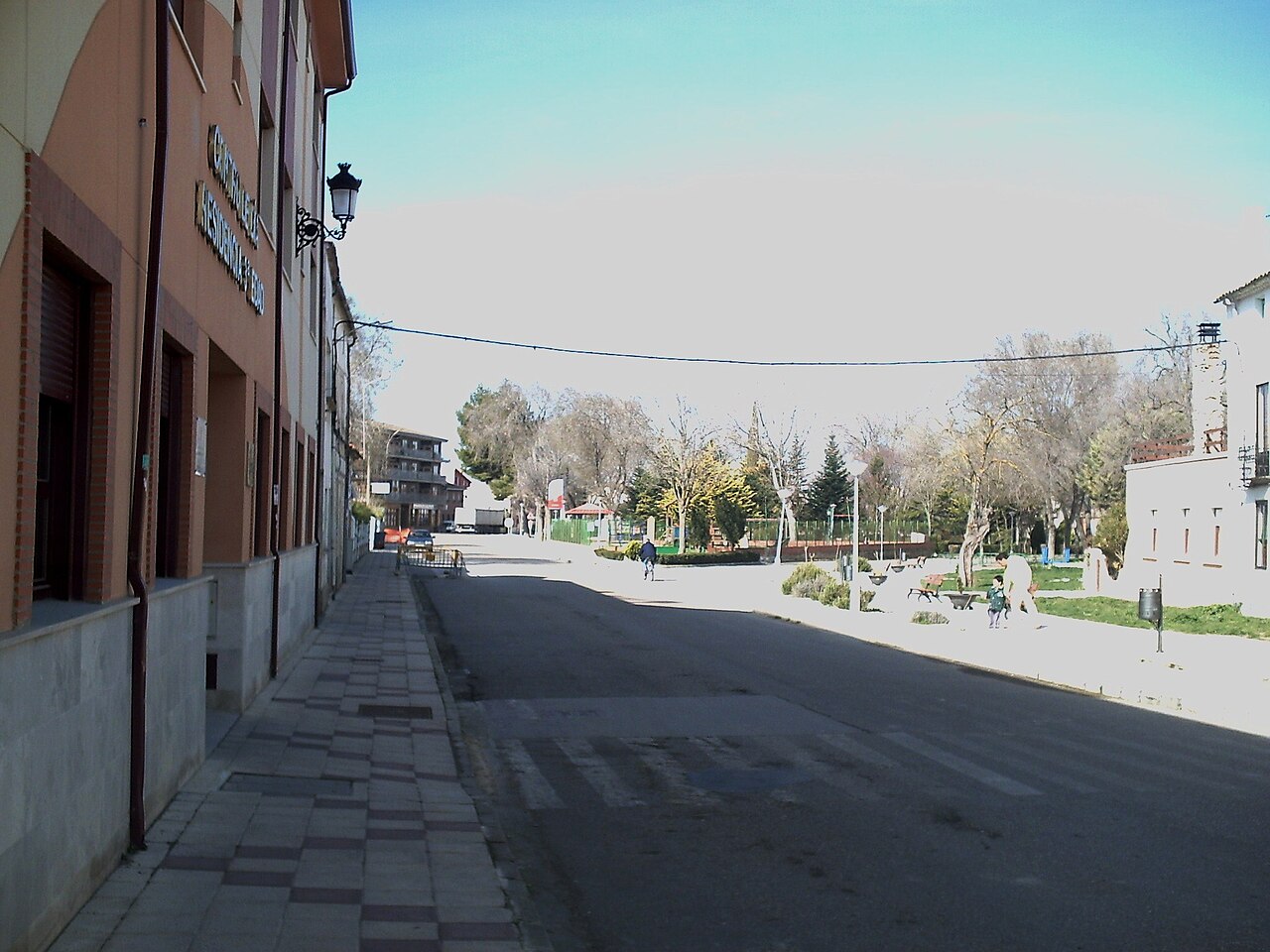
Torquemada keeps its most interesting details without drawing attention to them. Calle Mayor looks much like any street in a small town on the Castilian plateau: adobe houses, iron balconies, a half-lowered blind and the faint sound of a television from an open window.
On one discreet façade there is a reminder that Juana I of Castile, known in English as Joanna of Castile, spent periods here with her son, the future Carlos V, who would become Charles V, Holy Roman Emperor. There is no historical re-enactment, no costumed figures. Just another house along the street and the strange thought that centuries ago the royal court passed through a place that now moves at a very different pace.
José Zorrilla is also closely linked to Torquemada. The author of Don Juan Tenorio, one of the most famous works of Spanish Romantic literature, had family ties here through his mother’s side. Walking around the square or the streets near the church of Santa Eulalia, it takes some effort to picture the Romantic writer in this landscape of grain fields and steady wind. Yet that contrast makes sense. It was a good place to step away from noise and distraction.
The church towers rise above the rooftops, red tiles catching the light in winter when chimneys send up thin lines of smoke. Everything feels contained, almost reserved, as if the town prefers understatement.
The Stone Bridge and the River
The stone bridge over the Pisuerga is one of those structures built with centuries in mind. It has many arches, more than you might expect for a town of this size, because the river spreads wide when it floods.
An earlier version was reportedly carried away by an old flood, and the reconstruction was done on a grander scale. Whatever the full story, the bridge continues to do its job.
Crossing on foot, you hear the water below, a car passing slowly and the wind that never quite disappears in this part of Palencia province. From the middle, the view back towards the town is calm: red-tiled roofs, smoke from a winter fire and the towers of Santa Eulalia rising above everything else.
Locals walk across without a second glance. For them it is simply the bridge, part of daily life rather than a monument.
Wine from the Cerrato, Roast on the Table
Vines have shaped this area for centuries. Torquemada lies within the wine-growing environment of Arlanza, and many of the underground bodegas still produce wine for family consumption.
There is no elaborate tasting ritual. The wine tends to appear in an ordinary glass, followed by a straightforward question about what you think. A positive answer is usually enough for a refill.
Food follows the same logic. Lechazo, milk-fed lamb, often takes centre stage at the table. Roasted in a wood-fired oven, the skin turns crisp while the meat slips easily from the bone. It is the kind of Sunday meal repeated generation after generation in this part of Castilla.
The rhythm is unhurried. Wine from the bodega, lamb from the oven and conversation that stretches through the afternoon.
Across the Cerrato Landscape
Torquemada does not end at its last house. Beyond it begins the Cerrato: gentle hills, cereal fields and tracks linking small villages across the countryside.
One of these routes is known as the route of Carlos V. It connects several municipalities in the area and passes through Torquemada. The route is long, with constant ups and downs along agricultural paths. From the car it can look easy. After a while on foot or by bike, the steady slopes make it clear that the plateau has its own way of wearing you down.
For something less demanding, the banks of the Pisuerga offer a change of scene. Among poplars and small market gardens, the sound of water becomes more noticeable than the wind. Storks perch on towers, a tractor moves slowly in the distance and silence fills the gaps.
The seasons alter the atmosphere completely. Winter brings fog. During the grape harvest there is the smell of fermenting must. When the heat arrives, the wheat shifts in the breeze like a yellow sea.
Arrival and First Impressions
The turn-off from the motorway linking Valladolid and Palencia comes quickly. Within minutes the main road gives way to the flat expanses of the Cerrato and the sign for Torquemada appears.
Inside the town, it pays to slow down. Calle Mayor is narrow and when two cars meet, things can become tight. In any case, Torquemada is best taken at the pace it sets itself.
From the surface it may look like a place you pass through. Pause for a moment and you find a town built as much underground as above it, where wine rests in the cool earth, the Pisuerga keeps flowing and history lingers without raising its voice.