Full Article
about Valbuena de Pisuerga
Small village on the Pisuerga; known for its bridge and the quiet riverside; fishing spot.
Hide article Read full article
A village shaped by land and silence
Early in the morning, when the sun is still low, Valbuena de Pisuerga almost blends into the earth around it. The adobe and stone façades take on a soft ochre tone, and the air carries the smell of open countryside. Sound is scarce. Perhaps a distant tractor, or the wind moving through the stubble.
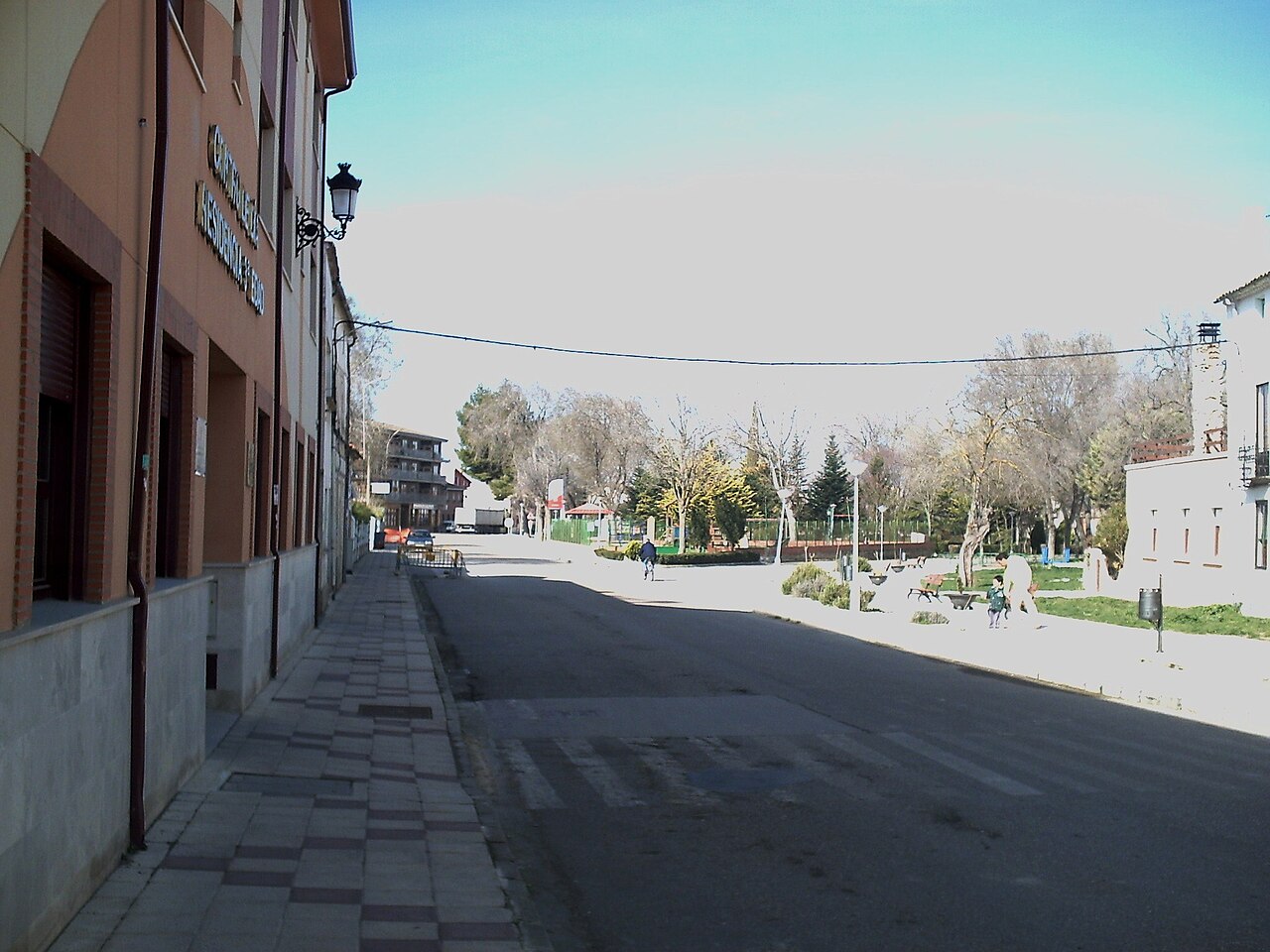
With fewer than fifty inhabitants, the village can be walked in a matter of minutes. It is better not to rush. The scale encourages a slower pace, where attention falls on small details rather than landmarks.
Valbuena de Pisuerga lies in El Cerrato, a district in the province of Palencia defined by gentle hills and long agricultural fields. Cereal crops set the rhythm of the year. In summer, everything turns yellow and dry underfoot. In winter, the land flattens visually beneath a wide, cold sky.
The river Pisuerga gives the village its name, although it does not run right beside the houses. Its presence is felt more indirectly, in the agricultural character of the area and in the nearby fertile plains where the soil tends to be more productive.
There are no marked routes or designed visitor trails here. The usual way to explore is simply to wander through the two or three main streets, noticing large wooden gates, boundary walls slightly bowed with age, or yards that still hold farming tools. The parish church appears as a natural point of reference, plain and without elaborate decoration on the outside.
Buildings that tell their own story
Many of the houses follow the traditional building style of El Cerrato. Thick walls made of adobe or stone, curved roof tiles, and façades that show repairs from different periods. It is common to see old earth walls alongside more recent brick patches. This mixture says a lot about the place: things are maintained, adapted, and reused rather than replaced.
At the centre stands the church of San Martín. From the outside it is restrained, almost austere. If it happens to be open, which is not always the case, the interior contains altarpieces and carved figures that hint at busier times in the past. Light filters in through small windows, leaving the space in a calm half-shadow.
Just beyond the built area, agricultural tracks begin almost immediately. A short walk is enough to gain a little height and see how El Cerrato unfolds in soft hills. Among the fields stand traditional adobe dovecotes, some already quite deteriorated. These structures are closely tied to the region. From a distance they look like small cylinders or low towers, sharing the same colour as the surrounding soil.
Tracks through fields and low hills
The paths leading out of the village are not intended as hiking routes. They serve as access to farmland. Still, they can be followed on foot or by bicycle without difficulty, as long as crops and agricultural machinery are respected.
The landscape shifts noticeably with the seasons. In spring, green fields soften the contours of the land, and the edges of the paths fill with poppies and tall grasses. In summer, the sun is strong and shade is scarce. Walking is more sensible early in the day or towards evening.
Birdlife is part of the experience in this open terrain. With a bit of patience, birds of prey such as kites, harriers or kestrels can be seen gliding over the fields. Other species typical of cereal-growing areas appear too, especially along the boundaries where low shrubs remain.
Around the surrounding area, among scattered holm oaks and small patches of woodland, mushrooms can appear in autumn. It is not a place widely known for this, yet local residents do head out in certain years to look for varieties like níscalos or setas de cardo when conditions are right.
Summer gatherings and quiet winters
As in many small villages, festivities are concentrated in summer, when people who live elsewhere return. For a few days, the rhythm changes. There are more people in the square, long outdoor tables, and conversations that stretch into the night.
The celebrations usually include a religious event linked to the patron saint and a shared meal among neighbours. They are not large-scale festivities, but they show how the connection to the village remains strong, even if the official population is small.
For the rest of the year, life here is much quieter. In winter, it is entirely possible to walk through the streets without encountering anyone for quite some time.
Getting there and practical notes
Valbuena de Pisuerga is reached via local roads that cross El Cerrato. The usual approach is by car from nearby towns, as getting around without a vehicle is difficult.
There are very few services in the village, and it is not set up as a conventional tourist destination. Those who want to spend more time in the area tend to stay in larger nearby towns and come here for a short visit, a walk through the streets, and a wander along the surrounding tracks.
One final practical point: in summer, the heat can be intense and there is little shade beyond the village centre. Visiting earlier in the day or later in the afternoon makes the experience more comfortable. At those times, the colours of El Cerrato return and the quiet becomes even more noticeable.