Full Article
about Valdeolmillos
Cerrato village with a plasterwork tradition; noted for its church and a plaster museum in a cave.
Hide article Read full article
A village measured in silence
The day begins in near silence. A distant tractor hums, wind brushes against stubble fields, and little else interrupts the stillness. In that pale early light, before anyone has stepped into the street, the essence of tourism in Valdeolmillos becomes clear. This is a place that asks visitors to adjust to the slow pace of a very small village, one that barely registers on maps of the Cerrato region.
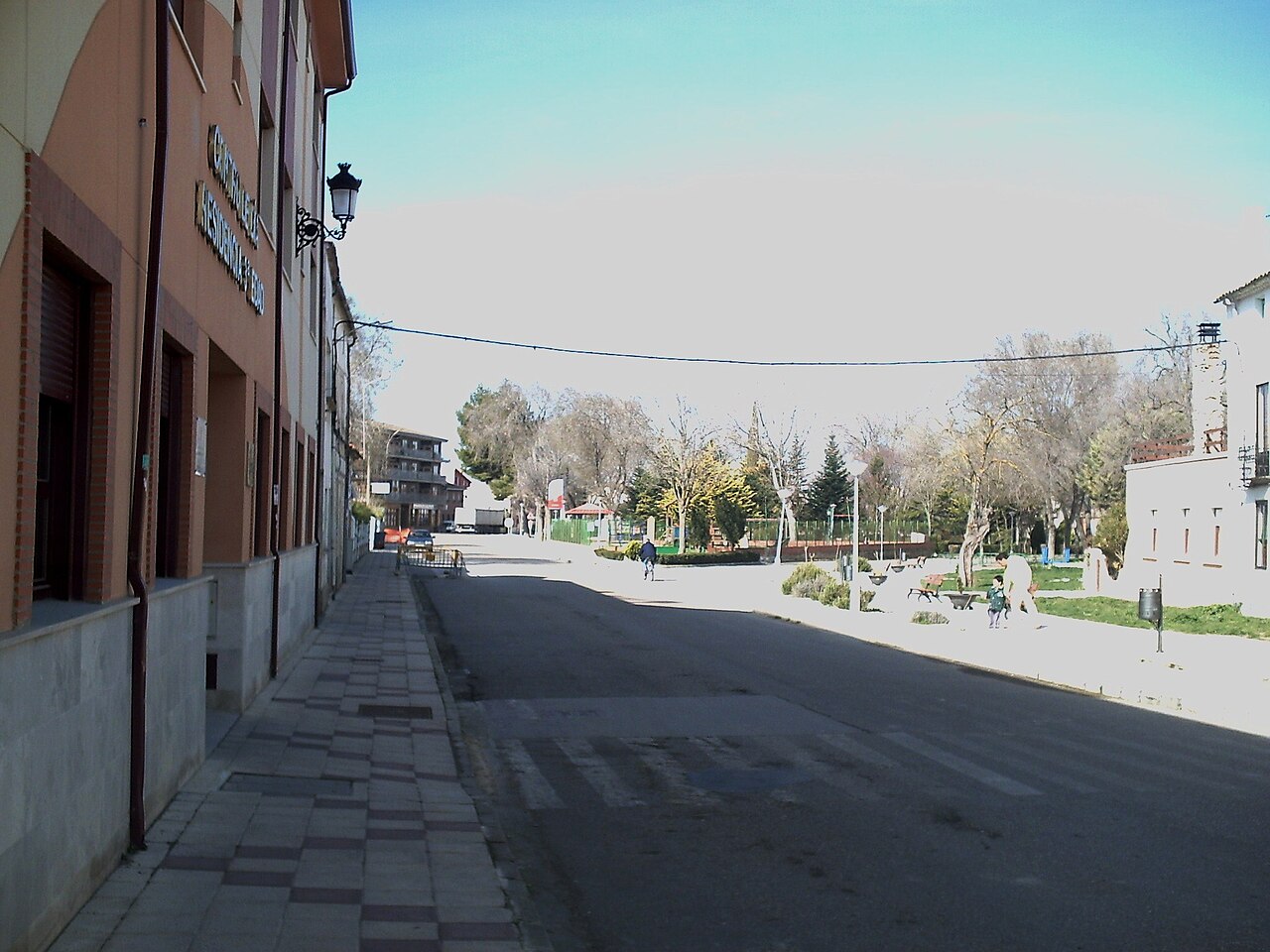
Valdeolmillos has around fifty residents today. It sits at just under 800 metres above sea level, in a part of Palencia where the plateau softens into gentle folds of cereal fields. The layout of the village feels informal. Some streets remain unpaved, while walls of rammed earth and adobe houses line the way, topped with ageing roof tiles. Many buildings show fine cracks or repaired corners, quiet traces of passing years and harsh winters.
Life here follows a steady rhythm shaped more by daylight and agricultural work than by schedules. The stillness is not staged or preserved for visitors, it is simply how the village exists.
The church above the rooftops
The parish church of the Asunción occupies the most visible spot in Valdeolmillos. It is not especially large, yet it defines the village skyline from a distance. Part of the structure is usually dated to the 16th century, though later alterations have left their mark.
The façade is restrained. Dark stone dominates, with very little decoration. The tower combines brick and masonry, and when the bell rings its sound carries cleanly across the surrounding valley. From the small atrium, the view opens over red-tiled roofs and the wide, cultivated plots of the Cerrato beyond.
Light transforms the scene as the day moves on. By mid-afternoon, it falls at an angle that warms the tones of the brick. Moments like this invite a pause. Nothing needs to happen, and that is precisely the point.
Cellars in the hillside
At the edges of the village, low doorways appear, facing out towards the fields. These are old bodegas, traditional underground wine cellars carved directly into the earth. They can be identified by their slanted օդ ventilators that emerge from the grass.
For many years, these spaces stored wine and kept it cool throughout the seasons. Some still serve as storage areas, while others remain closed and partially covered by vegetation. Even in that state, they form part of the wider landscape of the Cerrato, where similar cellars appear in nearby villages. The region once had a strong connection to wine production, and these structures are among the most visible reminders.
They do not function as tourist attractions in a formal sense. There are no signs or explanations. Their presence is understated, blending into the terrain rather than standing apart from it.
Tracks through open fields
Agricultural tracks begin as soon as the last houses fall behind. These wide, pale dirt paths are designed for machinery, and they are easy to follow thanks to the gentle terrain. Walking here requires little effort in terms of elevation, but distances can be deceptive.
The landscape shifts noticeably with the seasons. Spring brings bands of intense green across the fields. Summer turns everything gold, and the air carries the scent of dry straw. Winter strips the land back to its bare form, leaving the wind to move freely across open ground.
There is no tourist signage. Anyone heading out should think ahead, carry water, and keep track of the return before daylight fades. Distances between villages in the Cerrato often look shorter than they are, especially under sun or wind.
The appeal lies in that openness. There are no defined viewpoints or marked stops, only the gradual change of light and colour across a wide horizon.
Birds of the plain
Early hours bring subtle movement to the fields. Before vehicles pass along the tracks, the area reveals part of its wildlife. This stretch of Tierra de Campos and the Cerrato supports populations of steppe birds, species adapted to open farmland.
Great bustards can sometimes be spotted in the distance, along with small groups of little bustards. Skylarks are also present, more often heard than seen as they rise and disappear against the sky. There are no dedicated observation points. The sensible approach is to remain on the paths and avoid entering cultivated land.
Spring tends to offer the best conditions, especially at the start of the day. Even then, sightings depend on patience and a bit of luck.
August and the return of voices
For much of the year, Valdeolmillos remains very quiet. Some houses stay closed except at weekends or during the summer months. August changes that pattern.
Festivities linked to the Asunción bring families back for a few days. The atmosphere shifts. Conversations return to the streets, children run through the square again, and evenings stretch a little longer than usual.
Outside that period, calm quickly returns. Autumn and late winter feel particularly still. Few cars pass through, chimneys send smoke into the cold air, and the surrounding fields remain open and uninterrupted.
Time here is not organised around a list of activities. It follows light, weather, and work on the land. Visitors who come to Valdeolmillos tend to notice that difference first, and then settle into it.