Full Article
about Valle de Cerrato
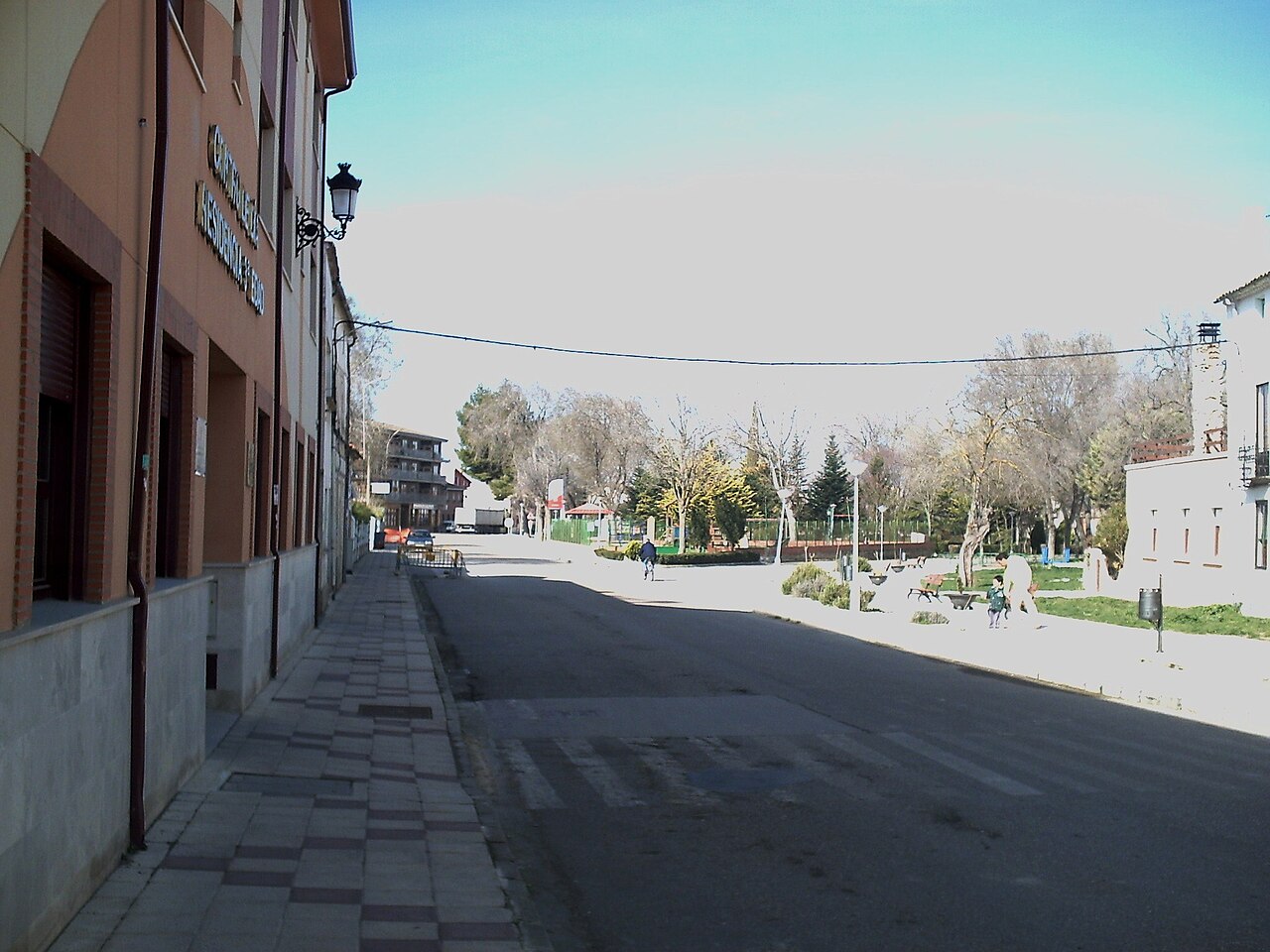
Town set in a typical Cerrato valley; it keeps traditional architecture and a quiet atmosphere.
Ocultar artículo Leer artículo completo
The tractor stops at 3:47 pm. Not because the farmer's finished—there's still half a field of wheat to cut—but because the afternoon wind has picked up, and in Valle de Cerrato, the wind rules everything. At 800 metres above sea level, where the Meseta's clay hills roll like frozen waves, this village of seventy souls operates on meteorological time rather than Greenwich Mean.
Seventy. That's not a typo. While British tourists queue for selfies in Segovia and Salamanca, Valle de Cerrato carries on with its annual population drop that would make a London borough planner weep. Yet what's remarkable isn't the emptiness—it's how the place refuses to become a museum piece. The church bell still rings for mass (when someone's remembered to wind the mechanism). The bakery van still arrives Tuesdays and Fridays, its arrival announced by a horn that sounds like a depressed goose. Real life, stubbornly persistent.
The Architecture of Survival
Walk the main street—though 'main' feels grand for what's essentially a widened farm track—and you'll see the architectural equivalent of a family photo album. Adobe walls lean like tired relatives at a wedding, their surfaces patched with modern cement that never quite matches the original clay colour. Some houses wear new roofs of orange tile, others still sport the traditional straw-thatch that's become Instagram catnip for passing cyclists. The contrast isn't picturesque; it's honest. This is what happens when a place refuses to die but can't afford cosmetic surgery.
The parish church squats at the village's highest point, its Romanesque austerity softened by centuries of DIY repairs. Finding it open requires detective work: ask in the plaza's single bar (open Thursdays through Sundays, hours variable) or track down Doña María, who keeps the key in her kitchen drawer next to the saffron. Inside, the air smells of beeswax and mouse droppings. The altar's 17th-century polychrome saints have lost most of their paint to time and candle smoke, giving them the haunted expression of people who've watched their village slowly empty.
Walking Through Earth's Memory
The surrounding landscape operates on geological time. These clay hills were seabed once, and on spring mornings after rain, you can still find fossilised shells in the field boundaries—tiny white spirals that crunch underfoot like prehistoric crisps. The walking here isn't dramatic. No peaks to bag, no via ferratas to conquer. Instead, there's a network of agricultural tracks that connect Valle de Cerrato to its equally tiny neighbours: Villaprovedo (population 32) and Reinoso de Cerrato (a metropolis at 89).
Start early. By 10 am in July, the temperature hits 32°C and the clay paths turn to dust that coats everything—boots, legs, the inside of your nostrils—in a fine orange film. The reward comes at dusk, when the setting sun transforms the wheat stubble into what locals call "el mar de oro," though it's less romantic when you're scratching harvest debris from your socks. Bring water. Lots. The nearest shop is 18 kilometres away in Herrera de Pisuerga, and the village's lone fountain dried up during the 2017 drought.
Birdwatchers should pack patience and a good scope. The great bustard—Spain's heaviest flying bird—sometimes appears in the neighbouring fields, though you'll need dawn stillness and binoculars to distinguish its grey bulk from the limestone outcrops. More reliable are the kestrels that nest in the church tower, dive-bombing swallows with the efficiency of RAF pilots. Their calls echo off the adobe walls, the only sound apart from the wind that never entirely stops.
The Taste of Altitude
Food here follows the agricultural calendar, not tourist demand. In late October, every household slaughters a pig; by December, the rafters drip with chorizos that taste of smoke and mountain air. The local morcilla—blood sausage studded with rice and onions—carries the iron tang of high-altitude pig farming. Ask politely at any kitchen door and you'll likely leave with a link wrapped in newspaper, still warm from the wood-fired oven.
For sit-down meals, abandon hope. The village's last proper restaurant closed when its owner retired to Valladolid in 2019. Instead, drive 25 minutes to Palencia's industrial estates, where Casa Lucio serves lechazo—milk-fed lamb roasted in wood ovens until the skin crackles like pork crackling. It's £18 per quarter, expensive by local standards but cheaper than anything comparable in the UK. Pair it with a Crianza from the Arlanza valley; the altitude here—higher than Ben Nevis—gives the tempranillo grapes a brightness that cuts through the lamb's richness.
When to Come, When to Stay Away
April brings wild tulips to the uncultivated field margins—small red blooms that British gardeners pay fortunes for but here grow as weeds. The temperature hovers around 18°C, perfect for walking, though pack layers. At this altitude, a sunny morning can turn to horizontal sleet by teatime. May's better for wildflowers but brings the cereal harvest's dust and the constant drone of combines.
Avoid August. The village empties further as residents flee to coastal relatives, leaving only the very old and one stubborn British expat who'll talk your ear off about property prices. Temperatures hit 38°C by midday; the clay hills radiate heat like storage heaters, and even the kestrels stop flying. Everything smells hot—dry grass, hot metal from distant machinery, the faint whiff of manure that drifts over from the pig farms near Osorno.
Winter arrives suddenly, usually during the first week of November. Snow isn't guaranteed, but when it comes, the village becomes temporarily beautiful and completely inaccessible. The Palencia council's snowplough reaches here eventually—though 'eventually' might mean three days. Bring chains. Better yet, bring a 4x4 and the phone number of Miguel the farmer, who'll tow you out for €50 and a bottle of decent whisky.
The Long View
Stay past sunset. When the generator-powered streetlights flicker on—one every hundred metres, bathing the adobe walls in sodium orange—you'll understand why astronomers prize this region. The Milky Way appears not as a vague smudge but as a river of light, so bright it casts shadows. On moonless nights, you can read by starlight alone, though the text will be limited to the health warnings on your Spanish cigarettes.
Leave early. The village wakes with the sun, and by 7 am the bakery van's horn signals another day of quiet defiance. Valle de Cerrato won't change your life. It has no gift shops, no Michelin stars, no hashtags trending on Instagram. What it offers instead is harder to package: the sound of wind through wheat, the smell of wood smoke on cold mornings, the realisation that somewhere in Europe, people still live by seasons rather than algorithms.
Just remember to check the weather forecast before you go. The tractor won't start again until the wind drops, and in Valle de Cerrato, the wind is the real boss.