Full Article
about Vertavillo
Walled town in the Cerrato; remains of wall and gates survive; noted for its church and the pillory.
Hide article Read full article
A Small Village in the Cerrato Landscape
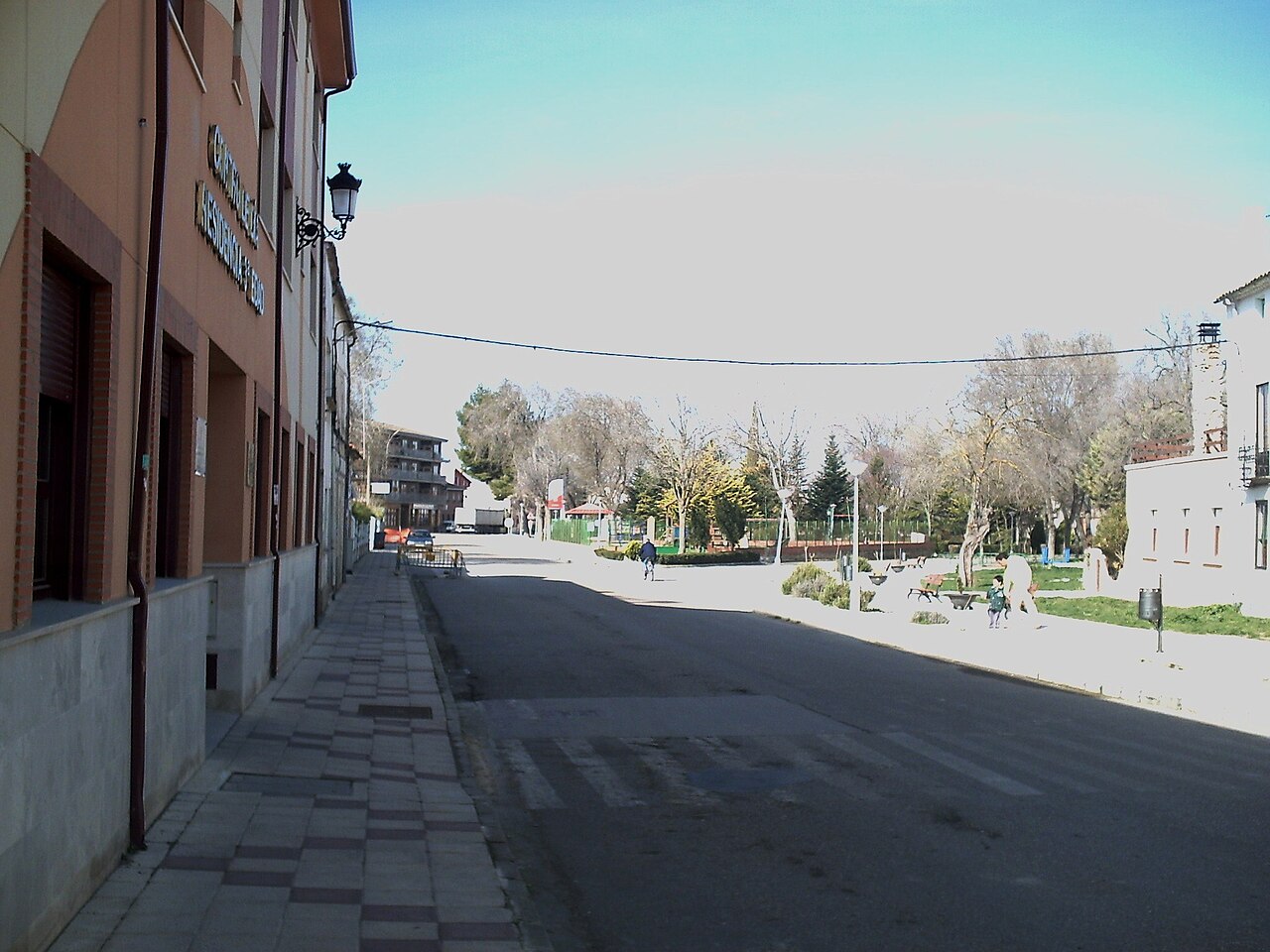
Vertavillo lies in the heart of the Cerrato palentino, a comarca in the south of the province of Palencia, within Castilla y León. The village stands on one of the gentle hills that define this part of the region, at around 800 metres above sea level. With little more than a hundred inhabitants, it remains a very small settlement whose scale has changed little in recent decades.
Like other villages in the Cerrato, Vertavillo developed in close relationship with its surroundings. For centuries, the local economy has depended almost entirely on cereal crops and vineyards. The layout of the village reflects that agricultural focus. Houses adapt to the contours of the hill, and the streets slope downwards towards the threshing grounds and fields that have long sustained the community.
At the centre stands the church of San Miguel, around which the rest of the village is organised. From this high point, the houses cascade gently down the hillside. Vertavillo has not been reshaped by large-scale tourism. It continues to function as a small agricultural settlement where traditional uses of domestic space are still visible.
Walking through its streets reveals courtyards, wide gateways designed for carts, and cellars dug into nearby slopes. Some houses have been restored, others remain in a more fragile state, something common in villages with very small populations. That uneven condition makes it easier to understand how daily life once unfolded in this part of Castile. Materials are simple and local: adobe, stone and wood predominate throughout the built fabric.
San Miguel and Vernacular Architecture
The most prominent building in Vertavillo is the church of San Miguel. Its origins are usually placed in the 16th century, although like many rural churches it has undergone later alterations. Adaptations over time were common in small communities, where buildings evolved according to changing needs and available resources.
The tower and solid masonry walls shape the village skyline. From a distance, the church marks Vertavillo’s position on the hill. Up close, its elevated setting explains how the settlement grew around it, using the temple as both spiritual and spatial reference point.
The interior is not always open, which is typical in small localities where churches are used only on specific occasions. Even so, walking around the exterior offers a clear sense of its importance. From the high ground beside it, the surrounding countryside comes into view and the logic of the village’s placement becomes evident.
Beyond the church, the main architectural interest lies in the traditional houses. Many retain large wooden gates, internal patios and separate spaces for livestock or grain storage. These features speak directly to an agricultural way of life centred on cultivation and animal husbandry. On the nearby slopes, former wine cellars have been excavated into the earth. They are linked to vine growing, which for centuries formed part of the Cerrato’s rural economy.
The overall impression is one of functional design shaped by climate, terrain and work. There is little ornamentation. Instead, the architecture reflects practical needs and the use of materials available in the immediate area.
The Open Horizons of the Cerrato
The setting around Vertavillo is essential to understanding the village itself. The Cerrato is a landscape of gentle contrasts. There are no mountains and no extensive forests. Instead, broad plateaus are almost entirely given over to cereal cultivation, while narrow valleys cut into the terrain and historically provided space for vineyards.
From the outskirts of the village, the horizon stretches far into the distance. Scattered holm oaks punctuate the fields. Colours shift markedly with the seasons. In summer, golden tones dominate as the cereal ripens under the sun. In winter, the scene becomes more austere, with ploughed earth exposed beneath wide, open skies.
Several agricultural tracks lead out from Vertavillo into the surrounding countryside. These are simple routes still used by farmers, allowing long walks with barely any change in elevation. The terrain is gentle, shaped by gradual undulations rather than steep slopes.
This type of dry farmland also supports birdlife typical of the Castilian plains. With patience, it is possible to spot larks and pipits moving across the fields, or a kestrel hovering above the crops. The absence of large urban centres nearby contributes to a sense of openness. At night, the sky can be seen with notable clarity, free from the glow of major towns.
Food and Everyday Customs
The cuisine in this part of the Cerrato follows a straightforward Castilian tradition. Dishes are substantial and rooted in the needs of long working days in the fields. Lamb is a staple, as are sopas de ajo, a garlic soup common across inland Spain, and hearty legume stews.
In a village the size of Vertavillo, options for eating or having a drink can be very limited. They may not operate regularly throughout the year. This is worth bearing in mind when planning a visit. Some visitors combine their time here with stops in other nearby villages to round out the day.
Food, like architecture and landscape, reflects continuity rather than reinvention. The emphasis remains on local produce and recipes that have been part of the comarca for generations.
A Short Walk Through Vertavillo
Vertavillo can be explored in a short space of time. The most rewarding approach is to wander slowly through the streets around the church of San Miguel, observing how houses adapt to the slope and how agricultural functions are woven into domestic space.
From there, it is worth heading towards the edges of the village. The low hills provide a modest vantage point over the Cerrato. From this perspective, the reasons for settling here become clearer. The site offers protection from the wind while maintaining open views over the farmland that has sustained the community for centuries.
Vertavillo does not present grand monuments or dramatic scenery. Its interest lies in coherence between village and landscape, between built form and agricultural routine. In this small corner of Castilla y León, the rhythm of cereal fields and vineyards continues to shape both the view and the way of life.