Full Article
about Villamediana
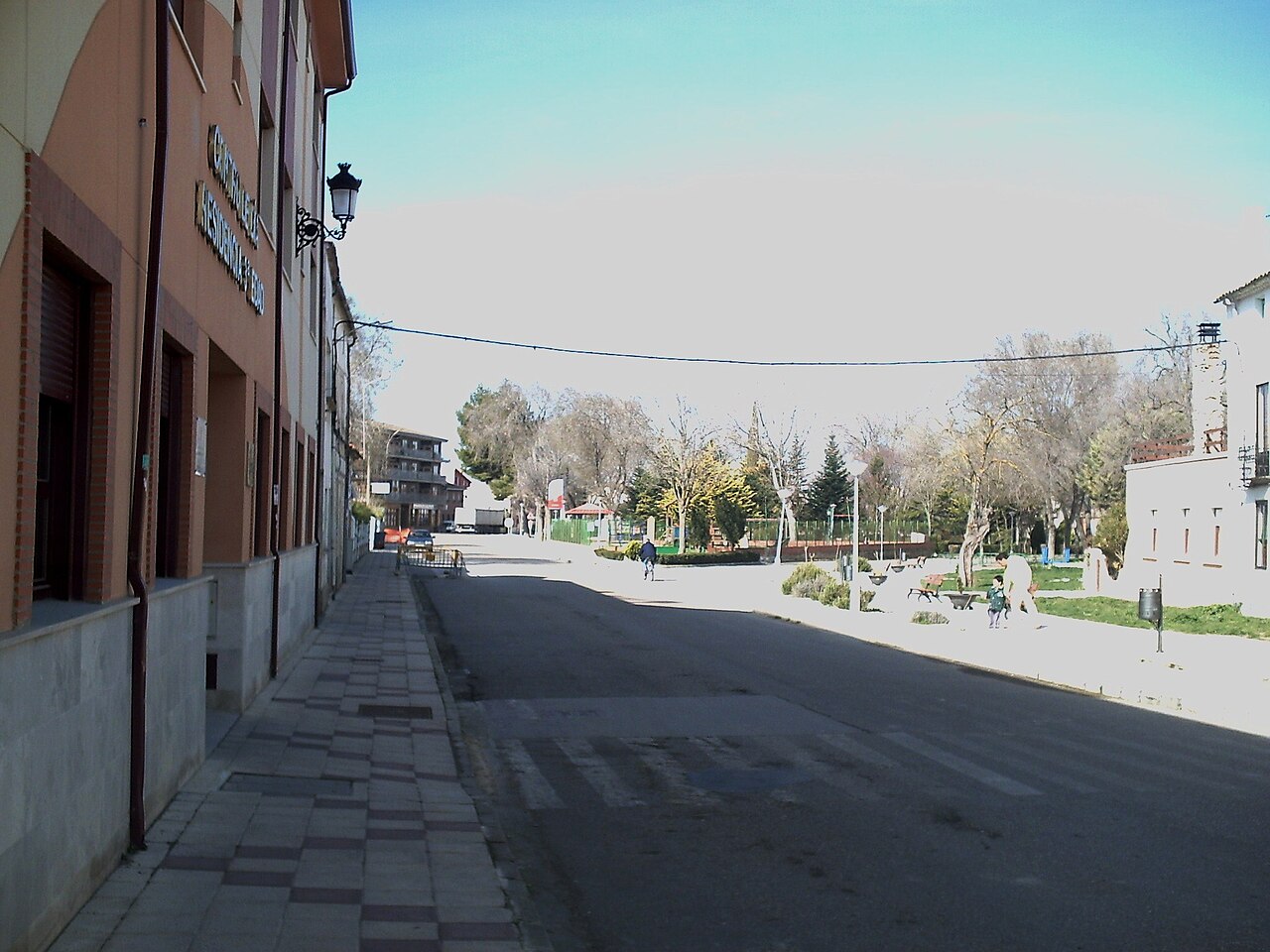
Town near Palencia and Magaz; has remains of a wall and an interesting church; traditional architecture.
Hide article Read full article
A Slow Morning on the Plain
By mid-morning, when the sun begins to warm the páramo, the high plateau typical of inland Castilla León, the air still carries a chill through the streets of Villamediana. Tourism here has little to do with signposted routes or groups with cameras. What defines the place is silence, the crunch of gravel underfoot and the brief song of a blackbird hidden among the rooftops.
Walls of adobe and stone hold on to the night’s coolness. The village seems to move at its own pace, as if it has not quite finished waking up. Villamediana sits on a calm horizon line where land and sky meet with barely an obstacle in between. From the road, the outline of the parish church of Santa Columba stands out immediately. Its square tower rises above the houses, built in limestone with narrow windows and a clock that for decades marked the rhythm of rural life.
Inside, remains of Baroque altarpieces can still be seen, along with a simple altar that continues to be used without much ceremony. The church does not present itself as a monument set apart from daily life. It feels woven into it.
Quiet Streets and Underground Cellars
A walk through Villamediana reveals iron gates, whitewashed façades and houses with wooden balconies darkened by many winters. At several corners, discreet entrances lead down to underground bodegas. These cellars are common across this part of the Cerrato region. Families used them to store wine and keep food at a steady temperature throughout the year.
Outbuildings and livestock pens make it clear that life here revolved, and in some ways still revolves, around farming and animals. The surrounding cereal fields shift in colour as the seasons turn. Summer brings gold. Winter leaves a pale straw tone. Spring offers a brief spell of green before the cycle begins again.
The landscape does not try to impress. It stretches out, open and practical, shaped by work and weather rather than design.
Tracks Across the Cerrato
Several agricultural tracks leave Villamediana and link it with other villages in the Cerrato, including Baltanás and Torremormojón. These are compacted dirt roads, straight for long stretches, cutting through farmland and small clusters of holm oaks.
Winter mornings often begin with frost. In summer there is hardly any shade. Anyone planning a longer walk needs to carry water and a hat. Signposts are not always present, and the openness of the terrain can be disorientating if you stray too far from the village.
The Cerrato itself is a rural area known for its rolling plains and patchwork of cultivated fields. Around Villamediana, that character is especially clear. Long lines of crops follow the contours of the land. The sky feels large, sometimes larger than the earth beneath it.
Nightfall and the Open Sky
When the few lights in the village go out, the sky appears clear and deeply dark. There are no formal stargazing facilities or observatories. None are necessary. A short walk to the outskirts and a few minutes of patience are enough for eyes to adjust.
On still nights, the hoot of a tawny owl may carry across the fields. The beat of wings from another nocturnal bird of prey sometimes breaks the quiet. It is a kind of silence that is difficult to recall in a city, where some background noise is always present.
Darkness here feels complete rather than dramatic. The horizon disappears. The village becomes a handful of shapes against the land.
Birds Over the Fields
The farmland around Villamediana attracts a steady movement of birds for those willing to pause and look. Storks often perch on electricity pylons. With a little luck, birds of prey such as buzzards or kites can be seen circling above the fields. In winter, flocks of lapwings move between freshly ploughed plots.
There are no hides or interpretative panels. Observation depends on patience and a slow walk along the tracks. The experience remains informal and unscripted. Wildlife here forms part of the working landscape rather than a separate attraction.
Food and Practicalities
Villamediana is a small village, and it helps to arrive prepared. A shop or somewhere to sit down for a meal is not always available. Many visitors bring provisions with them or head afterwards to nearby towns where shops and bars still operate.
Livestock farming continues in the surrounding area. In neighbouring villages it is easy to find produce that reflects the local pantry: sheep’s cheese, cured meats and dried pulses that form part of everyday cooking in this part of Castilla León.
The rhythm of supply follows the rhythm of rural life. Services are limited, and that is part of the character of the place.
A Landscape Shaped by Light
Photographically, the Cerrato has a particular quality. Everything depends on the light. After the harvest, the fields lie flat and yellow. In autumn, low mists settle for a while over the shallow valleys. On clear days, the sky seems to occupy more space than the land itself.
Sunrises tend to be calm, with a cool light that gradually warms. At sunset, the plateau turns reddish for a few minutes before the west wind carries away the last clouds. The change happens quickly. Colours fade, outlines soften, and the village returns to shadow.
Walking through Villamediana comes down to a slow rhythm and a landscape that does not demand attention. Old houses line straight tracks that lead into open fields where time appears to follow a different measure, guided by the seasons and daily work. Silence lasts here, sometimes for quite a while, until a car passes on the road or a gate opens somewhere across the street.