Full Article
about Villaviudas
A Cerrato village with a notable church; it keeps traces of traditional architecture and wine cellars.
Ocultar artículo Leer artículo completo
The thermometer on the stone wall reads 28 °C at 10 a.m., yet the air feels lighter than the number suggests. At 760 m above sea-level Villaviudas gets the full Castilian sun, but the constant breeze sliding across the plateau keeps the heat from turning sticky. Stand still for a moment and you’ll hear it: larks overhead, a tractor turning earth somewhere beyond the last houses, and—if the wind shifts—the faint clink of a fork against pottery as the bar on Plaza de España sets tables for an early beer.
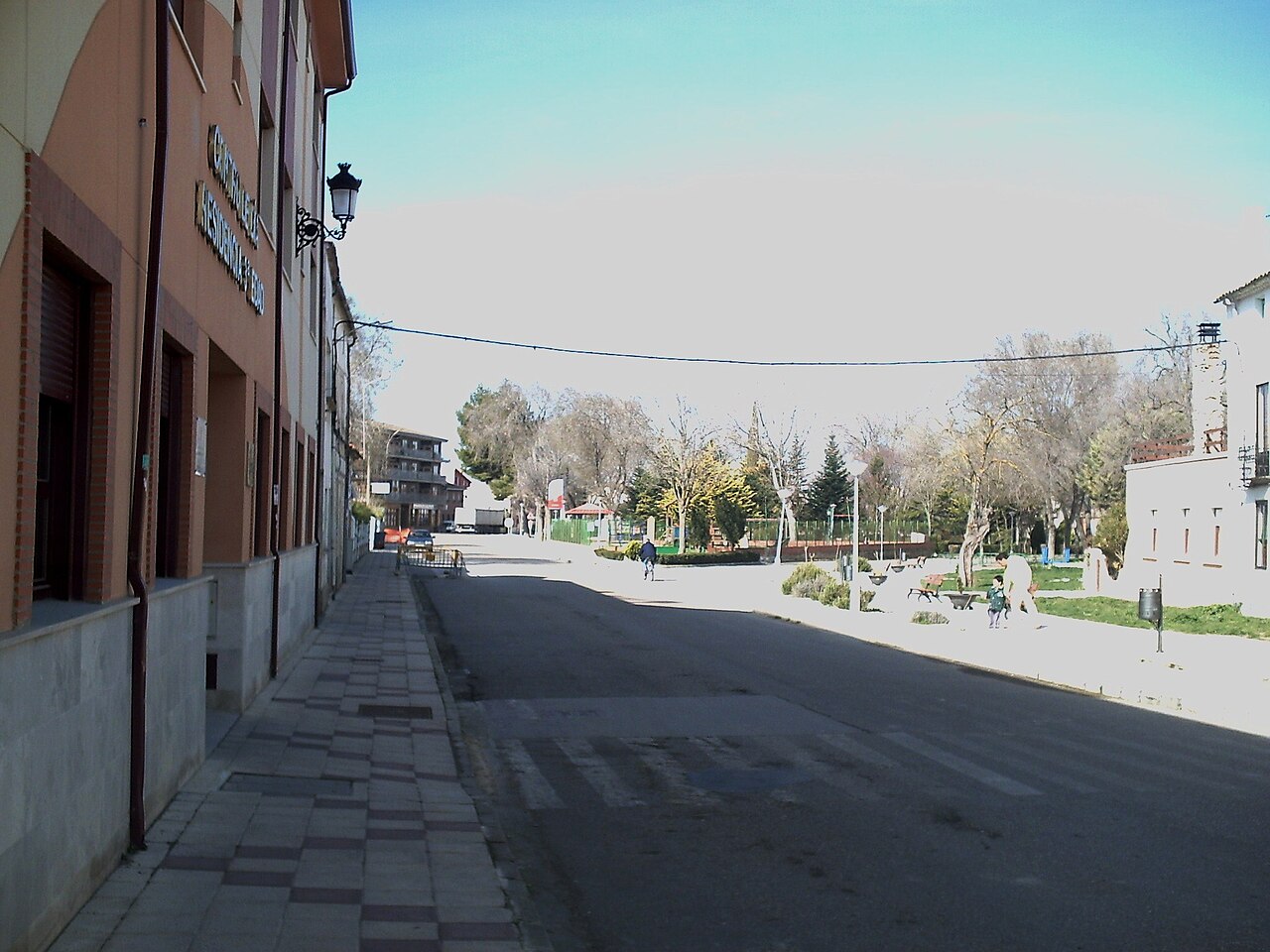
This is El Cerrato, a region of gentle red-clay ridges that ripple between the provincial capitals of Palencia and Valladolid. Villaviudas (population 350, signposted 38 km from Palencia on the CL-613) sits almost exactly on the spine of one of those ridges. The village was built to work the vine and the cereal fields; tourism arrived as an after-thought, which explains both its authenticity and its limited infrastructure. Expect peace, wide skies and soil the colour of terracotta roof-tiles—not souvenir shops.
Adobe, Brick and the Echo of Cellars
No single monument dominates. Instead, the pleasure is in piecing together the layers of a working village that never had much money to replace things. Start at the parish church, an unadorned 16th-century rectangle whose bell turret looks oversized until you realise it doubled as a defensive mirador when bandits followed the ridge tracks. The wooden doors open only for Mass (11 a.m. Sunday, 7 p.m. weekday feast-days) but the stone porch stays cool even at midday and gives a good vantage over the arcaded houses that edge the square.
Walk south-east along Calle de la Iglesia and you’ll pass adobe walls fat enough to swallow the midday heat. Their ochre plaster is patched with modern cement, a reminder that people still live here year-round; satellite dishes bloom like metal fungi above the rooflines. At the end of the lane the ground drops away and a line of conical brick chimneys pokes from the hillside—ventilation shafts for the old bodegas subterráneas. These hand-dug cellars kept wine at 14 °C long before refrigeration. Most are locked and a few have collapsed, so resist the temptation to crawl in, but the 2 m-high chimneys photograph well against evening light.
Back in the centre, detour into the alley behind the bakery (open 8–11 a.m., €1.20 for a 250 g barra) to see a 19th-century palomar: a circular dovecote built into the house gable. Pigeon squab was once protein for poor winters; now the nests house jackdaws who swoop in and out as if they own the deeds.
Paths that Remember the Mule
The surrounding cereal mosaic is sliced by caminos wide enough for a single tractor—ideal walking tracks if you remember two things: there is no shade, and the clay sticks to boots like glue after rain. The most straightforward circuit heads south to the hamlet of Mucientes, 5 km away. You’ll cross three stone bridges no wider than a cart, skirt a stand of holm oaks where rollers and shrikes hunt, then meet the Arroyo de Mucientes, usually dry until February. Turn left at the water trough and the track deposits you back in Villaviudas after two hours, in time for lunch.
Spring is the visual payoff: green wheat streaked with poppies, bee-eaters overhead, and the occasional Great Bustard lumbering into view. Summer turns the palette to bronze and the temperature to 35 °C by 3 p.m.—walk at dawn or don’t walk at all. Autumn brings stubble fields and the smell of newly pressed grapes; winter is raw, with fog that can trap the village for days and roads that ice over after sunset. Snow is rare but tyre chains live in most car boots from November onward.
What You’ll Actually Eat
There are no restaurants per se. Hospitality hinges on the bar-restaurant “El Cerrato” on the plaza (no website, phone 979 80 20 63). It opens at 7 a.m. for field workers and shuts when the last customer leaves—often 11 p.m. House rules: order before 4 p.m. if you want the full menu, after that only sandwiches and raciones. Expect robust country cooking: sopa de ajo (garlic soup) at €4, roast suckling lamb for two at €28, and a half-litre of local tinto at €3.50. Vegetarians get a tomato-pepper salad and setas (wild mushrooms) when in season; vegans should pack emergency almonds.
Villaviudas sits just outside the Cigales D.O. wine zone, so cellars here sell vino de mesa in 5-litre plastic garrafas for €6. It won’t win medals but tastes honest after a hot walk. If you want labelled bottles, drive 12 km to Olmos de Esgueva where Bodegas Mucientes sells chilled rosé with proper export paperwork.
Beds, Bells and the 6 a.m. Tractor
Accommodation is limited to three village houses refurbished as rural lets (search “Casa Rural Villaviudas” on the regional tourism site). Two sleep four, one sleeps six; prices hover round €90 per night for the whole house, linen included. Walls are thick, Wi-Fi sporadic, and the church clock strikes the quarters—bring ear-plugs if bells bother you. The nearest hotel is in Dueñas, 18 km north: the three-star Hotel Villa de Dueñas (doubles €65, breakfast €7) with a pool that feels like nirvana after a dusty July afternoon.
There is no cash machine. The bakery and the bar accept Spanish cards; the grocer does not. Palencia has the nearest 24-hour medical centre and proper petrol; the village pump closed in 2008.
When to Time Your Arrival
Fiestas last four days around 15 August. The population quadruples, parking disappears and every house becomes an impromptu peña (music club). If you want communal cheer, come then; if you came for silence, stay away. Semana Santa (Easter week) is low-key: a single drum-led procession at dusk, followed by hornazo (meat-stuffed bread) in the square. Winter is cheapest but daylight shrinks to six hours and cafés may close if the owner heads to town for the week.
Leave with the memory of that first sight—red soil, white façades, sky curved like a bowl overhead—and the realisation that Spain still contains places whose marketing budget is zero but whose welcome costs nothing beyond a polite buenos días. Just remember to fill the tank before you arrive; the next petrol is half an hour away and the tractor blocking the lane isn’t in a hurry.