Full Article
about Villodrigo
Border town with Burgos on the Arlanza river; site of a battle in the War of Independence.
Hide article Read full article
First Impressions in the Quiet of El Cerrato
There are places where the first thing you notice is the silence. Not complete silence, but the kind where you hear a bit of wind and perhaps a dog somewhere in the distance. Tourism in Villodrigo, right in the heart of El Cerrato in the province of Palencia, begins exactly like that. You step out of the car, look around, and quickly understand what this place is about.
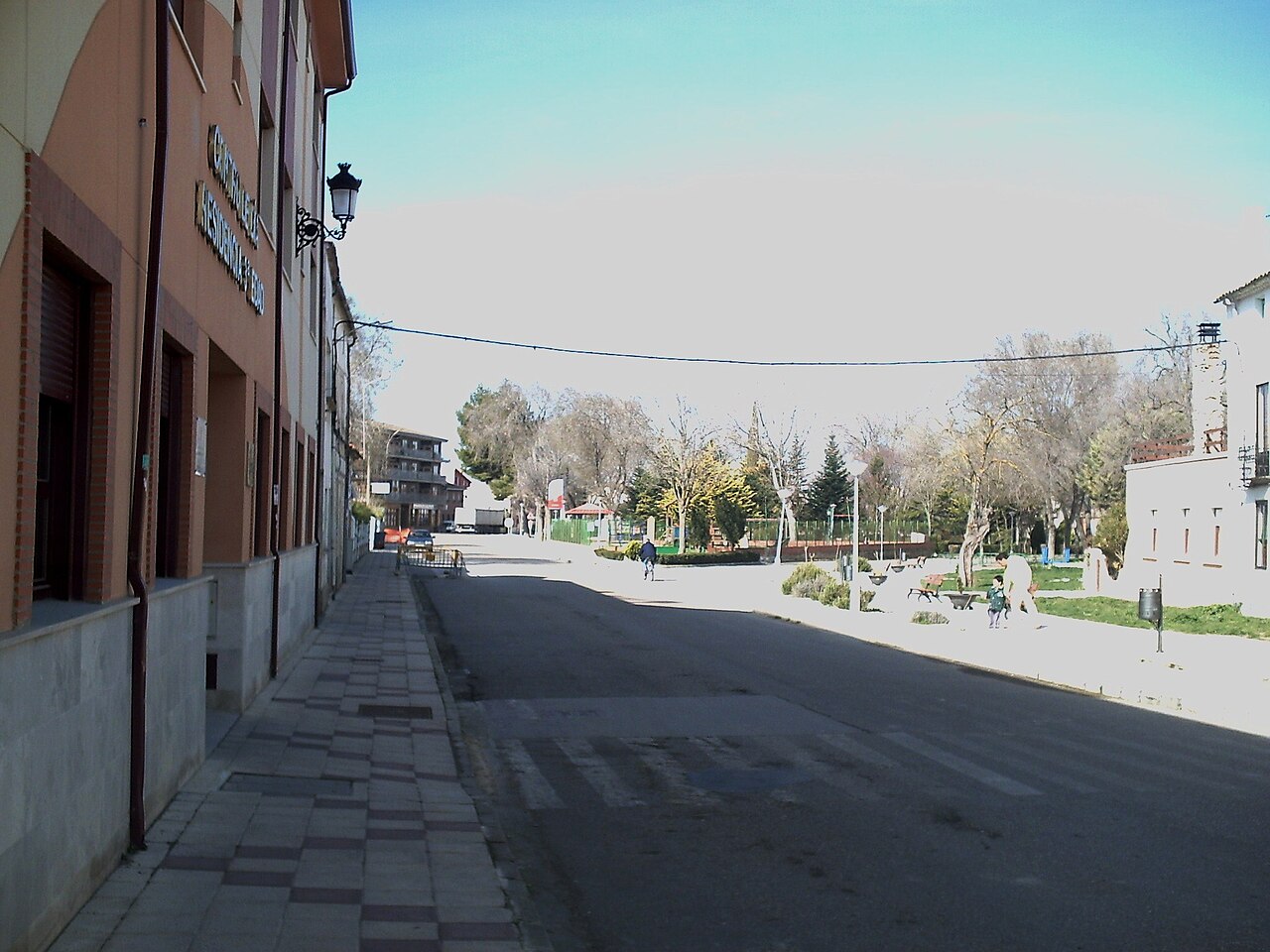
Villodrigo is a very small village, with barely a hundred residents on the official register. It sits on higher ground within El Cerrato, surrounded by open fields where the horizon always seems just a little further away than expected. There are no museums here, no busy streets. What you find instead is rural life in its most straightforward form, still shaped by the rhythm of sowing and harvest.
A Village Best Understood on Foot
The first impression is simple. Stone houses, large wooden gates, and the occasional courtyard that hints at how homes used to be organised. Nothing is designed to stand out. Everything feels built with a clear purpose: to endure winter, withstand the summer heat, and keep working year after year.
At the centre of the village stands the church of San Esteban. It is a sober building, very much in keeping with others across the area. It usually opens for specific celebrations or events, so on an ordinary day it may well be closed.
A short walk towards the edges of the village reveals another characteristic feature: traditional wine cellars dug into small hillsides. These are common across El Cerrato, and Villodrigo is no exception. Some are no longer in use, but they remain in place, partially hidden by the terrain, a reminder of a time when wine was part of everyday life in many households.
Walking here is less about ticking off sights and more about observing how things fit together. The layout of the houses, the materials, the way the village meets the surrounding land, all of it reflects a practical way of living shaped by the environment.
The Landscape That Defines It
What truly defines Villodrigo lies just beyond its streets. Leave the built-up area and you are immediately on agricultural tracks that cut across cereal fields and the occasional scattered vineyard. There are no marked routes or information boards. These are working paths that have always been there, used for farming rather than for visitors.
The landscape of El Cerrato has an interesting quality. At first glance it can seem plain, but it changes noticeably with the light. In spring, green dominates the view. By summer, the fields turn golden, creating a strong contrast with the sky. Towards evening, that dry yellow tone fills everything.
This is the kind of place where walking or cycling does not require much planning. You follow a track and keep going. The experience is less about reaching a specific point and more about moving through the landscape itself.
There is also a certain openness that shapes how the area feels. With few visual barriers, distances seem to stretch. The land does not overwhelm with variety, but it holds your attention in quieter ways, through light, colour and space.
Eating in and Around the Village
Within Villodrigo itself, options for eating are limited, which is typical for a village of this size. Many people who pass through end up eating in nearby towns or make a brief stop as part of a wider route through the region.
In this part of Castilla, the food is closely tied to the countryside. You can expect dishes based on roasted meats, especially lamb, along with legumes and local wine. It is not modern or experimental cuisine, but it is filling and closely aligned with the landscape you have just crossed.
Meals here tend to reflect the same straightforward approach seen in the village itself. There is no attempt to reinvent tradition, just to maintain it.
A Short Stop Along the Way
Villodrigo is not a place to plan a full day around. It works better as a quiet stop within a broader journey through El Cerrato, a region where villages are separated by long stretches of farmland.
You arrive, walk through the streets, take a look at the wine cellars on the outskirts, and follow one of the tracks heading out towards the plateau. Within a couple of hours, you can form a clear sense of the place.
That brevity is part of its character. The village does not demand much time, but it offers a specific kind of pause, one that contrasts with more structured or crowded destinations.
When the Village Comes Alive
During the summer, especially in August, the atmosphere shifts slightly. This is when residents who live elsewhere return, and the village celebrations take place. These include religious events and gatherings in the streets, bringing more activity than usual.
In a place this small, the change is immediately noticeable. More cars appear, more voices fill the air, and the quiet rhythm of daily life gives way, for a while, to something more communal.
It also reveals another side of Villodrigo. Even with a small permanent population, the connection many people have to the village remains strong. These seasonal returns show that the village still plays an important role beyond its day-to-day quietness.
In the end, Villodrigo is not trying to impress. You visit, walk slowly, and spend a while looking out over the landscape of El Cerrato. And somehow, that is enough.