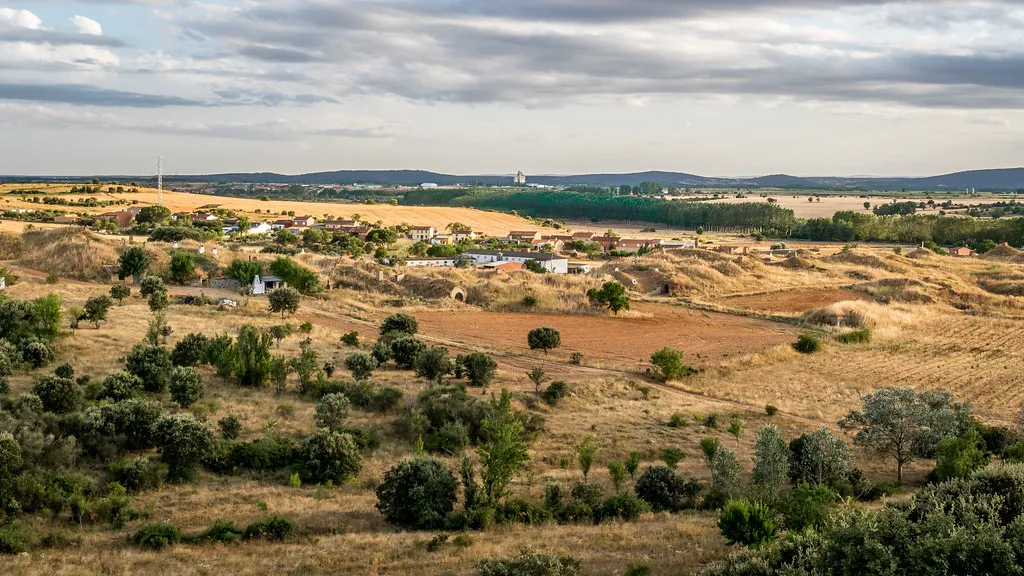
Antigua (La) - Flickr
Juanje Orío · Flickr 5
Castilla y León · Cradle of Kingdoms

Antigua (La)

The first thing that strikes you about La Antigua is the wind. It arrives across the plateau uninterrupted, carrying the smell of dry earth and rip...

324 inhabitants · INE 2025
754m Altitude

Why Visit

Church of Santa María Cycling tourism

Best Time to Visit

summer

Nativity of Our Lady (September) septiembre

Things to See & Do
in Antigua (La)

Heritage

  • Church of Santa María
  • Hermitage of the Christ

Activities

  • Cycling tourism
  • steppe birdwatching

Festivals
& & Traditions

Fecha septiembre

Natividad de Nuestra Señora (septiembre)

Las fiestas locales son el momento perfecto para vivir la autenticidad de Antigua (La).

Full Article
about Antigua (La)

A farming municipality in the Páramo Leonés, growing corn and sugar beet; known for its traditional adobe architecture.

Ocultar artículo Leer artículo completo

A village that isn’t on the way to anywhere

The first thing that strikes you about La Antigua is the wind. It arrives across the plateau uninterrupted, carrying the smell of dry earth and ripening wheat, and it makes the temperature feel five degrees cooler than the car thermometer suggested. At 750 metres above sea level, the village sits just high enough for the air to thin and the night sky to sharpen, yet low enough that snow rarely settles for long. Drivers shoot past on the A-231, eyes fixed on León or Burgos, unaware that a turn-off leads here in under two minutes. Most sat-navs still confuse the place with the Canary Island of the same name; locals joke that the mistake keeps the crowds away.

What you find is not a chocolate-box hamlet but a working grain centre: concrete silos beside stone houses, a single bar with its metal shutter half-open, and tractors parked wherever they fit. The population hovers around 300, though numbers swell in August when descendants return for the fiestas and the old schoolhouse briefly reopens as a disco. Out of season, the silence is so complete that the clang of the church bell at 13:00 can be heard a kilometre out on the wheat tracks.

Stone, adobe and the smell of rain on dust

The parish church of San Juan Bautista looks more like a fortified barn than a place of worship. Thick adobe walls, rounded by centuries of repairs, support a Romanesque arch that has never seen a guidebook. Inside, the only English is a laminated A4 sheet someone laminated in 2009: “Please close door to keep out pigeons.” The altarpiece is nineteenth-century, painted pine rather than gilt, and the paint is flaking in exactly the way art-restorers warn you about. Yet the building fits its landscape the way a hedgehog fits its skin—practical, low-slung, designed for winters that start in October and linger till May.

Walk twenty paces beyond the porch and you are among houses that still have wooden stable doors. Many are empty; inheritance laws split properties between siblings until nobody can afford to repair the roof, and the result is a patchwork of immaculate cottages beside others with tree saplings growing through the floorboards. Photographers tend to linger on the inhabited side of the street, but the derelict half tells the truer story of rural Spain’s last fifty years.

A circular that doesn’t need way-markers

You don’t come to La Antigua for signed trails. Instead, pick any farm track that radiates from the grain store and walk for an hour; the horizon is so wide you cannot get lost. In April the wheat is ankle-high and tinged with lime green; by late June it turns bronze and rustles like dry newspaper. Kestrels hover above the power lines, and if you sit on the concrete drainage channel the village disappears entirely—no roofs, no barking dogs, only sky and cereal.

Cyclists use the same grid of tracks to stitch together a flat 25-kilometre loop south to Reliegos and back, but walkers have the advantage of silence. The only shade is provided by poplars planted along irrigation ditches, so start early. In July the thermometer hits 34 °C by 11:00, and the wind can feel like someone aiming a hair-dryer at your face. October is kinder: 22 °C, stubble fields glowing pink at dusk, and the heady smell of grape must drifting over from a cooperative press in neighbouring Mansilla.

What passes for lunch

There is no shop. The bakery vanished in 1998, and the last butcher retired when his son took a job in a León call centre. If you arrive without supplies, the single bar can knock together a bocadillo of tinned tuna, tomato and industrial cheese for €4, served on a plank that doubles as a plate. The coffee is good, though, and the owner will refill your water bottle from the reverse-osmosis cooler if you ask—much safer than the public fountain whose pipes date to Franco.

Pilgrims staying at the private albergue get a three-course set meal at 19:00 sharp: garlic soup thick enough to stand a spoon in, followed by huevos rotos (essentially posh egg and chips) and a yoghurt pot. Vegetarians are tolerated if they announce themselves before 16:00; otherwise the ham is picked out rather than omitted. The house wine comes from Valdeorras and tastes better after the second glass, especially when the wind rattles the patio plastic.

When the village remembers it’s alive

Fiestas begin on the last weekend of August. A sound system arrives on the back of a flat-bed lorry, and suddenly every eighth house has fairy lights and a barbecue smoking on the pavement. The programme is printed on pink paper and taped to the church door: Saturday evening mass followed by a foam party in the playground, Sunday morning procession with a brass band imported from Sahagún, and a paella for 200 served at 15:00 under awnings borrowed from the local farmers’ co-op. Visitors are welcome to join the queue; bring your own plate and pay €6 into the plastic bucket. English is understood if you speak slowly and smile first.

Outside fiesta week, the calendar is governed by crops. On 13 December, St Lucy’s Day, elderly women still bring bags of wheat to be blessed, a tradition that predates the combine harvester and makes the priest sigh because the grains end up wedged in the altar carpet. In late January the fog can be so thick that the church tower disappears; locals call it la borrasca and advise driving only if you know where the ditches are.

Beds, buses and bad phone signal

Accommodation is either the albergue (18 bunks, €12, washing machine €3) or a casa rural with three doubles at €55 a night. Both fill up during Holy Week and again in early May when a nearby monastery hosts a choral festival. Booking is by WhatsApp; if the message won’t send, walk 200 metres up the road until you catch a signal—Vodafone users may need to stand on the picnic table.

Buses between León and Burgos will stop on request at the junction with the A-231, two kilometres away. Wave early; drivers don’t brake for hesitators. From there it is a flat trudge along a farm track, fine with a backpack but miserable in the rain because the surface turns to paste. A taxi from Sahagún costs €18 if you can persuade the company to make the trip; after 22:00 the price jumps to €30 and the driver will complain about potholes.

Worth the detour?

La Antigua will never feature on a postcard rack. It offers no souvenir shops, no Michelin-listed restaurant, no selfie-ready castle. What it does give, provided you arrive with water and realistic expectations, is a calibration point for the rest of your journey through Castilla y León. After the art-saturated cathedrals of León and the wine-tasting circuits of Ribera del Duero, an hour spent watching cloud shadows slide across the meseta feels almost subversive. Come for the wind, the wheat and the sound of a single bell marking time nobody rushes. Leave before you need a cashpoint—because the nearest one is eight kilometres away, and the road is already fading into the fields.

Key Facts

Region
Castilla y León
District
El Páramo
INE Code
24005
Coast
No
Mountain
No
Season
summer

Livability & Services

Key data for living or remote work

2024
Connectivity5G available
HealthcareHospital 19 km away
Housing~5€/m² rent · Affordable
CoastBeach 16 km away
January Climate4.4°C avg
Sources: INE, CNMC, Ministry of Health, AEMET

Planning Your Visit?

Discover more villages in the El Páramo.

View full region →

More villages in El Páramo

Traveler Reviews