Full Article
about Poza de la Sal
Birthplace of Félix Rodríguez de la Fuente; known for its Roman saltworks and castle.
Ocultar artículo Leer artículo completo
The first thing you notice is the white crust glittering between terracotta stones. It could be frost, except the thermometer reads 28 °C in the shade of the castle wall. Those crystals are salt, forced up from a Jurassic seabed 800 m beneath your boots, and they have paid for this hamlet since before the Romans arrived. Poza de la Sal, population 280, still trades on the brine that bubbles to the surface at 32 °C – the same temperature, locals enjoy pointing out, as a proper British bath.
A Hill, a Castle and a Thousand Salt Pans
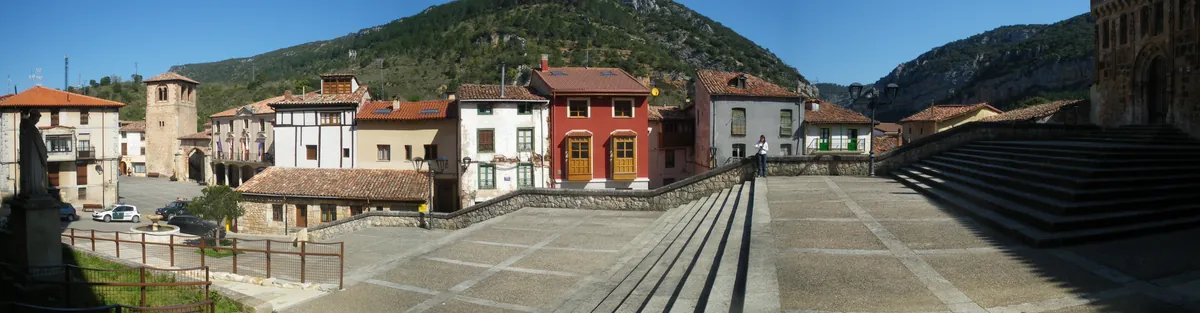
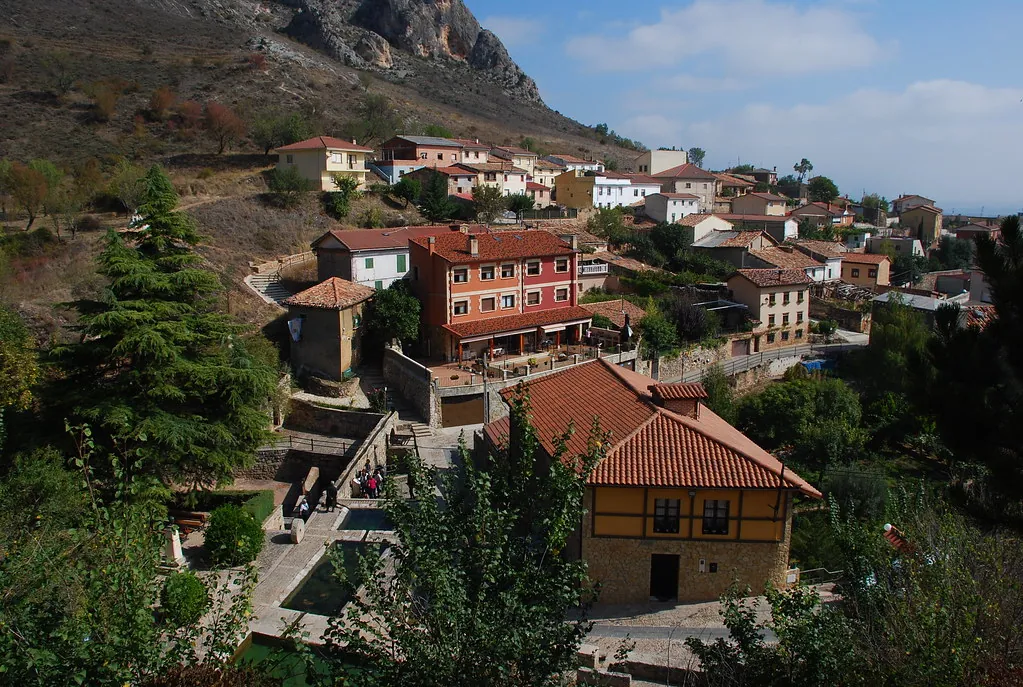
The village climbs a limestone ridge halfway between Burgos and the Rioja wine country. Houses are built from the ridge itself, their ochre walls mortared with the same iron-rich mud that stains the River Arlanza a rusty red after heavy rain. At the top, the Castillo de los Rojas keeps watch through empty arrow slits. The climb takes ten minutes if you are fit, twenty if you stop to admire how the stonework changes colour at sunset from biscuit to burnt umber. Trainers are advisable: medieval builders cared little for even treads, and the final ramp is polished smooth by centuries of wool-traders’ boots.
Below the castle the salinas fan out like rice terraces designed by M. C. Escher. Wooden walkways, renewed each spring, thread between shallow pools where salt crystals form overnight when the humidity drops. The scene is photogenic in the extreme, yet the air smells more of damp earth than seaside. This is inland evaporation, not coastal dredging, and the process is unchanged since a 10th-century charter granted the monastery of San Pedro de Cardeña one-third of the profits “in any year the sun shines”.
What the Museum Doesn’t Tell You
The Centro de Interpretación de las Salinas occupies a former salt warehouse on the edge of the pans. Inside, a short film explains how tectonic pressure squeezed the buried salt sheet upwards, creating a diapir that still rises a millimetre a year. Exhibits include a replica Roman caliculum – a ceramic funnel used to drip-brine pork – and a 1920s photograph of women carrying 40 kg baskets on their heads for 30 centimos a day. What the captions skip is the modern economics: the cooperative now produces barely 30 tonnes a year, most of it sold as souvenir flakes in 100 g tins. The real money comes from school trips and the €4 entry fee, not from seasoning your roast potatoes.
Guided tours run at 11:00 and 16:00 daily except Mondays, but groups need a minimum of six. Turn up at quarter past and the caretaker may switch on the video for you anyway, provided you buy a packet of flor de sal on the way out. The walkway beyond the gate is free and always open; early morning is best, before the sun bleaches the pools white and the night shift of herons departs.
Lunch at One Bar, Coffee at the Other
Tourism here is a two-horse race. Casa Martín, on the main square, serves a three-course menú del día for €14 that would warrant a £25 price tag in the Cotswolds: roast lechazo (milk-fed lamb) with proper chips, followed by arroz con leche thick enough to stand a spoon in. Wine from the Arlanza valley arrives in a plain glass bottle and tastes of sour cherries; it is light enough for lunchtime yet still 13%. Payment is cash only – the proprietor keeps a card machine in a drawer but claims “the signal dies when the wind blows from the Moncayo”. Across the street, Bar Rojas offers coffee strong enough to etch the cup and a slice of tarta de queso made with local queso de Burgos. Service stops dead at 15:00 sharp; if the door is bolted, the owner is probably upstairs watching the lunchtime news.
Felix’s Ghost and the Wolves He Never Shot
Halfway down Calle de los Hornos, a blue-and-white tile marks the birthplace of Félix Rodríguez de la Fuente, the Spanish David Attenborough who taught a generation to root for the wolf rather than the shepherd. The house is now a modest museum stuffed with field notebooks, a 1970s Sony reel-to-reel, and the stuffed peregrine that introduced eight million viewers to the word bioacústica. Britons of a certain age may remember BBC2 running his series El Hombre y la Tierra with subtitles in 1982; locals remember him borrowing the family Seat 600 to drive to the salt pans and record flamingos that stopped over for one week in April. Entry costs €3, or nothing if you can recite the scientific name of the Iberian lynx – a trick the caretaker’s grandson finds hilarious.
Walking Off the Salt
A way-marked path leaves the village past the abandoned era (threshing floor) and climbs 250 m to the castle’s rear gate. The loop takes forty minutes and gives views north across wheat fields that fade into the oak scrub of the Obarenes. Buzzards mew overhead; below, the salt terraces look like a badly iced cake. For a longer hike, the GR-88 long-distance trail passes through Poza on its 180 km circuit of the Arlanza valley. Eastwards, the route drops to the river then follows an old drove road to Frías, 18 km away, where a medieval bridge and a parador await. Carry water: there is no café between villages and summer temperatures touch 35 °C in the shadeless stretches.
When to Come, When to Stay Away
Spring brings green wheat and nesting storks; the pools glitter under April sun and the castle smells of wild thyme. Autumn is quieter, the cereal stubble gold against purple saffron crocus, but be aware that the fiestas of San Cosme y San Damián (26 September) fill the single guesthouse and turn the square into a sound system testing zone. Winter can be magical – salt crusts sparkle like frost at –5 °C – but the mountain road from Briviesca is occasionally closed after snow. August is simply hot, and the brine evaporates so fast that the pans look like builder’s rubble.
There is no hotel; the lone casa rural has four rooms and books up months ahead with biology teachers on pilgrimage. The nearest beds are in Briviesca, 18 km west, where the Hotel San Ginés has doubles for €65 and a garage for bicycles. Petrol stations are equally scarce: fill up on the A-1 before turning off, or risk a 40 km detour to Miranda de Ebro.
Taking the Flavour Home
The interpretation centre sells 100 g tins of flor de sal for €4.50, stamped with the castle silhouette. The flakes are damp and pinkish, tasting faintly of iron – delicious on tomatoes, overpowering on eggs. Larger 500 g sacks cost €12 but weigh down carry-on luggage; declare them if you fly from Bilbao, as Spanish security sometimes mistakes white crystals for other substances. A smarter souvenir is the local morcilla de Burgos spiced with Poza salt; it travels well if refrigerated and passes UK customs provided it is sealed.
The Bottom Line
Poza de la Sal is not pretty in the chocolate-box sense. Stone walls bulge, streets smell of wood smoke and sheep, and the castle will never be restored while €4 tickets fund roof tiles. Yet the place lingers: the sight of salt forming out of bare earth feels like a minor miracle, and the silence after the last school bus leaves is total, broken only by swifts racing the thermals. Come for the geology, stay for the lamb, and leave before the wind changes direction – otherwise you may find yourself explaining to a bemused barman exactly how you planned to pay for that second bottle of sour-cherry wine.