Full Article
about Villamejil
Heart of the La Cepeda region; known for its riverside forests and tourist campsites.
Ocultar artículo Leer artículo completo
The tractor arrives at 7:43 am. Not 7:30, not 8:00, but 7:43 precisely, rattling through Villamejil's main street with the same diesel soundtrack that has woken this village for forty years. At 910 metres above sea level, where the Spanish meseta begins its climb towards the Montes de León, time moves to agricultural rhythms rather than tourist schedules.
Stone Walls and Wooden Balconies
Villamejil's architecture tells the story of a community that never quite abandoned its rural roots. The stone houses, their walls thick enough to keep out winter winds that sweep across the plateau, still feature the traditional wooden balconies that characterise this corner of Castilla y León. Walk down Calle Real and you'll spot the difference: properties on the left have been renovated with double-glazed windows and fresh render, while those on the right retain their original wooden doorways, some dating back to the early 1900s.
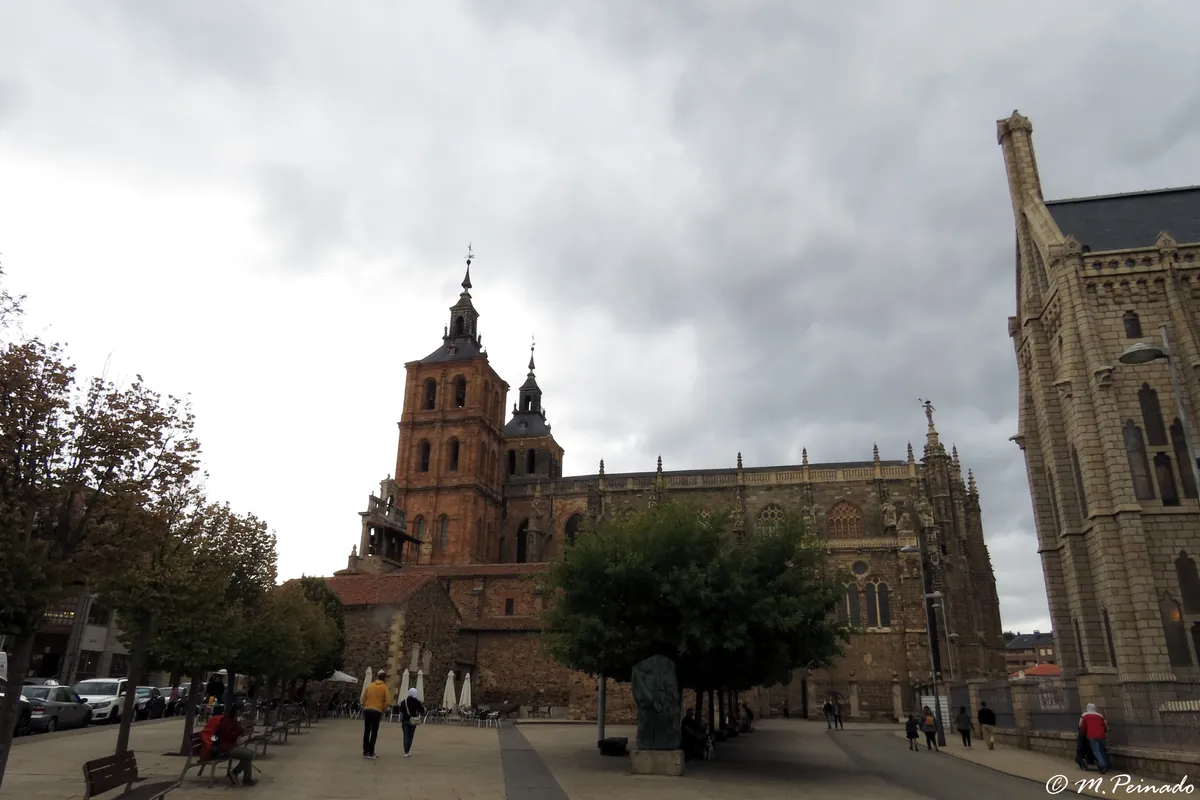
The parish church dominates the modest skyline, though calling it a cathedral would be generous. Its stone walls show layers of modification—Romanesque foundations, baroque additions, and a bell tower that leans slightly westward. Inside, the smell of beeswax and centuries of candle smoke creates an atmosphere no heritage consultant could manufacture. The priest still rings the bells manually at noon, a sound that carries across the surrounding wheat fields for miles.
What's remarkable is what hasn't been converted. The old stables remain stables, not boutique accommodation. The communal wash house, built in 1952, still functions though most houses now have modern plumbing. Even the village's single bar, El Encuentro, occupies what was always a public space—first as a grocer's, then as a wine shop, now as the social hub where farmers discuss rainfall statistics over cañas of beer.
The Agricultural Calendar
Spring transforms Villamejil into a patchwork of emerald green wheat and bright yellow rapeseed. This is when photographers appear, though they're usually Spanish weekenders rather than international visitors. They come for the light—crystalline morning air that makes the distant mountains appear closer than their 30-kilometre distance suggests. Temperatures hover around 15°C in April, perfect for walking the network of farm tracks that radiate from the village like spokes.
Summer brings a different character entirely. The landscape turns golden-brown by July, and the mercury can hit 32°C despite the altitude. This is when the village population swells from 650 to nearly 1,000 as families return for the August fiestas. The patron saint celebrations aren't designed for tourists—they're homecomings. Streets fill with children who normally live in León or Madrid, returning to grandparents who never left. The plaza hosts impromptu football matches between cousins who haven't seen each other since Christmas.
Autumn might be Villamejil's finest season. September temperatures drop to comfortable walking weather, and the surrounding oak woodlands show subtle colour changes—not the dramatic maples of New England, but muted browns and russets that suit the stone architecture. This is mushroom season, though foraging requires local knowledge and strict adherence to regional regulations. The town hall posts daily updates on which species are currently fruiting, and locals guard their favourite spots with the same protectiveness British gardeners show towards their asparagus beds.
Winter arrives early at this altitude. Snow isn't guaranteed but neither is it remarkable—perhaps two or three substantial falls between December and March. The village becomes very quiet. Some pensioners head to family homes in larger towns, leaving a core population of perhaps 400 souls. Days are short, and the agricultural machinery falls silent. This is when Villamejil most closely resembles its medieval past, though electricity and central heating make the comparison less romantic than it sounds.
Walking Without Waymarks
The footpaths around Villamejil follow ancient routes between fields, not waymarked tourist trails. This frustrates some visitors and delights others. A decent Ordnance Survey-style map shows the main tracks, but many rights of way exist only in local memory. The standard circuit—south past the abandoned mill, west along the Arroyo de Valdecasa, then north back to the village—takes about ninety minutes. Longer routes connect to neighbouring villages: Cabañas Raras lies 7 kilometres east, while Fabero sits 12 kilometres northwest through increasingly mountainous terrain.
What you won't find are interpretive panels, snack bars, or designated viewpoints. Instead, there are stone walls built without mortar, irrigation channels that still function after 200 years, and the occasional concrete pillbox from the Civil War, slowly being reclaimed by ivy and ignorance. The landscape rewards attention to detail: notice how farmers still stack their hay in traditional hayricks, how the oak trees grow in lines where medieval field boundaries once stood, how the soil colour changes from red clay to sandy loam as you gain elevation.
Eating and Sleeping
Let's be honest about the limitations. Villamejil has one bar, one small grocery shop, and no restaurants. El Encuentro serves basic tapas—tortilla española, local cheese, perhaps some embutidos if the supplier from Ponferrada has made his weekly delivery. A coffee costs €1.20, a beer €1.50. The proprietor, Jesús, speaks no English but communicates effectively through gestures and patience.
For proper meals, you'll need to drive. Cabañas Raras, 15 minutes east, has two restaurants serving cocido leonés, the regional chickpea stew that could fuel a farmer through a twelve-hour working day. Expect to pay €12-15 for a three-course menú del día. Fabero, 20 minutes northwest, offers more choice including a decent pizzeria that acknowledges vegetarianism exists, unlike many traditional establishments.
Accommodation options within the village are precisely zero. The nearest hotels cluster around Ponferrada, 35 minutes by car. Casa del Cura in Cacabelos offers eight rooms in a converted priest's house from €65 per night, while the Hotel Temple in Ponferrada provides modern comforts from €80. Self-catering apartments exist in neighbouring villages, though booking requires Spanish language skills—English isn't widely spoken outside the main tourist centres.
The Reality Check
Villamejil won't suit everyone. Public transport is virtually non-existent—two buses daily to Ponferrada, none on Sundays. The village lacks the photogenic perfection of Spain's more celebrated destinations. Stone buildings show cracks, paint peels, and satellite dishes mar historic façades. Young people continue leaving for city opportunities, and the average age creeps upward each year.
Yet for travellers seeking authentic rural Spain, these imperfections constitute the appeal. This is a working village where tourism supplements rather than defines the economy. Where strangers receive nods of acknowledgment rather than sales pitches. Where the loudest evening noise comes from swifts nesting in church eaves, not karaoke bars.
Come with realistic expectations. Bring walking boots and a Spanish phrasebook. Accept that lunch finishes at 3:30 pm sharp, that everything closes between 2:00 and 5:00 pm, that the twenty-first century arrived here selectively rather than completely. Villamejil offers something increasingly rare—a glimpse of Spanish rural life that evolved naturally rather than being preserved for display. Just don't expect the tractor to change its schedule for anyone.