Full Article
about Argujillo
A farming municipality in southeastern Zamora, marked by cereal and legume fields; it keeps rural traditions and a parish church that towers over the hamlet.
Hide article Read full article
At first light, when the sun is still low, the pale earth of the tracks throws back an almost white glow. The village appears all at once, with no signs and no gradual lead-in. A small cemetery at a crossroads marks the entrance, and behind it the first houses. This is often how a visit to Argujillo begins: quiet, open countryside, and the sense that time moves a little more slowly here.
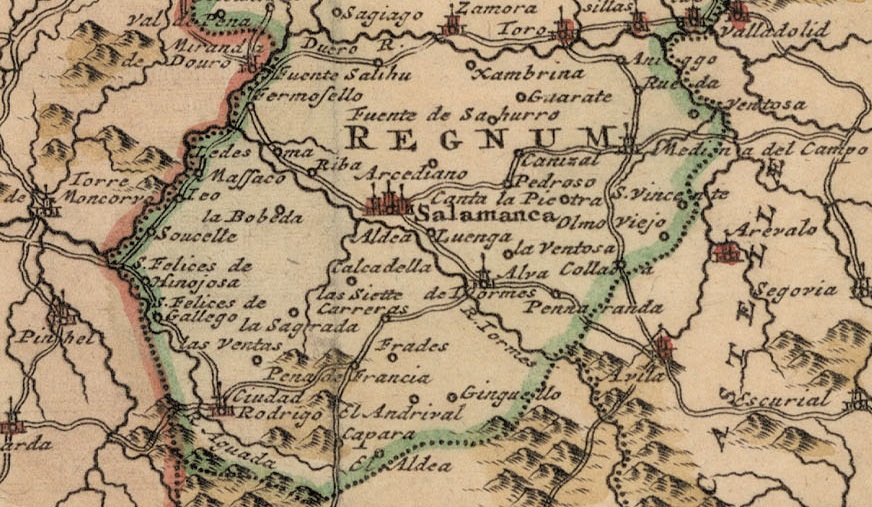
Argujillo has around 215 inhabitants and sits in the comarca of La Guareña, in the south-east of the province of Zamora. At about 769 metres above sea level, the land is flat and wide. Cereal fields surround the village on every side. In spring the green is even and uninterrupted. By summer everything turns gold, and the wind moves through the ears of grain like a slow wave.
Arriving in Argujillo
The approach is along local roads that cut through farmland and the occasional scattered farm building. It is a place to reach without hurry. There are no large signs and very little traffic, though tractors and agricultural machinery are common, especially during busy periods in the fields.
Once inside, the streets are simple. Some are still earth or compacted gravel. The sound underfoot shifts as you walk, first a dry crunch, then a brief echo between low façades.
Santa Marina at the Centre
The tower of the church of Santa Marina is visible from almost anywhere in the village. It is not especially tall, yet it stands out above the rooftops. Built in pale stone, with narrow windows and a bell tower that marks the hours with a sharp, clear sound, it carries across the whole settlement.
The main doorway is solid and heavy. Inside, the space is restrained. Wooden ceilings, thick walls that keep the interior cool even on the hardest summer days. Around the church, life tends to gather in the late afternoon. A few residents sit in the shade as the sun drops and a light breeze begins to move through the square.
Streets, Gateways and Working Spaces
Walking around Argujillo does not take long. In half an hour it is possible to circle most of the built-up area, though it is worth taking it slowly.
Many houses still have large wooden gates in dark timber. Some show years of use, the grain raised, the metal fittings heavy and worn. On several façades there are stone coats of arms, discreet and partly eroded.
Between the homes there are still corrales and haylofts. These are not decorative remnants. Some remain in use. From time to time there is the bleating of sheep or the blunt clang of a metal door closing somewhere nearby.
Tracks Across Open Fields
Beyond the last houses, wide agricultural tracks begin. Long straight lines that run between plots of cereal. There is no signposting for walking, but it is easy to find your bearings because the land is open and the village remains in sight.
In dry conditions the ground is easy to walk. After rain, the clay sticks to shoes and each step becomes heavier. Footwear that can cope with mud is advisable if the weather has been unsettled.
Birdlife is often visible over the fields. Steppe birds move across the open ground. Storks glide overhead, and now and then a harrier flies low, watching for movement between the furrows.
The Pace of Rural Life
Life here remains closely tied to agriculture. On the edges of the village there are still family vegetable plots where onions, beans or tomatoes are grown in season. In autumn, some families head out to look for mushrooms in nearby areas if the year has been wet enough.
Winter usually brings frequent frosts. Summer is dry and bright. The best light comes at sunrise and again late in the day, when shadows stretch across the lines of freshly worked soil.
The festivities of Santa Marina take place in summer and bring together residents who live elsewhere for much of the year. For a few days the village changes: more voices in the square, music at night, a noticeable movement through the streets.
Argujillo does not revolve around visitors, and that is part of how it works. It is a small, agricultural place where most things happen on a domestic scale. Walking for a while, then sitting and listening to the wind over the fields, is enough to understand its rhythm.