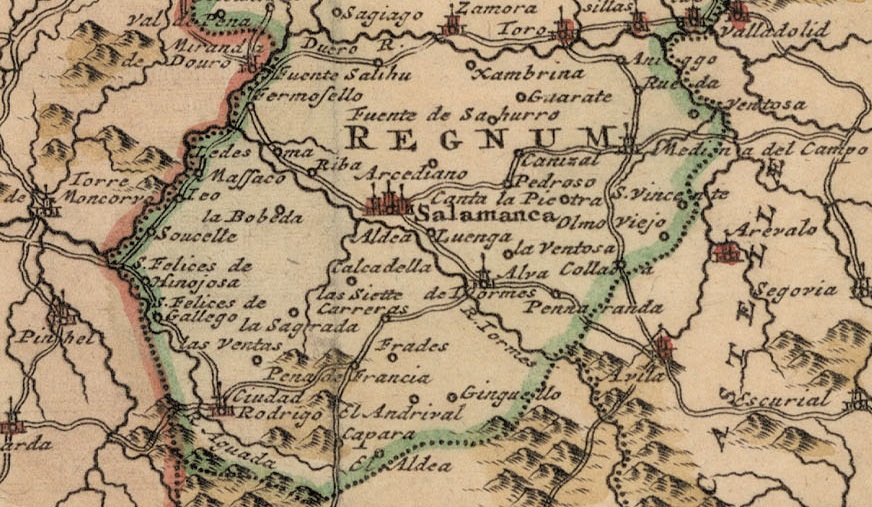
Spain & Portugal 1864 Keith Johnston detalle reino de leon.jpg
Keith Johnston · Public domain
Castilla y León · Cradle of Kingdoms

Fuentelapeña

The church bell strikes noon, yet nobody quickens their pace. At 737 metres above sea level, Fuentelapena operates on mountain time—slower, deliber...

589 inhabitants · INE 2025
737m Altitude

Why Visit

Church of Santa María de los Caballeros Wine tourism

Best Time to Visit

summer

San Roque (August) agosto

Things to See & Do
in Fuentelapeña

Heritage

  • Church of Santa María de los Caballeros
  • Christ Chapel

Activities

  • Wine tourism
  • Cultural visit

Festivals
& & Traditions

Fecha agosto

San Roque (agosto)

Las fiestas locales son el momento perfecto para vivir la autenticidad de Fuentelapeña.

Full Article
about Fuentelapeña

Town of La Guareña with a striking church declared a BIC; known for its wines and local sandstone architecture.

Ocultar artículo Leer artículo completo

The church bell strikes noon, yet nobody quickens their pace. At 737 metres above sea level, Fuentelapena operates on mountain time—slower, deliberate, governed by cereal harvests rather than smartphone schedules. This Castilian village of five hundred souls sits planted in La Guareña's wheat belt, where the plateau's vastness makes even the church tower seem modest by comparison.

Stone, Sun and Silence

Approach from Zamora and the landscape flattens into an ocean of grain. Then, without ceremony, Fuentelapena materialises: stone houses the colour of dry earth, their wooden doors painted government-issue green, a few limewashed facades catching the light like mirrors. The architecture speaks of function rather than ornament. Adobe walls two feet thick keep interiors cool during summer's furnace and retain heat when January temperatures drop below freezing. Many dwellings still feature the original corral entrances—wide enough for livestock, now repurposed for hatchbacks and tractors.

The parish church anchors the single plaza, its masonry telling a story of continuous adaptation. Romanesque bones support later Gothic additions; Baroque flourishes appear where funds permitted. Look up to spot the carved corbels—some medieval craftsman couldn't resist adding grotesque faces amid the geometric patterns. Inside, the air carries incense and centuries of candle smoke, though services rarely fill the nave these days. The faithful prefer the 7pm Sunday mass, when work in the fields finishes and shadows lengthen across the square.

Walking the Agricultural Calendar

Spring transforms the surrounding plains into an emerald carpet that ripples like water in the breeze. By late June, combine harvesters replace colour with stubble, exposing the underlying ochre earth. Autumn brings ploughing, winter brings rain—though never enough—and the cycle begins again. This rhythm dominates village conversation more thoroughly than any national politics.

Several footpaths radiate from the eastern edge, following drovers' routes established when merino sheep moved between summer and winter pastures. The GR-14 long-distance trail passes within three kilometres, though you'd need Ordnance Survey-level dedication to locate the exact junction. Local farmers use these tracks daily; follow their tyre marks rather than expecting waymarks. A circular walk of eight kilometres leads past an abandoned cortijo where swallows nest in the rafters, returning the same calendar day each year.

Birdwatchers should bring patience along with binoculars. The dehesa oaks support booted eagles and black-shouldered kites, while the open fields attract lesser kestrels hunting grasshoppers disturbed by farm machinery. Dawn offers the best chance—by midday, thermals send raptors spiralling too high for identification.

Eating According to the Thermometer

Fuentelapena's cuisine reflects both altitude and agriculture. Winter demands sustenance: cordero asado cooked in wood-fired ovens until the skin crackles like pork crackling, served with patatas arrugadas that absorb the meat juices. Summer menus lighten slightly—gazpacho made with beefsteak tomatoes from irrigated gardens, accompanied by hard cheese that locals grate over everything. The cheese deserves attention: made from merino sheep milk, aged six months in mountain caves, it develops crystals that crunch between teeth like Parmesan.

The village bar doubles as the social centre. Opening hours shift seasonally—8am-11pm in winter, extending to 2am during fiesta week. Coffee costs €1.20, a caña of lager €1.50. They don't serve food daily; phone ahead if you want cocido on Thursdays. The nearest proper restaurant sits twelve kilometres away in Morales del Vino, where Menu del Dia runs €12 including wine.

Toro denomination wines appear on every table. The local cooperative produces a young red that punches above its €4 supermarket price, though serious oenophiles should visit Bodegas Estancia Piedra fifteen minutes away. Their tastings require advance booking—phone numbers fade on the village noticeboard, so ask in the bar and someone will know someone's cousin who works there.

When Five Hundred Becomes Five Thousand

August transforms Fuentelapena completely. The fiesta patronale brings back emigrants from Madrid and Barcelona, plus their children who've never worked a harvest. Population swells tenfold. Temporary bars appear in garages, DJs play until 4am, the single bakery runs out of bread by 9am. It's either magical or unbearable, depending on your tolerance for amplified folk music and processions that block streets for hours.

The rest of year returns to near-silence. Shops close for siesta—though nobody calls it that anymore—from 2pm until 5pm. The bakery operates Tuesday through Saturday; bread costs 95 cents but you need to request it before 10am or they'll sell out to regular customers. The pharmacy van visits Tuesdays and Fridays, parking by the fountain that gave the village its name. The fountain itself, built 1897, still flows though nobody drinks from it since they connected mains water in 1983.

Getting Here, Staying Put

Public transport requires military planning. One daily bus connects to Zamora at 7am, returning at 6pm. Miss it and a taxi costs €45—if you can find a driver willing to come this far. The nearest train station sits 35 kilometres away in Sanabria, served by regional trains that make British Rail seem punctual. Hiring a car becomes essential rather than optional.

Accommodation options remain limited. One casa rural occupies a renovated grain store—book months ahead for weekends. The owner, Pilar, speaks rapid Castilian and expects guests for breakfast at 9am sharp. Alternative choices cluster in Zamora, forty minutes away along roads where encountering another vehicle feels like social event. During harvest season, expect delays behind tractors hauling grain trailers that occupy the entire lane.

Winter access occasionally fails when snow drifts across the plateau. The village stocks up beforehand—locals remember 2009 when they remained cut off for five days. Summer brings the opposite problem: temperatures touching 40°C make walking unpleasant between 11am and 7pm. Spring and autumn provide the sweet spot, when mornings start crisp and afternoons warm just enough to sit outside the bar without baking.

Fuentelapena offers no postcard moments, no Instagram hotspots. Instead, it provides something increasingly rare: a place where the modern world hasn't quite arrived, where neighbours still borrow sugar, where the church bell measures days and seasons with equal authority. Come prepared for that reality—or don't come at all.

Key Facts

Region
Castilla y León
District
La Guareña
INE Code
49080
Coast
No
Mountain
No
Season
summer

Livability & Services

Key data for living or remote work

2024
ConnectivityFiber + 5G
Housing~5€/m² rent · Affordable
Sources: INE, CNMC, Ministry of Health, AEMET

Planning Your Visit?

Discover more villages in the La Guareña.

View full region →

More villages in La Guareña

Traveler Reviews