Full Article
about Bercial de Zapardiel
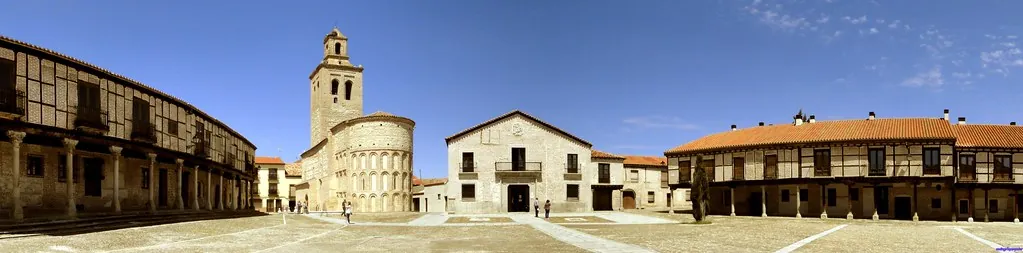
A farming municipality watered by the Zapardiel River; its church stands out with the typical regional Mudéjar tower.
Hide article Read full article
Where the Landscape Sets the Pace
Some villages give the impression that very little happens there, and that is precisely the point. Bercial de Zapardiel, in the comarca of La Moraña and about 16 kilometres from Arévalo, works like that. It is small, with just over 160 residents today, surrounded on all sides by cereal fields where the landscape matters more than any single monument.
Life here follows the rhythm of the countryside. In spring the fields turn green. By summer the wheat stands tall and golden, and the wind moves through the ears like a slow, rolling sea. This is not a destination for headline attractions. It is somewhere to walk, look around and quickly grasp how the territory functions.
La Moraña, a flat agricultural area in the province of Ávila, is defined by its wide horizons and working farmland. Bercial de Zapardiel fits squarely within that setting. The sense of space is constant, and the seasons are visible in the crops rather than on a calendar pinned to a wall.
A Walk Through the Village
The urban centre is straightforward, with straight streets and low houses built from adobe and brick. Large wooden gates open into plots with yards at the back. Some properties still have underground bodegas, cellars that recall a time when daily life revolved around wine and cereal production.
The parish church of San Miguel marks the centre of the village. Its base is thought to date from around the 16th century, although it has undergone later alterations. It retains the feel of a rural Castilian church, solid and without excessive ornamentation. Inside, there is a Renaissance-style choir and a stone baptismal font that has been here for more generations than anyone can remember.
This is not a place for ticking off monuments one after another. It suits a slower approach. An adobe façade that has stood the test of time, an old cart resting in a yard, oversized doors designed to admit heavily loaded wagons, these are the details that shape the walk.
There is an unpolished coherence to the village. Materials are simple, the layout practical. Everything points back to agriculture as the organising principle of daily life.
Straight Roads and Open Horizons in La Moraña
What truly defines Bercial de Zapardiel lies beyond its streets. Within a couple of minutes of leaving the village, you are on completely straight agricultural tracks bordered by cereal plots.
This is the typical landscape of La Moraña: open horizon, very little shade, and villages appearing in the distance as small clusters of rooftops. From some of these tracks you can make out nearby places such as Moraleja de las Panaderas or El Arenal. Distances between villages are measured more in minutes by car than in kilometres, a reflection of how close yet self-contained these communities are.
For those who enjoy walking without a strict plan, several paths link Bercial de Zapardiel with neighbouring municipal areas. They are not signposted tourist routes. They are long-established working tracks used by farmers. Even so, they can be followed without difficulty, provided there is a basic sense of direction to avoid straying into the middle of cultivated plots.
The experience is defined by openness. There are few trees and long sightlines in every direction. Silence is part of the setting, broken mainly by wind or the distant sound of agricultural machinery during busier periods of the year.
Birds Over the Cereal Fields
The cereal plains around Bercial de Zapardiel are also home to steppe birds. With some luck, and by setting out early, it is possible to spot great bustards or little bustards in the open fields. There are no guarantees, but this remains one of the areas where such sightings can still happen.
Other species appear frequently: wagtails moving across the ground, partridges darting between crops, or a harrier flying low over the fields. The landscape encourages this kind of wildlife. There are few trees, wide visibility and a quiet that allows birds to move relatively undisturbed.
For visitors unfamiliar with Spain’s interior plains, this birdlife is part of what makes the experience distinctive. The interest lies less in dramatic scenery and more in subtle movement across a vast agricultural canvas.
Food Rooted in the Land
Cooking in this part of Castilla is direct and substantial. Dishes are based on what the land provides and are prepared without unnecessary complication. Legumes such as chickpeas and broad beans feature regularly. Cured embutidos, traditional Spanish sausages, are common, as are roasts of lamb or beef for celebrations and family gatherings.
In many households, the annual matanza, the traditional pig slaughter and preparation of preserved meats, is still carried out as it has been for generations. Recipes circulate within families, sometimes for decades, with small variations that each household defends with quiet conviction.
There is no elaborate culinary scene attached to Bercial de Zapardiel. The emphasis is on continuity and practicality, on food that sustains agricultural work and brings people together around a table.
San Miguel and Village Life
The main festivities revolve around San Miguel at the end of September. There is a procession, popular music and gatherings that tend to last longer than planned. Nothing about it is designed to impress outsiders. It is very much a village celebration, with neighbours out on the streets, long conversations and tables that gradually fill up.
During the summer there is usually a romería, a traditional communal outing often linked to a religious observance, or activities organised by the residents themselves. Games, shared meals and a plaza atmosphere where everyone ends up taking part in one way or another define these days.
In a village of just over 160 people, participation is less a choice and more a natural extension of daily life. Events are modest in scale, yet they reflect the cohesion of a small rural community.
A Small Place Without Pretence
Bercial de Zapardiel does not try to draw attention to itself. It is one of many villages in La Moraña where life remains tied to the fields and the agricultural calendar. Anyone arriving with a long checklist of sights may find it limited.
For those interested in understanding this part of the province of Ávila, the open landscape, small settlements and unhurried pace, it makes sense to stop for a while. Walk the streets, look at the construction of the houses, follow one of the straight tracks out into the fields.
Sometimes that is enough.