Vista aérea de Bernuy-Zapardiel
Instituto Geográfico Nacional · CC-BY 4.0 scne.es
Castilla y León · Cradle of Kingdoms

Bernuy-Zapardiel

The church bell tolls twice. It's three o'clock in Bernuy Zapardiel, and the sound carries across wheat fields that stretch until they blur into th...

79 inhabitants · INE 2025
855m Altitude

Why Visit

Mountain Church of San Martín Flat walking trails

Best Time to Visit

summer

San Martín festivities (November) agosto

Things to See & Do
in Bernuy-Zapardiel

Heritage

  • Church of San Martín
  • Brick architecture

Activities

  • Flat walking trails
  • Crop viewing

Festivals
& & Traditions

Fecha agosto

Fiestas de San Martín (noviembre), Fiestas de verano

Las fiestas locales son el momento perfecto para vivir la autenticidad de Bernuy-Zapardiel.

Full Article
about Bernuy-Zapardiel

Small Moraña village; open fields and rural quiet.

Ocultar artículo Leer artículo completo

The church bell tolls twice. It's three o'clock in Bernuy Zapardiel, and the sound carries across wheat fields that stretch until they blur into the horizon. At 855 metres above sea level, this Castilian village sits high enough that the air carries a different quality—thinner, cleaner, with a dryness that makes even shade feel crisp.

Eighty souls call this home. They live scattered across stone houses with wooden gates that creak exactly as you'd hope, their corrals once sheltering animals now replaced by vegetable patches and the occasional rusty tractor. The population swells slightly during summer months when Madrid families return to their grandparents' houses, but even then, Bernuy Zapardiel remains a place where silence has weight.

The Geography of Nothing Much

La Moraña spreads like a rumpled blanket around the village, its gentle undulations hiding more than they reveal. This isn't dramatic mountain country—no jagged peaks or vertigo-inducing drops. Instead, the land rolls softly, creating a landscape that seems simple until you notice how the wheat catches light differently at each hour, or how the distant wind turbines appear to move across fields like slow-motion dancers.

The altitude matters here. Summer mornings start cool, often misty, before temperatures climb to proper heat. Nights drop dramatically—pack layers even in August. Winter brings proper cold, the sort that British visitors underestimate until they step outside at midnight and find their breath freezing. Snow arrives occasionally, transforming the ochre landscape into something almost monochrome, and when it does, access becomes interesting. The road from Arévalo, fourteen kilometres away, climbs steadily. In bad weather, a front-wheel-drive hire car might struggle.

Spring transforms everything. Green shoots push through earth that looked dead six months earlier, and the fields become alive with birds. Steppe birds, mostly—great bustards that look too heavy to fly, sandgrouse calling from furrows, harriers quartering the fields with military precision. Bring binoculars. Pack patience.

What Passes for Architecture

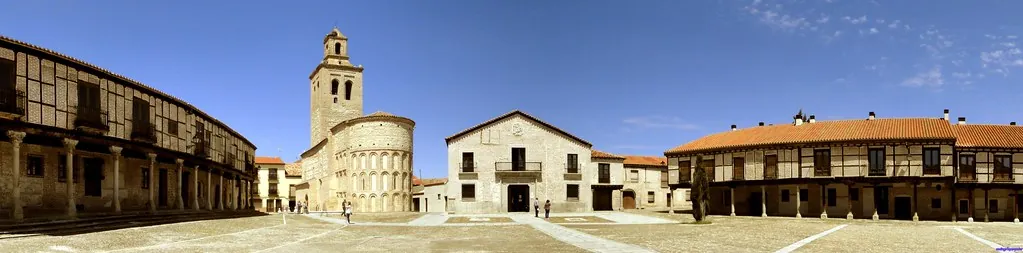
The parish church dominates the tiny plaza, its squat tower more functional than decorative. Built from local stone that matches the surrounding houses, it represents Castilian rural architecture at its most honest—no Gothic flourishes or Baroque excess, just thick walls that have kept worshippers cool in summer and warm in winter for centuries. The door stands open most days, revealing interior shadows and the faint smell of incense and old wood.

Wandering the streets takes twenty minutes if you're thorough. Traditional houses built from mampostería—irregular stones fitted together like puzzles—sit alongside newer constructions that try to respect the old proportions. Many retain their original wooden doors, some carved with dates from the early 1900s. Peek through open gateways and you'll see corrals transformed into tiny gardens, outdoor bread ovens now used for storage, and the occasional ancient wine press converted into a flower bed.

The agricultural buildings tell their own story. Pajaras—stone granaries—dot the village edges, their weathered walls creating perfect backdrops for photographers chasing that golden-hour light. These structures, built to store grain and shelter animals, now mostly house tools and memories. Their terracotta roofs, originally clay tiles, have been patched with corrugated iron where economics trumped aesthetics.

Walking Without Purpose

Bernuy Zapardiel rewards aimless wandering. Paths radiate from the village like spokes, following centuries-old routes that connected neighbouring settlements before roads existed. They're not marked, not advertised, not organised. This frustrates some visitors and delights others. Download an offline map before arriving—mobile signal dies quickly once you leave the village—and trust the farm tracks that head towards distant stone piles or lone holm oaks.

The walk to El Campillo de Arévalo takes ninety minutes across flat terrain. You'll pass through wheat fields, past abandoned farmhouses slowly returning to earth, and alongside stone walls that predate any living memory. Midway, an old threshing floor sits like a stone spaceship landing pad, its circular form once the centre of harvest activity. Now it provides perfect seating for a picnic lunch, assuming you've brought water and food—there are no shops, no bars, no facilities.

Cycling works too, though bring your own bike. The tracks are firm enough for hybrids, though mountain bikes handle the occasional sandy patch better. Early morning rides offer the best light and temperatures, plus the chance to spot wildlife before heat sends everything seeking shade.

The Seasonal Kitchen

Food here happens in houses, not restaurants. The village contains zero dining establishments, zero bars, zero shops. This isn't an oversight—it's simply how things work when eighty people share a postcode. Self-catering becomes essential, which means shopping in Arévalo before arrival. The Saturday market there sells local pulses, lamb from regional farms, and bread that stays fresh for days rather than hours.

Traditional Moraña cooking centres around what the land produces. Chickpeas and beans feature heavily, often slow-cooked with local pork products that would make a British butcher weep with joy. Lamb appears frequently—this is merino country after all—and the cooking methods haven't changed much since someone first thought to put meat in an earthenware dish with garlic and wine. The local wine isn't fancy but costs less than bottled water and complements the food honestly.

If you must eat out, Arévalo offers several options. La Bellota serves proper Castilian portions—order one dish between two unless you've spent the day harvesting wheat. Their cochinillo (suckling pig) arrives with skin so crisp it shatters, revealing meat that needs no knife. Reserve ahead at weekends when Madrilenos descend for rural fixes.

When to Come, When to Stay Away

April and May deliver the region at its most photogenic. Fields glow green, temperatures hover around pleasant, and the village celebrates its patronal fiestas in late May. These aren't tourist events—they're homecomings where families who've scattered to cities return to remember who they are. Visitors are welcome but remain observers, watching traditions that would continue with or without an audience.

September offers harvest time, when combines work late into evening and the air smells of cut wheat. The landscape turns golden, then ochre, then brown. Photographers love this period for the quality of light, though accommodation becomes scarce during the Arévalo mediaeval market in early October.

July and August bring fierce heat. Temperatures regularly exceed 35°C, and the village empties as locals sensibly retreat to cooler places. What looks like abandonment is actually survival strategy—only mad dogs and English tourists wander midday streets. If summer visits are essential, plan early morning activities and siesta through the afternoon heat.

Practicalities Without Pampering

Getting here requires commitment. Madrid's Barajas airport sits 130 kilometres south—two hours driving on good roads, longer if you stop for coffee in Arévalo (you should). Public transport doesn't reach Bernuy Zapardiel; hire cars aren't optional extras, they're necessities. The final approach involves narrow country roads where Spanish drivers assume everyone knows the width of their vehicle to the millimetre. Pull over. Let them pass.

Accommodation means renting village houses through Airbnb or similar platforms. Options rotate as owners decide whether to let their family properties, so book early and confirm close to arrival dates. Expect rustic rather than luxury—thick walls, tiny windows, kitchens that remember the 1970s fondly. One property claims Wi-Fi; take this with industrial quantities of salt.

Bring cash. The village contains no ATMs, no card facilities, no contactless payment systems. Arévalo's banks close for siesta, naturally, so plan accordingly. Pack walking boots, sunscreen, layers for temperature swings, and books—night-time entertainment involves stars, silence, and whatever you've downloaded before arrival.

Bernuy Zapardiel won't change your life. It offers no epiphanies, no Instagram moments, no stories that impress at dinner parties. What it provides is space to remember that time moves differently when phones lose signal, that landscapes don't need to be dramatic to be memorable, and that eighty people can maintain a community where everyone knows whose grandfather built which wall. Some visitors flee after one night, driven mad by the quiet. Others extend stays, discovering that doing nothing much becomes addictive when nobody's trying to sell you anything. The village remains unmoved either way—it was here before you arrived and will be here long after you've left, the church bell marking hours that feel somehow both longer and shorter than those back home.

Key Facts

Region
Castilla y León
District
La Moraña
INE Code
05029
Coast
No
Mountain
Yes
Season
summer

Livability & Services

Key data for living or remote work

2024
TransportTrain 13 km away
HealthcareHospital 19 km away
Housing~5€/m² rent · Affordable
CoastBeach 18 km away
January Climate4°C avg
Sources: INE, CNMC, Ministry of Health, AEMET

Planning Your Visit?

Discover more villages in the La Moraña.

View full region →

More villages in La Moraña

Traveler Reviews