Full Article
about Cantiveros
A cereal-plain town; known as the birthplace of local historical figures and for its Mudéjar church.
Hide article Read full article
A village that does not rush
Some places seem built for a quick stop: a photo, a coffee, then back on the road. Cantiveros does not fit that pattern. Arrive with that mindset and within half an hour it may feel like there is nothing left to see. In a way, that impression is not wrong. Yet this small village in the La Moraña region of Ávila works differently. Time slows down almost without notice.
With around 100 registered residents, daily life here still revolves around agriculture. There are no marked walking routes or visitor centres. What you find instead is a working village much as it has long been: enclosed yards, quiet streets, and a stillness broken mainly by the wind or the sound of a bell.
Cantiveros is not trying to present itself. It simply carries on, shaped by the land around it and the routines of those who live here all year.
The church at the heart of it all
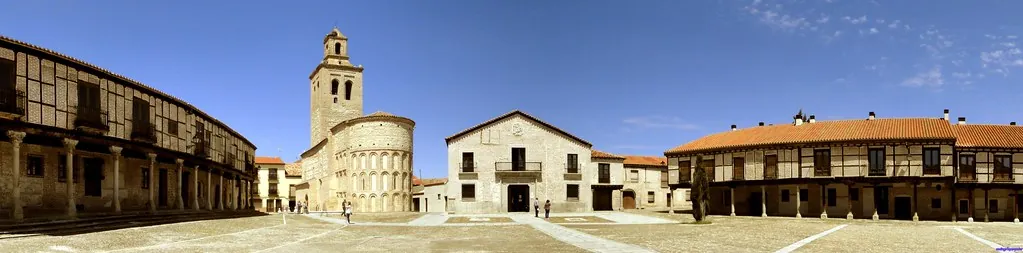
Like many villages in this part of Ávila, the parish church provides a clear point of reference. In Cantiveros it is dedicated to San Miguel. The building does not dominate the skyline, yet its bell gable rises just enough to guide you as you move through the streets.
Inside, the atmosphere is simple and restrained, in keeping with rural churches across the area. Stone walls, limited decoration, and a feeling of a place used over generations rather than designed to impress. It reflects continuity more than display, and that quiet purpose defines much of the village itself.
Adobe houses and inward-looking patios
Walking through Cantiveros means paying attention to the details of traditional Morañego architecture. Many houses combine adobe, rammed earth and stone, materials that have withstood decades of harsh winters and dry summers.
Behind solid walls and large wooden gates lie interior patios that remain central to domestic life. From the street, there is often only a hint of what sits beyond: old animal enclosures, small storage spaces, or traces of farming structures from busier times.
This is not a place reshaped for visitors. The buildings reflect how residents have maintained them over time, with all their irregularities. That lack of polish gives the village a directness that is hard to miss.
The open land of La Moraña
The landscape around Cantiveros is typical of La Moraña: wide plains, cereal fields and long horizons. Anyone expecting mountains or dense woodland will quickly realise this is a different kind of setting.
Each season shifts the colours. Spring brings a near continuous green across the fields. Summer turns everything golden. By autumn, ochre tones take over. The changes are gradual but noticeable if you spend time walking along the agricultural tracks.
There are no prepared viewpoints or explanatory panels. Movement through this landscape usually follows rural paths, many used by tractors and local residents. The experience is straightforward and unadorned, shaped by the terrain rather than by infrastructure.
Watching the fields, waiting for movement
For those interested in birdwatching, this part of La Moraña offers opportunities, though nothing is guaranteed. With binoculars and patience, it is sometimes possible to spot great bustards, little bustards, or other species associated with cereal-growing plains.
Patience matters here. Long stretches may pass with nothing but open land in view, then suddenly a shift in the crops reveals movement. It does not happen every time, and that uncertainty is part of what defines the experience.
Walking and cycling through farmland
One of the most natural ways to explore the area is to follow the tracks leading out of the village. These routes cross farmland and pass small livestock holdings, offering a close look at how the land is used.
Not all paths are signposted, so it helps to have a clear idea of your route beforehand or carry a map. After periods of rain, some sections become heavily muddy, a common feature in this clay-rich terrain.
Even so, travelling on foot or by bike has a particular appeal. There is very little traffic, and the landscape stretches out in all directions with few interruptions. It is a version of inland Castile that remains largely unaltered.
A small place without pretence
Cantiveros does not rely on major sights or attractions. It is a small village in La Moraña that continues to function on its own terms: residents who live here year-round, fields that dictate the rhythm of the seasons, and streets that stay quiet.
Approach it with a clear idea of what is there, and what is not, and the visit makes more sense. The interest lies less in monuments and more in observing how life continues in this part of inland Castile. The landscape and the pace of agricultural work still set the tone, and everything else follows.