Full Article
about Crespos
One of the largest villages in central Moraña; a communications hub with services and heritage.
Ocultar artículo Leer artículo completo
The church bell strikes noon, and every shadow disappears. At 920 metres above sea level, the sun sits directly overhead in Crespos, bleaching the stone walls white and turning the surrounding wheat fields into a shimmering bronze sea. This is La Moraña, Castilla y León's breadbasket, where the calendar still revolves around sowing and harvest rather than tourism seasons.
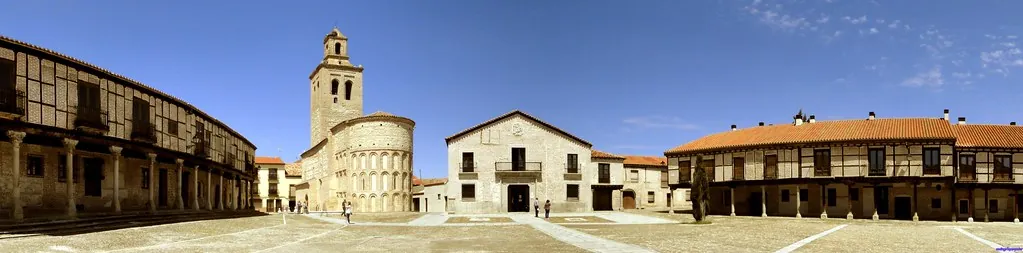
Crespos doesn't announce itself. The village emerges gradually from the N-VI, 25 minutes northwest of Ávila, after the road narrows and the landscape flattens into geometric fields. Stone houses cluster around a modest parish church, their terracotta roofs weathered to a uniform rust. No souvenir shops, no interpretive centres, just 460 people living much as their grandparents did.
The Architecture of Function
The Iglesia Parroquial stands at the village's highest point, not for dramatic effect but because that's where the rock outcrop made foundations possible. Built from local granite with a simple tower, it represents rural Castilian ecclesiastical architecture at its most honest. Inside, the temperature drops ten degrees; thick stone walls designed for survival rather than grandeur. Sunday mass still fills the pews, though weekday services might draw only a dozen worshippers.
Wandering the streets reveals layers of agricultural pragmatism. Adobe walls, thick enough to regulate summer heat and winter cold, support beams of rough-hewn oak. Wooden doors open onto cobbled courtyards where chickens once scratched and wheat was threshed. Many houses retain their original pajares—stone granaries raised on stilts to deter rodents. Some have been converted into garages, others into rustic dining rooms for extended families who return for August fiestas.
The village layout follows medieval livestock routes. Narrow lanes widen unexpectedly into small plazas where sheep and cattle once gathered before market. These spaces now serve as evening meeting points, with benches positioned to catch the last rays of sun before it drops behind the distant Sierra de Gredos.
Walking Through the Agricultural Calendar
Spring transforms Crespos into a patchwork of impossible green. Winter wheat pushes through reddish soil, creating a colour combination that painters struggle to replicate. The caminos—unpaved farm tracks—become accessible to walkers wearing proper footwear. These aren't manicured footpaths but working routes between fields. Mud sticks to boots after rain, and the wind carries the scent of fertiliser rather than wildflowers.
Summer brings the wheat harvest, when combine harvesters work through the night to beat the weather. The village fills with the smell of diesel and fresh-cut grain. Temperatures regularly exceed 35°C, and sensible visitors time their walks for dawn or dusk. The local bar opens at 6:30am for farmers, serving café con leche and churros to those who've already been working two hours.
Autumn offers the most comfortable walking conditions. Fields lie stubbled after harvest, exposing the gentle roll of the landscape. Bodegas—underground wine cellars carved into hillsides—become visible as earth banks with wooden doors. Many still store wine made from local cooperatives, though production has dwindled as younger generations move to cities. October mornings often start with mist filling the valleys, creating an inversion layer that makes Crespos feel like an island floating above clouds.
Winter arrives decisively. The 920-metre elevation means regular frost, and snow isn't unusual. The village becomes quiet, with only essential movement between houses. This is when the stone architecture proves its worth, with walls that have survived centuries of temperature swings. Heating costs bite, and many houses show plastic sheeting over doorways—practical rather than pretty.
Eating With the Season
Food here follows the agricultural cycle without pretension. The Mesón de Crespos, the village's only restaurant, serves what local farmers eat. Judiones de La Granja—giant white beans grown in nearby villages—appear in hearty stews throughout winter. Spring brings calçots (grilled spring onions) and early asparagus from irrigated plots. Summer menus feature sopa castellana, a garlic soup designed to use stale bread, and chuleton (thick beef chops) from cattle that graze on mountain pastures.
The panadería opens at 7am, selling bread baked in wood-fired ovens that have operated for over a century. Mantecadas—sweet muffins similar to pound cake—appear on Fridays. Locals buy them by the dozen, wrapped in white paper that quickly becomes translucent with butter. The village shop stocks local honey, dark and herbal from bees that forage on mountain thyme, and embutidos (cured meats) made from pigs that rooted among the oak trees.
Wine comes from cooperative bodegas in neighbouring villages. Tinto de la tierra arrives in unlabelled bottles, robust enough to cut through rich food but nothing a sommelier would analyse. White wine from Verdejo grapes grown in Rueda, an hour's drive north, provides crisp contrast to heavy winter dishes.
Practicalities Without Frills
Access requires a car. The nearest train station is in Ávila, 30 minutes away, with infrequent bus connections that don't operate on Sundays. Rental cars from Madrid Barajas airport (90 minutes) prove essential for exploring the region. Roads are good but narrow; meeting a tractor around a bend remains common.
Accommodation options remain limited. The Casa Rural El Pajar converts a former grain store into basic but comfortable rooms from €45 per night. Booking requires phone calls rather than online systems, and English isn't guaranteed. More choices exist in nearby Arévalo, ten minutes away, which also offers supermarkets and petrol stations.
Mobile phone coverage varies by provider and weather conditions. The village shop stocks essentials but closes for siesta between 2pm and 5pm. ATMs don't exist—cash comes from Arévalo or Ávila. Medical emergencies require the regional hospital in Ávila; the local clinic operates limited hours with a rotating doctor.
When to Visit, When to Stay Away
April and May provide the best combination of comfortable weather and visual drama. Fields green with young crops contrast against dark earth, and temperatures hover around 20°C. Wild asparagus grows along field boundaries—locals will point out where to look if asked respectfully.
August fiestas bring the village alive, but also triple the population. Visitors are welcome but should understand these celebrations exist for residents, not tourists. Accommodation books up months in advance as emigrants return. Fireworks start at midnight and continue until dawn; light sleepers should stay elsewhere.
November through February offers authentic winter village life, but comes with limitations. Many businesses operate reduced hours, and weather can disrupt travel plans. The landscape becomes monochromatic—brown fields under grey skies broken only by the occasional red-tiled roof. This is when Crespos reveals its true character: resilient, self-sufficient, indifferent to outside validation.
Crespos won't change your life. It offers no epiphanies, no Instagram moments that haven't been captured a thousand times before. What it provides is something increasingly rare: a place where tourism hasn't reordered priorities, where the rhythm of agriculture still dictates daily life, where a cup of coffee costs €1.20 because that's what locals can afford to pay. Come for that, or don't come at all.