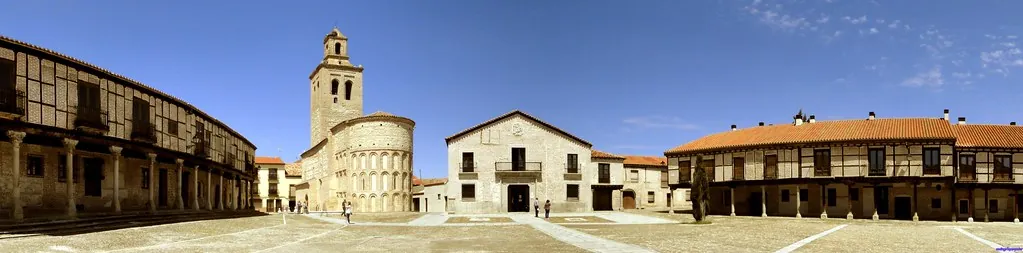
El Oso - Flickr
Martín Vicente, M. · Flickr 4
Castilla y León · Cradle of Kingdoms

El Oso

The thermometer outside the closed bakery reads 34 °C at eleven in the morning, yet the only shade in El Oso is cast by a single row of plane trees...

125 inhabitants · INE 2025
893m Altitude

Why Visit

Mountain El Oso Lagoon Crane and birdwatching

Best Time to Visit

summer

San Bartolomé Festival (August) agosto

Things to See & Do
in El Oso

Heritage

  • El Oso Lagoon
  • Lagoon Interpretation Center

Activities

  • Crane and birdwatching
  • flat hiking

Festivals
& & Traditions

Fecha agosto

Fiestas de San Bartolomé (agosto)

Las fiestas locales son el momento perfecto para vivir la autenticidad de El Oso.

Full Article
about El Oso

Famous for its lagoon and bird-watching center; a key spot for birding.

Ocultar artículo Leer artículo completo

The thermometer outside the closed bakery reads 34 °C at eleven in the morning, yet the only shade in El Oso is cast by a single row of plane trees and your own shadow. At 893 m above sea level on the baking plateau of La Moraña, the air is thin, the cereal fields shimmer, and the village’s 144 inhabitants have long since finished the outdoor chores that city folk haven’t even contemplated yet. You will hear a car before you see it, because nothing else is moving.

A Name Without a Story

Guidebooks usually promise a tidy folk tale when a place is called “The Bear”, but El Oso keeps its etymology stubbornly open. The parish priest, the woman who holds the keys to the church, and the retired farmer chewing sunflower seeds outside the only open bar will all give you a different version, none conclusive. What is certain is that the name predates living memory and that the animal has never been spotted here; the only bears in sight are the weather-beaten stone ones carved onto a 1990s fountain erected by the ayuntamiento to give visitors something to photograph. Accept the mystery and you have passed the first test of travelling in Castilla y León: the landscape is the monument.

Stone, Adobe, and the Smell of Thyme

There is no ticket office, no audioguide, and no coach park. Instead, a five-minute lap of the single-lane ring road delivers the architectural inventory: a sixteenth-century parish church whose bell tolls the quarters with mechanical precision, a cluster of stone houses with wooden doors the colour of rust and tobacco, and a larger number of adobe and rammed-earth dwellings whose walls bulge like well-proofed loaves. Look down the alleyways and you will spot a semi-collapsed hayloft, a threshing circle converted into a hen run, and a subterranean wine cellar sealed by a warped timber hatch. Everything is the colour of toast; even the swallows are dun.

Inside the church, the temperature drops ten degrees. The altarpiece is provincial baroque, gilded once and then dusted by centuries of grain harvest. Lighting is a single 40-watt bulb. If you want to climb the tower for the view, ask at number 17: María Luisa keeps the key and will unlock the door for a voluntary €2 coin that goes towards new hymn sheets. The staircase is narrow, the bells are loud if you time it badly, but the panorama repays the effort: a chessboard of wheat, barley and fallow stretching to a rim of blue mountains thirty kilometres away.

Walking the Grid

The best activity here is to break in a pair of boots on the agricultural lanes that form a perfect Cartesian grid across the plain. Maps are unnecessary; each camino is signposted with the name of the farmer who owns the adjoining plot (“Camino de los Herederos de D. José López”). Distances are measured in “pasos castellanos”, the long stride of a man leading oxen, and every junction offers a choice between more horizon or slightly different horizon. Take water: the only fountain is in the village square and the July sun reflects off the silica soil with searchlight intensity.

Cyclists can do the 14 km loop south to Navalmoral and back on dead-flat tarmac; the challenge is headwind rather than gradient. Birders should start at dawn when calandra larks and little bustards are active; bring a telescope because nothing here rises above knee height except the occasional electricity pylon. In June the wheat turns the colour of a lion’s pelt and the stalks whisper like newspaper; by mid-July the combine harvesters have shaved the land and the stubble scratches the sky.

Eating: Bring an Appetite and a Car

El Oso itself has no restaurant, no shop and no petrol station. The sole bar opens at 07:30 for coffee and churros, shuts at 14:00, and may or may not reopen at 20:00 depending on whether Paco feels like watching the football. If you are staying overnight, pre-order a cazuela of roast lamb or a cocido stew with the owners of your rural house; they will buy the meat in Arévalo and charge you €18 a head including wine. Otherwise drive 20 minutes to Arévalo where Casa Galatea serves cochinillo (suckling pig) with a brittle crackling that shatters like crème-brûlée topping, or try the weekday menú del día at Bar La Muralla: three courses, bread, wine and coffee for €14, served by waiters who understand “no garlic”.

Sunday lunchtime is sacred; arrive after 15:00 and the kitchens are closed. Stock up before 13:00 or you will be making a sandwich with the previous day’s bread.

Sleeping Under Loud Stars

Accommodation within the village limits amounts to four guest rooms at Rancho Montalvo, a converted grain store whose thick adobe walls keep the heat out until midnight. The patio has a tinaja (clay vat) converted into a plunge pool large enough for two Brits who are on speaking terms. Price, including breakfast of toasted village bread and local honey, is €80 for a double. There is no reception desk; the owner lives next door and hands you the key with the casual air of someone lending you a lawnmower.

Most visitors base themselves in Astorga, 25 km to the north, where the four-star Hotel Spa Ciudad de Astorga has English-speaking staff, secure parking and a rooftop pool that overlooks Gaudí’s Episcopal Palace. Expect €110 a night in May, €140 in August, and book the spa treatments early because the Roman legionary re-enactors like a soak after their march.

When to Come, and When to Stay Away

April and late-September give you 22 °C days, 10 °C nights, and fields either green-sprouting or stubble-burnished. In August the mercury can touch 38 °C; the village fiesta (15 August) imports a fairground ride and a disco that thumps until 05:00, shattering the very silence you came for. Winter is crisp, empty and beautiful, but overnight frosts of –8 °C are routine and the rural houses close from January to March because pipes freeze. If you must come then, stay in Astorga and visit for the day; the low sun turns the cereal stubble bronze and the sky the colour of Wedgwood china.

Getting Here Without Losing the Will

Fly to Madrid with BA from Heathrow or easyJet from Gatwick. Pick up a hire car at T1; the A-6 north-west is dual-carriageway all the way to Benavente, then the AP-71 slices through the wheat to Astorga in two hours fifteen, tolls €17. From Astorga take the N-VI for 12 km, turn right at the grain silo marked “El Oso 10 km”, and follow a straight road so empty you could land a small aircraft on it. Public transport is theoretical: one morning bus from Astorga on Tuesdays and Fridays, returning at 17:00. Miss it and a taxi costs €35.

Parting Shot

El Oso will not change your life, but it might recalibrate your ears. After a night you will notice the difference between silence and hush: the first is absence, the second is the faint pulse of your own blood. Bring a paperback, a wide-brimmed hat and a sense of tempo that can stretch to match the horizon. When the church bell strikes nine and the swifts cut arcs across a sky still glowing pearl, you will understand why half the village has never bothered to leave.

Key Facts

Region
Castilla y León
District
La Moraña
INE Code
05175
Coast
No
Mountain
Yes
Season
summer

Livability & Services

Key data for living or remote work

2024
Connectivity5G available
TransportTrain 11 km away
HealthcareHospital 20 km away
Housing~5€/m² rent · Affordable
CoastBeach nearby
January Climate4°C avg
Sources: INE, CNMC, Ministry of Health, AEMET

Planning Your Visit?

Discover more villages in the La Moraña.

View full region →

More villages in La Moraña

Traveler Reviews