Full Article
about Fuente el Saúz
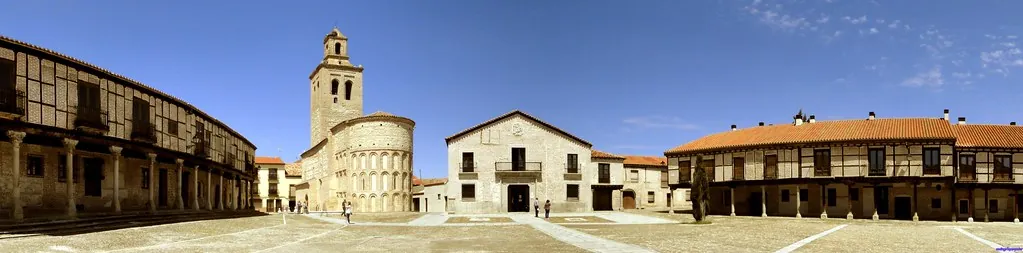
A Moraña town with one of the most beautiful churches in the region; its Mudejar apse stands out.
Hide article Read full article
Fuente el Saúz en La Moraña
Fuente el Saúz se encuentra en el centro de La Moraña, una comarca de llanuras abiertas donde el horizonte se pierde entre campos de cereal. Este paisaje, que puede parecer uniforme, es el resultado de siglos de agricultura en una meseta seca y exigente, donde la disponibilidad de agua y la calidad de la tierra han determinado los asentamientos.
El pueblo tiene poco más de ciento cuarenta habitantes y se sitúa a unos ochocientos setenta metros sobre el nivel del mar. La vida diaria sigue vinculada al campo, una relación que se nota en el ritmo del lugar y en la disposición de las casas, corrales y patios cerrados.
La construcción tradicional aquí emplea los materiales que había a mano: tierra, piedra y madera. Son frecuentes los muros de adobe o tapial, a menudo con un zócalo de piedra. Muchas viviendas se organizan alrededor de patios interiores, una solución para resguardarse del viento que barre la llanura. Aunque algunas edificaciones se han renovado, la lógica de la arquitectura popular morañega sigue siendo reconocible.
La iglesia y la trama del pueblo
El edificio más visible es la iglesia parroquial, dedicada a la Natividad de Nuestra Señora. Su diseño responde al patrón común en la zona: sencillo, práctico y sin ornamentación elaborada. Piedra y ladrillo son los materiales principales, donde prima la función sobre el adorno.
Su importancia está en cómo ordena el pueblo. La pequeña red de calles se recoge alrededor del templo, dando a Fuente el Saúz una planta compacta y bien definida.
Pasear por el casco permite ver elementos propios de esta parte de Castilla. Grandes portones dan acceso a los patios, las chimeneas sobresalen de los tejados y muchas fachadas están encaladas sobre el adobe. Algunas construcciones conservan palomares o dependencias agrarias integradas en la vivienda. Son detalles que hablan de una vida moldeada por la agricultura y la ganadería a pequeña escala, donde lo doméstico y lo laboral estaban unidos.
Senderos entre los campos de cereal
Los alrededores de Fuente el Saúz se comprenden mejor caminando. Los caminos agrícolas conectan el pueblo con otros de La Moraña, atravesando terrenos abiertos donde los árboles son escasos. La vegetación suele aparecer solo cerca de arroyos o en las vaguadas.
No se trata de rutas señalizadas ni preparadas para el turismo. Son las mismas vías que se han usado durante años para llegar a las tierras o desplazarse entre pueblos vecinos. Su carácter está en esa directitud, con pocas concesiones al visitante.
El paisaje cambia con las estaciones. En primavera, los campos se vuelven verdes con el crecimiento del cereal. A principios del verano adoptan tonos dorados. En algunas zonas aparecen pequeños cursos de agua, con vegetación de ribera. En años secos, algo no infrecuente en la comarca, el caudal puede ser mínimo.
La vida diaria en una comunidad pequeña
Con una población reducida, Fuente el Saúz tiene un ritmo muy tranquilo. No existe una infraestructura pensada para el turismo y los servicios disponibles son los más básicos. Conviene planificar la visita con antelación.
La cocina local pertenece a la tradición castellana de interior. Se basa en platos contundentes y directos, vinculados a la vida rural. Las legumbres son un pilar, junto a carnes como el cordero o el cabrito. Los productos de las huertas aparecen cuando es temporada. Estas recetas forman parte tanto de las comidas diarias como de las reuniones familiares o vecinales.
La vida aquí está menos condicionada por los visitantes externos que por las rutinas establecidas ligadas al calendario agrícola. La escala del pueblo hace que lo social gire a menudo en torno a caras conocidas y espacios compartidos.
Fiestas y tradición local
La celebración principal está dedicada a la Natividad de Nuestra Señora y suele tener lugar en septiembre. Como en muchos pueblos pequeños, combina actos religiosos con encuentros comunitarios y comidas compartidas.
La fiesta no está montada como un reclamo para foráneos. Es sobre todo un momento de reencuentro para los vecinos y para quienes mantienen un vínculo con el pueblo, aunque vivan fuera. El acento está en la continuidad y la comunidad, no en el espectáculo.
Una nota práctica breve
Fuente el Saúz se recorre en poco tiempo. Su interés está menos en monumentos mayores y más en la comprensión que ofrece sobre la vida rural en La Moraña. Desde aquí es fácil continuar hacia otros pueblos de la comarca o dirigirse a la ciudad de Ávila, a unos treinta kilómetros. Madrigal de las Altas Torres también queda cerca, con una presencia histórica más marcada dentro de la provincia.