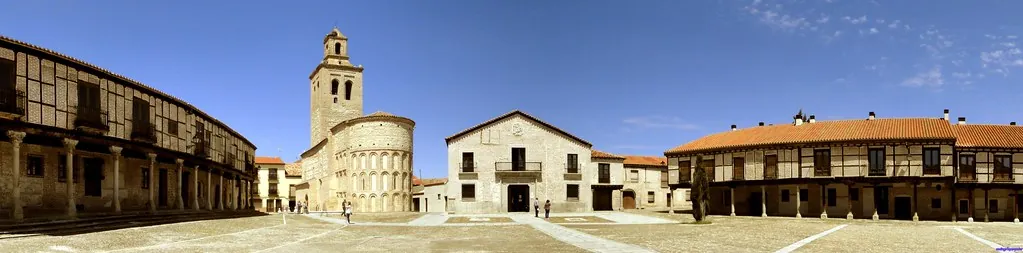
Vista aérea de Gotarrendura
Instituto Geográfico Nacional · CC-BY 4.0 scne.es
Castilla y León · Cradle of Kingdoms

Gotarrendura

The church bell strikes noon and nobody appears. Not a soul. Just swallows cutting arcs between terracotta roofs and the wind combing through wheat...

173 inhabitants · INE 2025
930m Altitude

Why Visit

Mountain López Berrón Museum Teresian Route

Best Time to Visit

summer

San Miguel festivities (September) agosto

Things to See & Do
in Gotarrendura

Heritage

  • López Berrón Museum
  • traditional dovecotes
  • statue of Saint Teresa

Activities

  • Teresian Route
  • Visit to the ethnographic museum

Festivals
& & Traditions

Fecha agosto

Fiestas de San Miguel (septiembre), Fiestas de la Virgen de las Nieves (agosto)

Las fiestas locales son el momento perfecto para vivir la autenticidad de Gotarrendura.

Full Article
about Gotarrendura

Town linked to Santa Teresa (possible birthplace); noted for its ethnographic museum and dovecotes.

Ocultar artículo Leer artículo completo

The church bell strikes noon and nobody appears. Not a soul. Just swallows cutting arcs between terracotta roofs and the wind combing through wheat that stretches clean to the horizon. At 930 metres above sea level, Gotarrendura feels higher than it sounds: the air is thin, the sky enormous, and the silence so complete you can hear your own pulse if you stand still long enough.

This is La Moraña, the breadbasket plateau of southern Ávila, where villages are measured less by head-count than by the radius of their grain fields. Gotarrendura’s registered population is 174, but even that figure feels optimistic; many houses are locked tight until summer cousins arrive from Madrid. The rest of the year the place runs on a timetable set by sowing, harvesting and the occasional funeral. Visitors who expect souvenir stalls or guided tours are usually gone before the echo of their own engine fades. Those who stay discover a different currency: kilometres of empty track, skies that redden across 180 degrees at dusk, and a church tower that has oriented travellers since the fifteenth century.

A Compass Built of Stone and Adobe

Approach on the CL-505 from Arévalo and the first thing you notice is the tower, sandstone turned honey-colour by sun and frost, rising from a cluster of low cottages like a lighthouse in a golden ocean. Close-up, the Iglesia de San Juan Bautista is less elegant than imposing: a long nave patched after fires, wars and budget shortages, the masonry a palimpsest of limestone, brick and whatever came to hand after each rebuild. Circle it slowly; the southern portal still carries a Romanesque arch, while the belfry wears a Baroque crown added when the Habsburgs needed somewhere to hang bigger bells. The interior is spare—no gilded altarpiece here—yet the proportions give away medieval ambitions: this was a parish that once administered thirty surrounding hamlets now swallowed by the fields.

Five minutes in any direction from the church door brings you to the village limits. Cobbled lanes narrow to footpaths between adobe walls whose straw flecks glitter in the sun. Some gateways are framed by wild fennel; others gape onto roofless corrals where storks have built kilo-weight nests on top of collapsing beams. Peek through the iron grill of a half-open cellar and you may catch the sour-wine smell of a private bodega, still used for the amateur tempranillo that locals call clarete. There is no centre as such, just a triangle of small squares where the ayuntamiento, a defunct bakery and Bar Los Nenes compete for shade. The bar opens at seven for coffee and closes when the last customer leaves—sometimes midnight, sometimes straight after the football scores.

Walking the Checkered Sea

Every street ends in wheat. Footpaths are signed only by the wear of tractor tyres, yet the logic is simple: follow the highest ground and you will reach the next village; follow the lowest and you will hit the river Adaja, a silver thread six kilometres north. One popular circuit strikes east to Mingorría (population 63) across a rolling chessboard of barley, poppies and fallow land painted red by clover. The outward leg takes forty minutes; the return feels longer once the meseta wind starts scouring from the west. Carry water—there is none between settlements—and a hat; at this altitude the sun feels closer than it does on the coast.

Spring brings calandra larks hanging above the fields, throats pulsing like tiny bellows. By June the wheat is waist-high and motionless hawks sit on power poles waiting for careless voles. Autumn turns the stubble into an avian airport: bustards, sandgrouse and flocks of golden plover that rise in synchrony when a harrier drifts past. No hides, no entrance fee, just patience and a pair of binoculars.

Darkness falls quickly once the sun slips behind the Gredos peaks thirty kilometres away. Street lighting is deliberately weak—gotarrendureños value their star-view—so the Milky Way spills across the sky like tipped sugar. On new-moon nights the church tower becomes a silhouette against a river of light so bright it throws shadows. Amateur astronomers set up on the disused football pitch where the horizon is unobstructed and the only glare comes from the occasional passing satellite.

What You’ll Eat and Where You’ll Sleep

Gotarrendura itself offers no accommodation; the nearest rooms are in Mingorría’s casa rural (three doubles, €55 a night, breakfast extra) or back in Arévalo ten minutes by car. Most visitors base themselves in the walled town of Madrigal de las Altas Torres, birthplace of Isabel la Católica, where convents rent out surplus cells and weekend apartments start at €65. Lunch, however, can be had in the village if you plan ahead. Bar Los Nenes will serve cocido maragato (a hearty chickpea and meat stew eaten backwards: meat first, vegetables last) if you phone the day before. Otherwise, stock up in Arévalo’s Saturday market on local cheese—queso de oveja brushed with olive oil and paprika—and picnic among the threshing floors south of the cemetery where the stone circles date to the 1700s.

Driving is the only practical access. There are two daily buses from Ávila, both at inconvenient hours, and neither continues back the same afternoon. A hire car from Madrid-Barajas (140 km, mainly motorway) gives freedom to zig-zag between villages and means you can retreat when the wind chill drops below zero, which happens even in April. Petrol stations are scarce after Arévalo; fill the tank and check the spare—shoulder edges are rough and tyres have been known to puncture on thistle stalks as hard as nails.

When to Come, When to Leave

April and May colour the fields emerald and fill the air with lark song; the temperature ranges from 6 °C at dawn to 20 °C after coffee, so dress in contradictory layers. September offers similar weather plus the drama of harvesters working under floodlights until two in the morning. Mid-summer is less kind: thermometers touch 35 °C by eleven o’clock and the wind feels like it has crossed a baker’s oven. Winter is for the hardy—night frosts of –8 °C are routine, and snow can drift across the CL-505 for days—but the compensation is brass-coloured sunsets and the village to yourself.

Come with modest expectations. Gotarrendura will not change your life, but it might recalibrate your sense of scale. After a few hours the human world shrinks to a grid of dirt tracks, a stone tower and the sound of your own footsteps crunching on gravel. When the bell tolls again—still nobody in sight—you will understand why locals say the village is held together not by people, but by sky.

Key Facts

Region
Castilla y León
District
La Moraña
INE Code
05087
Coast
No
Mountain
Yes
Season
summer

Livability & Services

Key data for living or remote work

2024
Connectivity5G available
TransportTrain 11 km away
HealthcareHospital 19 km away
Housing~5€/m² rent · Affordable
CoastBeach 16 km away
January Climate4°C avg
Sources: INE, CNMC, Ministry of Health, AEMET

Planning Your Visit?

Discover more villages in the La Moraña.

View full region →

More villages in La Moraña

Traveler Reviews