Full Article
about Las Berlanas
Municipality made up of several settlements on the plain; known for its farming and its freestanding church.
Hide article Read full article
Morning Light on the Plains of La Moraña
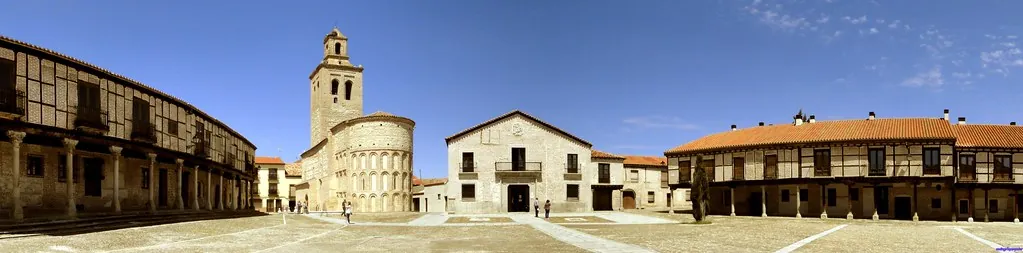
Early in the morning, before the sun begins to press down on La Moraña, the air in Las Berlanas carries the scent of dry earth and cereal crops. The square is usually quiet at that hour. A shutter creaks open, the sound folding into the steady toll of the church bells. Light arrives clean and uninterrupted, because here the horizon is wide and the fields begin almost at the edge of the last house.
This small municipality in La Moraña has around 300 inhabitants and keeps a direct, practical relationship with the surrounding land. Streets alternate between asphalt and stretches of dirt and gravel. Many houses are still built with adobe or stone, materials that keep interiors cool during the heat of summer. Some façades are whitewashed, others reveal the mud and straw of older walls, a common sight in villages across this part of the province of Ávila.
There are no headline attractions or a steady flow of visitors. Las Berlanas is usually reached because someone is already travelling through the comarca, the local district, or because they have family nearby. What defines the place lies all around it: broad cereal plots, straight agricultural tracks and the wind that sweeps across the plain even on days that seem calm.
A Church and a Landscape Shaped by Time
The parish church of the Asunción stands at one of the most visible points in the village centre. The present building appears to date back to the 16th century, although it has undergone later repairs. From outside, the mix of stone and brick in the bell tower is easy to spot, typical of religious architecture in the area. Inside, darkened wooden pews reflect years of use, and a simple altarpiece holds the focus.
Beyond the church, the landscape shifts with the seasons while always keeping that sense of open space that defines La Moraña. In spring, the fields turn an intense green and the air carries the smell of newly grown grass. Summer changes everything to the yellow of ripe wheat or to bare soil after the harvest. With autumn come brown tones across the fallow land, and the first cold days clear the sky even further.
A short walk out of the village brings you to wide agricultural tracks used by tractors. On either side stand small tool sheds, low stone walls and the occasional solitary tree offering limited but welcome shade. Above, it is common to see kites or kestrels gliding over the plots.
Walking the Flatlands Around Las Berlanas
Getting around the surrounding area is straightforward because the terrain is almost entirely flat. Paths link up with neighbouring villages in the comarca, allowing for long routes without technical difficulty. The real challenge here tends to be the sun and the wind rather than steep climbs.
In summer, it makes sense to head out early or later in the afternoon. At midday, shade is scarce and the heat lingers over the fields. In winter, the air can be biting even under a clear sky.
Agricultural life remains very present. During sowing or harvest season, it is common to come across machinery at work in the fields. These tracks are part of daily life for the people who live here, so it is important to step aside and allow vehicles to pass.
Food in the village reflects long-standing traditions from this part of Castile. Meals centre on hearty dishes: legumes, embutidos from the matanza, the traditional pig slaughter, and simply prepared meats. There is no dining scene designed to draw in outsiders. People eat as they have always eaten in the comarca, with recipes rooted in the agricultural calendar.
Festivities Rooted in the Community
Around August, Las Berlanas celebrates its patronal festivities in honour of the Virgen de la Asunción. During these days the rhythm of the village shifts. Residents who live elsewhere return, and the square regains movement that stretches late into the night.
The celebrations combine religious acts with activities organised by the neighbours themselves. There is music, shared meals and games set up in the streets or in the square. It is not an event created to attract visitors, but a moment in the year when the village reconnects with itself.
It is also common in summer for small processions or gatherings to take place at nearby hermitages. These follow rural paths that cut through the fields, linking faith with the landscape in a way that has long been part of life in La Moraña.
Reaching Las Berlanas and Planning Your Time
Las Berlanas lies less than an hour by car from the city of Ávila, reached via regional roads that cross the open landscape of La Moraña. The journey passes between cereal fields and small villages separated by several kilometres of plain.
For a day trip, it is wise to bring water and something to shield yourself from the sun if you plan to walk. Across much of the surrounding area there is little shade and few services close at hand. Spring and early autumn are often the most pleasant times to explore the tracks at an unhurried pace.
At night, when the wind drops and silence returns to the streets, the sky is usually strikingly clear. In such an open setting, it only takes a short walk away from the streetlights to notice how dark and expansive the sky becomes. Las Berlanas does not compete for attention. Its appeal lies in space, in routine and in the steady relationship between a village and the fields that surround it.