Full Article
about Muñogrande
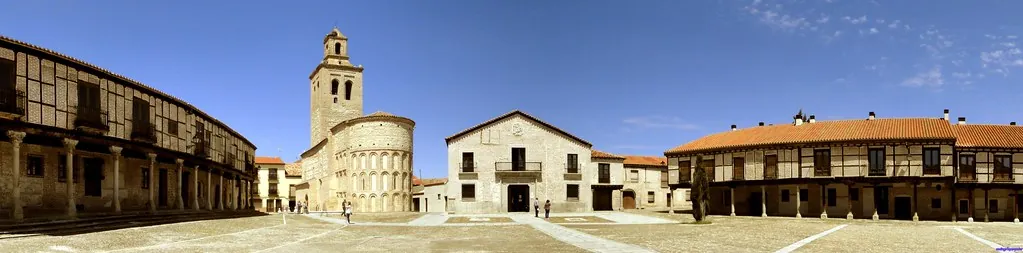
Small farming village; noted for its church and plain architecture.
Hide article Read full article
A village that doesn’t try to impress
Some places make an effort to grab attention straight away. Muñogrande does the opposite. Tourism here does not rely on standout monuments or signposted viewpoints. It feels closer to visiting a friend in a rural village and ending up wandering aimlessly while catching up.
Muñogrande sits in La Moraña, in the province of Ávila, within Castilla León. The population hovers at just over seventy residents. The setting is typical of the area: flat land, cereal fields stretching to the horizon and a vast sky that seems larger than anything seen in a city. Life moves at a noticeably different pace from conventional tourist destinations.
There is no attempt to turn the village into an attraction. There are no museums, no marked routes painted on the ground. Instead, there are quiet streets, brick and adobe houses, the occasional tractor passing slowly, and a sense that time does not rush in quite the same way.
Architecture that speaks quietly
The houses in Muñogrande carry the familiar look of villages across the Castilian plateau. Brick or adobe façades, traditional chimneys and roofs that have been in place for decades create a setting that feels unchanged.
Walking through the village can feel like opening an old family photo album. Small doors, modest windows and streets where the wind is often more noticeable than traffic define the atmosphere. Nothing calls loudly for attention, yet everything contributes to a clear sense of place.
The parish church stands out as one of the few recognisable landmarks. It is a simple building, the kind that remains active more because of the people who use it than because of what it contains. It usually opens during celebrations or gatherings. If the doors happen to be open, it is worth stepping inside to notice details that have disappeared from many larger churches after renovations.
Even so, the most striking element is not a building but the surrounding landscape. The fields of La Moraña have a steady, almost hypnotic quality. Straight lines, uninterrupted horizons and light that shifts dramatically with the seasons define the view. Spring brings a strong green across the fields, while summer turns everything into a golden yellow that is closely associated with inland Castilla.
Time outdoors, without a checklist
Muñogrande is not about ticking off sights. It suits a slower kind of visit, where the main activity is simply being there for a while.
One of the easiest ways to understand the place is to walk along the paths leading out towards the fields or to follow the nearby secondary roads. The terrain is mostly flat, which makes walking straightforward. In summer, though, the sun can be intense and there is very little shade available.
Cyclists often find this part of La Moraña especially appealing. Long straight stretches, light traffic and kilometres of open countryside make it easy to keep going while the horizon stays constantly in view. It is the kind of landscape where movement feels uninterrupted.
Staying into the evening brings a different experience. On clear nights, the darkness is clean enough that the stars seem closer than usual. Light pollution is minimal across much of La Moraña, so looking up at the sky becomes one of the most memorable parts of the day.
Traditions that still shape the year
As in many small villages in Castilla, the calendar in Muñogrande still revolves around local celebrations and gatherings. Summer is the key period, often in August, when people who grew up here return after spending much of the year elsewhere.
These are not events designed to draw crowds from outside. They are village occasions: simple processions, shared meals and long conversations that stretch into the evening in the square or out on the street.
During those days, there is a noticeable atmosphere of reunion. People come back, familiar stories resurface and children run through the same streets where previous generations once played. It is a rhythm repeated in many villages across the Castilian plateau.
A place that stays as it is
Muñogrande will not fill an itinerary with activities or compete with the better-known destinations in Ávila. It offers something quieter and increasingly uncommon: genuine stillness and a landscape that remains much as it has been for generations.
For those willing to slow down, that is enough.