Full Article
about Rasueros
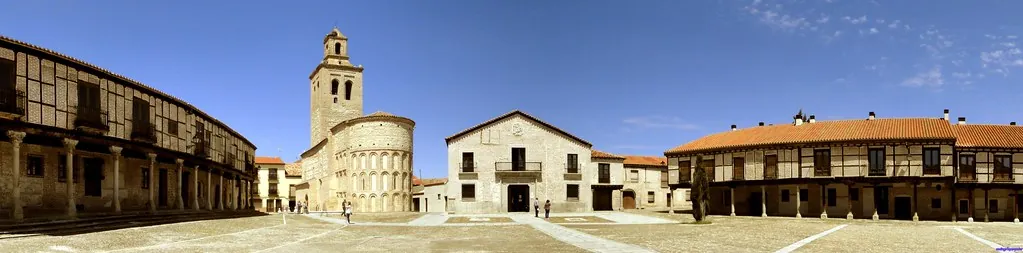
Border village with Salamanca; noted for its Mudéjar church and tower.
Ocultar artículo Leer artículo completo
The thermometer drops three degrees as you leave the N-501 at Arevalo and head north towards Rasueros. At 830 metres above sea level, this granite outcrop in the province of Ávila sits high enough to catch weather systems that never trouble Madrid, 90 minutes south. In winter, the village thermometer can plunge to -12°C; in July, the same altitude brings relief when the surrounding plains swelter at 38°C.
Rasueros doesn't announce itself. One moment you're driving through endless wheat fields, the next the road tilts slightly and a cluster of stone houses appears, huddled against a ridge that breaks the flatness of La Moraña. The population sign reads 150, though locals whisper the real figure hovers closer to 110. Those who remain have learned to live with the wind, which arrives unimpeded across the meseta and whistles through the single main street with enough force to slam doors shut.
The Architecture of Survival
Every building here speaks of practicality over ornament. The parish church of San Pedro stands at the highest point, its squat tower more watchtower than bell tower. Constructed from local granite in the 16th century, thickened walls keep interiors cool during summer afternoons when the sun ricochets off surrounding fields. Look closer and you'll spot later additions: brick repairs from the 1890s, concrete patches from the 1960s, each generation fixing what weather and time eroded.
Houses follow the same defensive logic. Narrow lanes, barely wide enough for a tractor, create wind tunnels that accelerate breezes through the village. Doorways sit recessed behind stone arches, not for beauty but to shield wooden doors from driving rain. Many homes still use traditional tapial construction—walls built from compacted earth and lime—though you'd never know beneath layers of whitewash that requires refreshing every three years. The effect from a distance is almost Moroccan: white cubes against brown earth, though here the colour comes from practicality rather than aesthetics.
Walking the entire village takes twenty minutes, thirty if you pause to read the ceramic plaques beside older houses. These list construction dates: 1734, 1821, 1897. The newest building is the ayuntamiento from 1972, a concrete block that locals voted to paint ochre in an attempt to blend with stone neighbours. It didn't work, but nobody's bothered to repaint it either.
Fields That Change Colour With the Hour
The real attraction lies beyond the last house. Rasueros sits surrounded by one of Spain's largest continuous cereal-growing regions, where fields stretch so far that the curvature of the earth becomes visible. Visit in late May and the wheat creates an ocean of green that ripples like water when wind blows. Return six weeks later and the same landscape glows gold under the July sun, harvesters working 18-hour days to gather grain before thunderstorms arrive.
These storms matter. At this altitude, weather changes fast. Morning might begin clear and still, but by 3pm cumulus towers build on the western horizon. When they break, temperatures can drop 15 degrees in twenty minutes. Locals keep jackets hanging on door pegs year-round; visitors who set off hiking in t-shirts often return soaked and shivering, having underestimated mountain weather despite the village's modest height.
The agricultural calendar dictates village rhythm. April brings tractors working until midnight, headlights creating strange constellations across dark fields. August smells of diesel and dust as combine harvesters crawl like mechanical insects. October sees fields burned stubble-brown, farmers ploughing furrows that run ruler-straight towards distant horizons. Winter transforms everything into a study of beige and grey, the only colour coming from occasional holm oaks that survive as boundary markers between plots.
Walking Where Tractors Rule
Rasueros offers no waymarked trails, no visitor centre, no guided walks. What exists is a network of agricultural tracks that connect the village to neighbouring settlements: Piedrahita 12km west, Madrigal de las Altas Torres 8km east. These paths, really just compacted earth between fields, provide flat walking through landscapes that feel more Mongolian steppe than Spanish interior.
Morning walks bring the best light. Setting out at 7am from the church, follow the track towards the abandoned railway station 2km south. The line closed in 1985, but the station building remains, windows long gone, interior decorated with agricultural graffiti: "Juan loves Maria 1997", "Wheat £180/tonne". Beyond here, paths fork towards different cortijos—farmsteads that appear as small white cubes on distant ridges, each surrounded by their own plots of land.
Practicality matters. These tracks serve working farms first, walkers second. Bring water; there's none en route. Wear boots after rain; clay soil becomes treacherously slippery. Step aside for tractors—they won't slow down. Dogs guard most cortijos; don't approach farm buildings closely. Summer requires hats and sunscreen; shade doesn't exist except beneath the occasional electricity pylon.
Birdwatchers find rewards for early starts. The plains support Spain's highest density of great bustards, those absurdly large birds that look too heavy for flight. Dawn in April brings spectacular mating displays: males inflate white chest feathers until they resemble walking snowballs, turning slowly while making sounds like corks being pulled. Binoculars essential—they'll abandon displays if approached within 200 metres.
The Seasonal Village
Rasueros transforms dramatically through the year. January weekends see the population double as children return from Madrid or Valladolid to visit ageing parents. Fires burn in grates, smoke hanging in the still air before dispersing into endless blue. The village bar—really someone's front room with an espresso machine and three tables—opens sporadically, depending whether the owner's rheumatism allows her to work.
Easter brings the first tourists, usually Spanish families driving out from Ávila for day trips. They photograph the church, walk to the village boundary stone 500 metres north, then depart before lunch. The brief influx means the bakery opens Friday-Sunday; otherwise villagers drive 20 minutes to Arevalo for bread.
July and August empty Rasueros completely. Those who can escape the heat leave for coastal family homes. The village becomes a ghost town save for the elderly who sit in shaded doorways, moving chairs to follow shade as the sun tracks across the sky. Temperatures might read 32°C but feel hotter; the altitude brings thinner air and stronger UV. Skin burns faster here than at sea level.
September harvest draws people back. Younger generations return to help ageing parents bring in crops. The village briefly buzzes with activity: cars parked haphazardly, conversations shouted across streets, the smell of diesel mingling with woodsmoke as families fire up heating systems unused since May. By October's end, quiet returns. Winter approaches fast at altitude; first frosts arrive mid-October, snow sometimes before Halloween.
Practicalities Without Pretension
Accommodation options remain limited. No hotels exist within the village; the nearest sits 15 minutes drive away in Arevalo, a three-star place charging €65-85 per night depending on season. Better options lie in converted cortijos rented through Spanish websites: Finca La Moraña offers two bedrooms from €90 nightly, minimum two nights, breakfast included but served at Spanish hours (8-10am). They'll collect from Rasueros if arranged in advance.
Eating requires planning. The village contains no restaurants, no shops, no petrol station. The nearest supermarket stands 12km away in Piedrahita—a small Covirán with limited stock and Sunday closing. Wise visitors shop in Arevalo before arriving, or time visits around lunch in neighbouring towns. Madrigal de las Altas Torres offers Casa Paco, serving roasted suckling pig for €18, but closes Mondays and doesn't accept cards.
Driving remains essential. No bus serves Rasueros; the nearest stop lies 8km away on the N-501. Taxis from Ávila cost €45-50 each way—more than car hire for a day. Roads are good but narrow; meeting agricultural machinery requires reversing to passing places. Winter brings ice; the final approach road faces north and holds snow longer than main routes. Chains sometimes necessary December-February.
Mobile signal proves patchy. Vodafone works on the village main street; Movistar requires walking to the church terrace; Orange only functions at the village boundary. WiFi exists nowhere publicly. This isn't marketing—it's simply that nobody's bothered installing the infrastructure. Some find this refreshing; others last two days before fleeing to connected civilisation.
Rasueros offers no souvenirs, no postcards, no branded fridge magnets. What it provides instead is space: to walk, to think, to understand how Spain's rural heart functions when tourists aren't watching. The village doesn't need visitors, which paradoxically makes it worth visiting—if you're prepared to arrive with realistic expectations and enough supplies for self-sufficiency. Those who do discover that Spain's emptiest landscapes often reveal its most authentic character, found in the details most travellers speed past on their way somewhere supposedly more interesting.