Full Article
about San Esteban de Zapardiel
Town on the banks of the Zapardiel; irrigated land and cereal crops
Hide article Read full article
A quiet morning on the Moraña plain
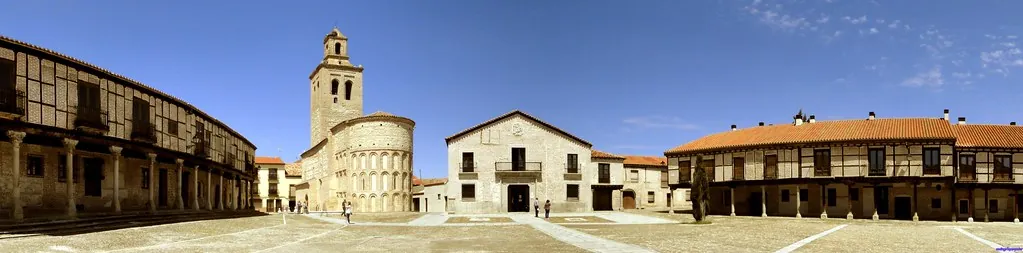
Early in the day, when the sun is still low, the main square of San Esteban de Zapardiel holds a kind of clear, undisturbed silence. Skylarks are easier to hear than any passing car, and the air carries that faint dampness left behind by the night across the flatlands of La Moraña. The landscape stretches out in wide cereal fields that seem to go on without interruption. In spring they appear soft and green; by mid-summer they turn dry and golden, the wind moving through the grain like ripples across water.
This is a small settlement, the sort that changes very little from one year to the next. Houses still face the street with façades of adobe, brick or whitewashed plaster, and many retain wooden doors darkened by time. There are no grand monuments or streets designed for tourism. What defines the place instead is a slow pace and an agricultural setting that shapes everyday life.
The church at the heart of the village
In the centre of the square stands the parish church dedicated to San Esteban. Its brick walls reveal traces of the Mudéjar style, a form of architecture that spread across much of this part of Castile, blending Christian and Islamic influences. From the outside, the mix of materials is easy to notice: brick, timber and pale render, all used over centuries to cope with cold winters and very dry summers.
It is usually closed outside service times, which is common in small villages. Even so, it is worth walking around it at a relaxed pace. The contrast between the reddish brick and the wide, open sky of La Moraña feels very characteristic of the area, something that belongs specifically to this stretch of Castilian plain.
Short streets and adobe houses
There are not many streets, and they can be covered without effort, almost without realising. Some still have cobbled sections and slight unevenness underfoot. On either side stand homes built from adobe and rammed earth, often arranged around interior courtyards that were once used to store tools or keep animals.
Moving slowly makes it easier to notice the details that say a lot about the place. Wide gateways hint at the days of carts and farm work. Walls show repairs from different periods, layers of use and adaptation. Small enclosed yards still hold chicken coops or simple sheds. This is not somewhere for quick snapshots before moving on. It rewards time spent lingering, pausing at corners, and letting the surroundings settle.
Across the open paths of La Moraña
Just beyond the edge of the village, agricultural tracks begin almost immediately. La Moraña is an expansive plain with very few visual barriers, so the landscape shifts mainly with the seasons and the changing light.
In spring, green stretches far into the distance and the air tends to move gently across the fields. By autumn, the land looks more bare, and the light at sunset turns everything into shades of ochre. Looking up regularly often reveals birds of prey gliding overhead: kestrels, kites and others that take advantage of the air currents above the crops.
The paths are generally flat and easy to follow. However, they are not marked out as formal walking routes. It helps to have a clear idea of your route on a map or phone, especially if you plan to walk further from the village than expected.
A few practical notes before arriving
San Esteban de Zapardiel is quiet even by the standards of the surrounding area. Services are not always available every day, so it makes sense to arrive prepared, with water, something to eat, or a rough plan already in mind.
The area has long been known for dried legumes such as alubias and chickpeas, staples of local agriculture. There is also a strong livestock tradition linked to lamb. In nearby villages, homemade products like cured meats and sheep’s cheeses are still part of everyday rural life, closely tied to the economy of La Moraña.
When the village comes to life
For much of the year, the atmosphere remains very calm. In summer, when relatives and former residents return, the village becomes more active. Festivities dedicated to San Esteban take place, combining religious events with gatherings that bring together much of the local community.
Those days offer the liveliest view of the village. At other times, especially on autumn or winter mornings, the streets return to near silence. This quieter side feels closer to the natural rhythm of the countryside, where daily life follows the pace of the land rather than the clock.
San Esteban de Zapardiel does not try to draw attention to itself. It belongs to a group of villages across the plains of Ávila where interest lies in small, everyday things: wind passing through wheat fields, the creak of an old wooden door, or the light of late afternoon settling on pale walls. Simple moments, repeated day after day, continue to define the place.