Full Article
about Santo Domingo de las Posadas
Small town in La Moraña; Mudejar church, surrounded by pine woods and cereal fields.
Hide article Read full article
Santo Domingo de las Posadas en la llanura de La Moraña
Santo Domingo de las Posadas se encuentra en la comarca de La Moraña, al norte de la provincia de Ávila. Su ubicación, en una llanura cerealista a unos 900 metros de altitud, explica su razón de ser. El paisaje es abierto, con horizontes largos y pocos accidentes. Los setenta y pocos habitantes que figuran en el padrón viven en un territorio cuyo ritmo lo marca el ciclo del cereal.
El nombre del pueblo alude a su pasado. Durante siglos, esta parte de La Moraña fue atravesada por caminos que conectaban Ávila con otras tierras de Castilla. Las “posadas” a las que se refiere su topónimo eran paradas para viajeros y arrieros que cruzaban la llanura. No queda un edificio identificable como tal, pero el nombre sigue recordando esa función de lugar de paso.
Hoy, el carácter de Santo Domingo de las Posadas es el de un núcleo agrario sin infraestructura turística. La quietud, sobre todo fuera de los meses de verano, es lo primero que se percibe al llegar.
La iglesia y la arquitectura popular
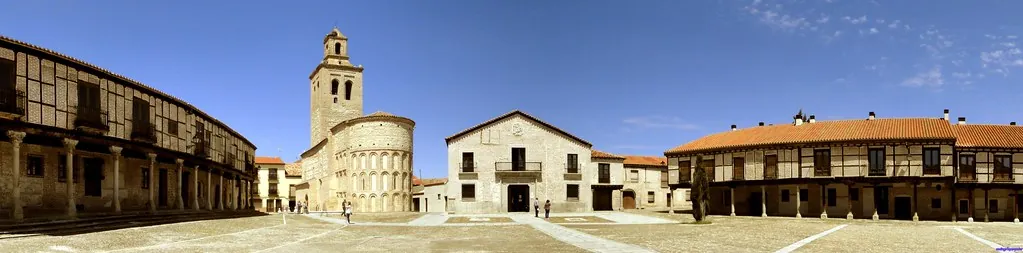
El edificio más visible es la iglesia parroquial, dedicada a Santo Domingo. Como ocurre en muchos templos de La Moraña, muestra varias fases constructivas. La base parece ser de los siglos XVI o XVII, con reformas posteriores. Su aspecto exterior es sobrio, de mampostería, con una torre que se distingue desde la distancia.
No suele estar abierta al público, algo habitual en pueblos de este tamaño. Aun así, la plaza en la que se sitúa sirve como referencia del núcleo original.
El resto del caserío responde a una arquitectura popular ligada a la actividad agraria. Las casas son de una o dos plantas, con muros gruesos y portones grandes pensados para el paso de carros. En algunas parcelas se reconocen aún los corrales cerrados y las construcciones auxiliares para animales o herramientas.
No todo está restaurado, y algunas partes muestran el paso del tiempo, algo esperable con una población tan reducida. El conjunto, sin embargo, mantiene una coherencia que ayuda a entender cómo eran estos pueblos antes de las transformaciones recientes.
El paisaje abierto
El principal interés de Santo Domingo de las Posadas está en su entorno. La Moraña es una llanura agrícola extensa donde el cielo tiene casi tanto peso como la tierra. Los campos cambian de color con las estaciones: verde intenso en primavera, dorado cuando el cereal madura, y tonos terrosos en los barbechos.
Basta salir del pueblo por cualquiera de los caminos agrícolas para comprender la geografía. Son pistas anchas, transitadas por tractores, que se prolongan en línea recta. Caminar o pedalear por ellas da una idea clara de la escala del territorio.
Este tipo de paisaje es también hábitat de aves esteparias. Con paciencia y manteniendo una distancia respetuosa con los cultivos, se pueden avistar especies como avutardas, sisones o aguiluchos, todas ellas ligadas a los secanos castellanos.
El amanecer y, sobre todo, el atardecer suelen ser los momentos más gratificantes para observar el entorno. La luz rasante define las líneas de los campos y acentúa la sensación de amplitud.
Caminar por los caminos de tierra
La gente que viene aquí lo hace generalmente para pasear sin prisa. El terreno es llano, sin dificultad técnica. Hay que tener en cuenta dos cosas: la sombra es escasa y las distancias entre pueblos pueden ser largas.
Un recorrido sencillo consiste en salir del casco urbano por una pista y caminar unos cientos de metros. Desde allí, el pueblo se reduce a la torre de la iglesia y un pequeño grupo de casas bajas rodeadas de cultivos.
En noches despejadas, la escasa contaminación lumínica permite ver el cielo con cierta claridad una vez que te alejas unos minutos del centro.
Un calendario local
Las fiestas del pueblo siguen un patrón común en la región. Se vinculan al calendario religioso y a encuentros que reúnen a los vecinos con quienes regresan en verano.
Suelen incluir actos religiosos y comidas comunitarias, pensadas más para la gente del lugar que para atraer visitantes. En núcleos de este tamaño, estas fechas son también cuando la actividad se nota brevemente.
Cuestiones prácticas
Santo Domingo de las Posadas es muy pequeño y carece de servicios para visitantes. Conviene llevar agua y planificar la comida o cualquier compra en localidades mayores cercanas.
La visita al pueblo en sí es breve. En menos de una hora se puede recorrer y entender su trazado. Lo que suele permanecer más tiempo es la impresión del paisaje: su escala, su quietud y la forma en que refleja una relación antigua entre las personas y la tierra.