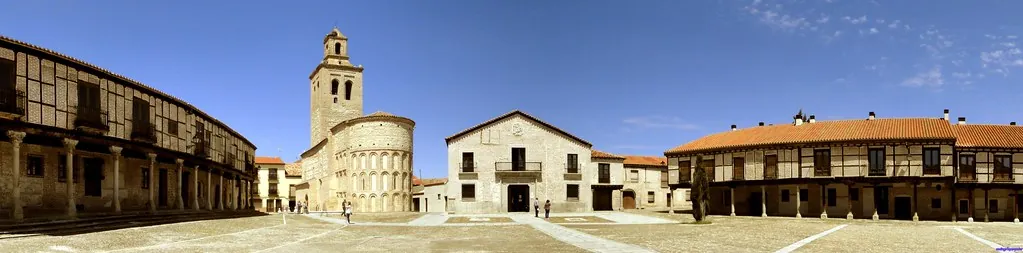
Vista aérea de Santo Tomé de Zabarcos
Instituto Geográfico Nacional · CC-BY 4.0 scne.es
Castilla y León · Cradle of Kingdoms

Santo Tomé de Zabarcos

At 960 m above the cereal plains of La Moraña, the horizon bends like the lip of a saucer. Santo Tomé de Zabarcos sits on the rim, a grid of stone ...

70 inhabitants · INE 2025
959m Altitude

Why Visit

Mountain Church of Santo Tomás Rural routes

Best Time to Visit

summer

Santo Tomás Festival (July) julio

Things to See & Do
in Santo Tomé de Zabarcos

Heritage

  • Church of Santo Tomás
  • Crop fields

Activities

  • Rural routes
  • Rest

Festivals
& & Traditions

Fecha julio

Fiestas de Santo Tomás (julio)

Las fiestas locales son el momento perfecto para vivir la autenticidad de Santo Tomé de Zabarcos.

Full Article
about Santo Tomé de Zabarcos

Farming village; known for its church and the quiet of the plain.

Ocultar artículo Leer artículo completo

At 960 m above the cereal plains of La Moraña, the horizon bends like the lip of a saucer. Santo Tomé de Zabarcos sits on the rim, a grid of stone houses so small that the parish church bell can wake every resident and most of the dogs. Seventy souls are on the roll today; on a quiet afternoon the storks on the tower outnumber them.

This is Castilla y León stripped to its bones: no gift shops, no interpretative centre, just the smell of straw and diesel drifting down Calle Real. The village works to a calendar older than Spain itself—sow in November, pray in December, harvest in July, repeat. Tourists who arrive expecting a show leave disappointed; those who arrive expecting silence usually stay for the sunset.

A village that forgot to grow

The houses are the colour of dry biscuits, their roofs weighted with ancient slabs of slate. Adobe walls bulge politely, like elders easing their belts after lunch. A single bar opens at eight for coffee and closes when the owner feels like it; if the metal shutter is down you drive to Arévalo, 18 km east. The only steady commerce is the agricultural co-op, where farmers queue for diesel and complain about the price of wheat.

There is no ticket office, no guided tour. You park beside the playground—two swings and a slide that squeaks—and start walking. The church of Santo Tomé, rebuilt piecemeal since the 1500s, keeps its best stone for the tower: perfect blocks of granite hauled here by oxen before England had a proper navy. Inside, the nave is cool and plain; frescoes peeled away centuries ago, leaving ghost rectangles on the lime-wash. Drop a euro in the box and the sacristan will switch on the lights long enough to read the only plaque, a 1734 note recording flood damage "que casi acabó con nosotros".

Behind the altar a tiny museum cupboard displays three silver candlesticks and a wooden Virgin whose paint has retreated to the folds of her cloak. It is locked on weekdays; ask for the key at number 17 across the square, and someone’s aunt will wipe her hands on her apron before leading you back.

Roads that disappear into themselves

Every street ends at a wheat field. The GR-14 long-distance footpath skirts the village, but way-markers are sporadic and the landscape is so open that a walker can invent a route simply by choosing a telegraph pole on the horizon and aiming for it. In May the soil smells of iron; in July the same earth lifts as ochre dust that powders your shins. Cyclists appreciate the gradients—there aren’t any—but carry two bottles; the nearest fountain is back in the plaza and the next is wherever a farmer has left a hosepipe running.

Birdwatchers settle on the crumbling stone walls just after dawn. Great bustards occasionally flap across the plough, looking like badly-loaded laundry. Lesser kestrels hunt the verge, diving so low that you feel the draught. No hides, no entrance fee, just the understanding that the field on your left is someone’s livelihood and the tractor always has right of way.

Winter wind, summer furnace

At this altitude the season announces itself without pleasantries. January mornings start at –6 °C; the wind barrels across the plateau and finds every gap in your anorak. Roads ice over and the school bus from Arévalo sometimes can’t climb the last hill—classes are cancelled by WhatsApp. Summer repays the insult with 36 °C shadeless heat; even the swallows fly at knee-height to keep cool. The wise schedule walks for the hour after sunrise or the ninety minutes before the sky turns the colour of a gas burner.

Spring and autumn are the comfortable windows, when the stubble fields glow soft green and the air smells of crushed thyme. If you want wild flowers come in late April; if you want to photograph stubbles burning come mid-March, when farmers torch the previous year’s straw and the horizon flickers like a faulty fluorescent tube.

Food you have to drive for

There is no restaurant menu waiting on a chalkboard. The village bakery closed in 2011; bread arrives in a white van that beeps its horn at ten o’clock. Self-caterers should stock up in Arévalo: Mercadona for staples, the Saturday market for peppers and morcilla. If you are staying in one of the two village apartments (Blason de los Serrano I and II, £65 a night, booked through the Arévalo tourist office) bring olive oil, coffee and anything green—the nearest supermarket lettuce has travelled farther than you have.

For a sit-down meal drive 12 km north to Fontiveros, where Posada Palacio Manjabalago serves roast suckling pig for €22 and lets you pour your own wine from a clay pitcher. Madrigal de las Altas Torres, 20 km south, does a fixed-price menú del día at Bar Asturias—three courses, water and coffee for €14, but arrive before two or the dining room fills with tractor drivers on their lunch break.

When nothing happens on purpose

Festivities are short, loud and rooted in December. The fiesta patronal honouring St Thomas lands around the 21st; the priest says an extra mass, the village women fry doughnuts in the bar, and someone produces a CD of pasodobles last updated in 1998. Fireworks are let off at midday so the livestock don’t spook. In mid-August the emigrants return—grandchildren who now work in Madrid or Valladolid—and a sound system appears in the plaza for one night of Latin pop. Tickets are not required; donations collected in a flowerpot cover the diesel generator.

There is no heritage interpretation centre, no artisanal cheese stall. The nearest approximation to organised culture is the open-air stone cross beside the cemetery, carved with the date 1605 and the warning "Acordaos de vuestros fin"—remember your end. It is less Instagram caption, more memento mori.

How to arrive, how to leave

Madrid-Barajas is the simplest gateway: collect a hire car from Terminal 1, swing onto the AP-6 north-west, fork onto the AP-51 towards Ávila, then take the N-502 to Arévalo. The final 18 km are on the CL-501, a single-carriageway so straight it could be used to calibrate a ruler. Total driving time from the airport: 1 h 45 min, tolls €14.45. Public transport is theoretical: ALSA coaches link Madrid with Arévalo twice daily, but the connecting bus to Santo Tomé was axed in 2013. A taxi from Arévalo station costs €35—book the mobile number stuck to the waiting-room window or you will wait for nothing.

Accommodation inside the village is limited to the two Blason apartments; both have Wi-Fi that falters when the wind is easterly. If you prefer a pool, Hotel Rural Casa del Oso lies ten minutes away by car, a converted grain store with beamed rooms at €90 B&B. Whichever you choose, pack a light jumper even in July—the plateau cools sharply after eleven at night.

Santo Tomé de Zabarcos will not change your life. It offers no epiphany, no souvenir magnet, barely a postcard. Instead it offers scale: a place where the sky is larger than the human story beneath it, and where the quiet is so complete you can hear the wheat growing when the wind drops. Bring walking boots, a sense of direction and enough petrol to leave when you are ready. The village will still be there, counting seasons rather than visitors, indifferent and oddly comforting in equal measure.

Key Facts

Region
Castilla y León
District
La Moraña
INE Code
05230
Coast
No
Mountain
Yes
Season
summer

Livability & Services

Key data for living or remote work

2024
TransportTrain nearby
HealthcareHospital 23 km away
EducationElementary school
Housing~6€/m² rent · Affordable
CoastBeach nearby
January Climate4°C avg
Sources: INE, CNMC, Ministry of Health, AEMET

Planning Your Visit?

Discover more villages in the La Moraña.

View full region →

More villages in La Moraña

Traveler Reviews