Full Article
about Sinlabajos
Town with a past: the Catholic Monarchs’ son died here; Mudejar architecture.
Ocultar artículo Leer artículo completo
The tractor arrives at 7:43 am. Not 7:30, not quarter to eight—7:43, every morning without fail. Its diesel engine cuts through the silence of Sinlabajos like a rooster that learned mechanics instead of crowing. At 827 metres above sea level, where the air thins and the wheat stretches until it fuses with the horizon, this is how days begin.
The Arithmetic of Smallness
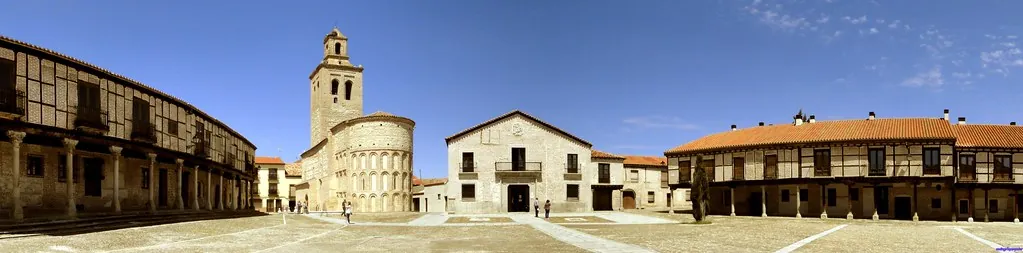
One hundred and thirty-four souls. One bar that opens when the owner's arthritis permits. One church bell that still rings the hours, though the tower leans slightly northwest from centuries of Castilian wind. The village occupies barely a kilometre of the province of Ávila, yet it contains entire textbooks of rural Spanish architecture—stone houses with wooden beams older than the United Kingdom itself, adobe walls thicker than a London terrace is wide, and those distinctive corrals where families once kept their pigs beneath the same roof that sheltered their children.
Walking Sinlabajos takes twenty-three minutes if you dawdle. Start at the church, dedicated to San Pedro like half the villages in Castilla y León, and work your way clockwise. The stone changes colour as you move—golden near the plaza where afternoon sun pools, grey on the northern streets that winter never quite abandons. Doorways shrink as you ascend the slight hill toward the cemetery. Spaniards have grown taller since these houses were built; anyone over five foot ten will develop an intimate relationship with the lintels.
The Calendar That Governs Everything
Spring arrives suddenly, usually during the second week of April. Overnight, the monochrome plateau erupts into green so violent it hurts your eyes after months of ochre. That's when photographers appear, climbing the dirt track south of the village to capture wheat fields that ripple like water in the wind. They leave disappointed half the time—the plateau's light is tricksy, either brutal or flat, rarely cooperative.
Summer belongs to the combine harvesters. They work in formation, three machines moving like dancers across fields that measure kilometres rather than hectares. The air fills with chaff; it settles on windowsills, in lungs, on the ice cubes of your gin and tonic at Casa Siete Lagos. The village's only proper accommodation charges €80 per night for a two-bedroom house that sleeps four, but they've been booked solid during harvest since 2019. Plan ahead or prepare to drive forty minutes from Arévalo.
October means mushrooms if the rain cooperates. Locals guard their spots like state secrets, though they'll sell you a kilo of níscalos for twenty euros if you ask politely and pretend not to notice the bulges in their jacket pockets. The restaurant—singular, no name beyond "Bar"—serves them with egg and local chorizo. It's the only dish on offer most days, unless María's grandson has brought rabbit from the city.
The Sound of No Cars Coming
Silence here has texture. During afternoon siesta, roughly 2 pm to 5 pm depending on season, you can hear your own heartbeat echoing against the stone walls. Then comes the wind, always the wind, carrying the smell of earth and something greener that might be thyme or might be the ghost of everyone's grandmother's garden.
The roads empty in both directions. The CL-501 passes twelve kilometres south, close enough for access, distant enough that Sinlabajos remains acoustically intact. Drivers heading from Madrid to Galicia flash past at 120 kilometres per hour, unaware that above them, on this elevated plain, life continues much as it did when their grandparents were children. Satellite dishes sprout from roofs like metallic mushrooms, but WhatsApp hasn't managed to hurry the rhythm of days that still revolve around sun and seasons rather than stock markets and status updates.
When the Village Remembers How to Party
August transforms everything. The population quintuples as families return—children who left for Valladolid's universities, grandchildren born in Barcelona who speak Spanish with Catalan accents. The plaza fills with plastic chairs and long tables. Someone's cousin brings speakers from Madrid; suddenly everyone knows how to dance sevillanas, even the teenagers who last week were pretending to be too cool for anything that wasn't reggaeton.
The bull runs aren't Pamplona. They release one young animal, horns wrapped in padding, into a makeshift ring constructed from hay bales. Local boys show off; visitors from London or Berlin photograph everything for Instagram stories that will earn them concerned messages from friends who don't understand that this isn't cruelty, just tradition wearing different clothes. The animal survives. Everyone drinks more wine than is sensible. Someone's grandfather starts singing coplas that predate Spotify by several centuries.
The Honest Truth About Visiting
Come prepared or don't come at all. The village shop closed in 2008; the nearest supermarket sits fourteen kilometres away in Mingorría, opens 9 am to 2 pm then 5 pm to 8 pm, and stocks nothing resembling fresh basil or oat milk. Mobile reception varies according to weather and your provider—Vodafone works better than O2, but neither copes well with the granite hills that surround this place.
Winter bites. At this altitude, temperatures drop to minus fifteen; the road becomes an ice rink from December through February. Spring brings mud that will swallow your rental car's tyres if you ignore local advice about where not to park. Summer sun at eight hundred metres burns faster than you'd expect—pack SPF 30 and a hat, or learn what heatstroke feels like while walking between fields that offer zero shade.
Yet something happens here that doesn't translate to TripAdvisor reviews. Maybe it's watching Antonio, eighty-seven years young, leading his sheep across fields his family has worked since records began. Perhaps it's the moment when you realise that the stone beneath your feet has witnessed Roman legions, Moorish raiders, Napoleonic armies, and civil war, yet still supports the weight of daily life with quiet indifference.
Sinlabajos won't change you. It has neither the facilities nor the pretension for transformation. What it offers instead is simpler and rarer: a place where clocks become suggestions rather than masters, where community survives not as nostalgia but as necessity, where the relationship between human settlement and surrounding landscape remains visible, comprehensible, honest.
Leave before dark if you're staying in Salamanca. The road twists, and local drivers know every bend by heart—they'll pass your cautious rental at speeds that seem suicidal until you realise they've been navigating these curves since before you learned to walk. Or stay overnight at Casa Siete Lagos, where the silence might keep you awake until you adjust to the absence of urban white noise. Either way, you'll carry away something that's becoming increasingly precious: proof that places still exist where Google hasn't mapped every mystery, where life proceeds according to rhythms older than the internet, where the view from your window changes with seasons rather than property developers.
The tractor will start again at 7:43 tomorrow. Some things, thankfully, remain beyond the reach of algorithms and travel influencers.