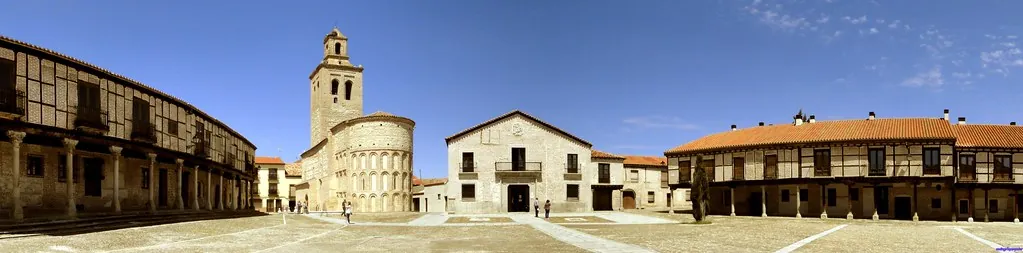
Vista aérea de Tiñosillos
Instituto Geográfico Nacional · CC-BY 4.0 scne.es
Castilla y León · Cradle of Kingdoms

Tiñosillos

The church bell strikes noon and nobody hurries. Two elderly men pause outside the single bar, caps in hand, debating yesterday’s rainfall while a ...

732 inhabitants · INE 2025
867m Altitude

Why Visit

Mountain Church of the Assumption Hiking through pine forests

Best Time to Visit

summer

San Marcos Festival (April) agosto

Things to See & Do
in Tiñosillos

Heritage

  • Church of the Assumption
  • Pine forests

Activities

  • Hiking through pine forests
  • mushroom picking

Festivals
& & Traditions

Fecha agosto

Fiestas de San Marcos (abril), Fiestas de verano

Las fiestas locales son el momento perfecto para vivir la autenticidad de Tiñosillos.

Full Article
about Tiñosillos

A Morana village surrounded by pine forests; known for its church and local industry.

Ocultar artículo Leer artículo completo

The church bell strikes noon and nobody hurries. Two elderly men pause outside the single bar, caps in hand, debating yesterday’s rainfall while a tractor rumbles past at walking pace. This is Tiñosillos, a granite-and-adobe scatter of 760 souls set on a high Castilian plateau forty minutes south-west of Ávila city. No souvenir stalls, no coach parks, just the smell of straw drifting from open barns and the sound of larks somewhere above the wheat.

The Plain Truth

At 867 m above sea level the air is thinner than on the Cantabrian coast and the sun carries real weight, even in April. The village sits in the centre of La Moraña, a bread-basket basin that ripples with cereal crops from March to July. When the wind blows, which is most afternoons, the fields move like water; in high summer they turn the colour of a lion’s pelt and crack underfoot. Winters reverse the palette: frost feathers the stone walls, the population halves, and the N-501 to Medina del Campo can ice over before breakfast.

There is no dramatic gorge or cliff-top hermitage here. The appeal is horizontal: forty-kilometre sight-lines that end in the faint blue saw-teeth of the Sierra de Gredos. Photographers arrive for the solstice light—honey-coloured at dawn, metallic by dusk—and for the minimalist geometry of threshing circles dotted between plots. Bring a long lens; the only vertical features are church towers in neighbouring villages, each one a kilometre or two apart like beacons on a dry ocean.

What Passes for a Centre

The plaza is a rectangle of beaten earth flanked by houses the colour of oatmeal. Their wooden doors, some three centuries old, still close with a drop latch rather than a lock. Number 14 has a semi-circular stone grain chute built into the façade—last used in the 1960s, now colonised by house martins. Opposite, the parish church of San Andrés keeps its bell in a squat tower more fortress than baroque. Inside, the air smells of beeswax and burnt straw; the altarpiece is plain pine, painted a sober terracotta that has faded to the shade of watered-down tomato soup. Sunday mass is at eleven; visitors are expected to stay for the offertory, even if they understood none of the sermon.

Walk two streets east and the settlement dissolves into threshing floors and sheep wire. Adobe walls bulge like loaves left too long to prove; many are capped with broken roof tiles to keep the rain from melting them back into mud. A working corral offers the best lesson in local engineering: granite posts linked by chestnut rails, a gate fashioned from an old iron bed-frame, and a feeding trough carved from a single block of stone so heavy it took six men and a mule to move it into place.

Tracks across the Bread-basket

Eight signed footpaths radiate from the village, all of them flat, most of them following the drove roads that merchants used to reach the fairs at Medina del Campo. The 7 km loop to Arévalo is the easiest: start by the cemetery, keep the telegraph poles on your left, and simply follow the dust. Wheat gives way to sunflowers, then to a shallow lagoon frequented by migrating godwits in April and September. There is no café en route, so fill a bottle at the public fountain on Calle Real; the water tastes faintly of iron and stays cold even after an hour in midday heat.

Mountain-bike tyres work better than walking boots on the powdery soil. Local farmer José María rents out two well-worn Treks for €15 a day; his workshop is the green hangar behind the cooperative grain store. He will also draw you a mud-map of the single-track that cuts across to El Campillo, a hamlet whose bar opens only when the owner feels like it—usually Saturday evening, never before nine.

Eating, or Otherwise

Tiñosillos keeps one restaurant, Casa Herminia, open Thursday to Sunday. The menu is laminated and never changes: judiones beans with chorizo, roast suckling pig the size of a handbag, and arroz con leche thick enough to stand a spoon in. A portion feeds two; ask for media ración unless you have ploughed a field beforehand. House wine comes from a plastic tap behind the counter and costs €1.80 a glass; it tastes of blackberries and aluminium. Vegetarians get a plate of pisto—pepper and aubergine stew—plus as much bread as they can butter. Pudding is optional; most locals skip straight to coffee and a shot of orujo that smells of aniseed and disappears like a match-flame.

If the dining room is shuttered, drive eight minutes north to Arévalo and try Asador José María (no relation to the bike man). Their lechazo arrives at the table still crackling, scored in the Castilian way so every rib becomes a ready-made handle. Expect to pay €25 a head with wine.

Where to Lay Your Head

Accommodation within the village limits is thin. Hotel Rural Casa del Oso has six rooms above a former grain store, beams blackened by centuries of wood-smoke, Wi-Fi that forgets it exists after 22:00. Doubles run €60–€70 including a breakfast of churros and thick hot chocolate; pack slippers, the stone floors are cold even in May. Budget alternatives are scattered across the plateau: Airbnb lists village houses from €17 a night, most with open fireplaces and blankets that smell faintly of lavender moth-repellent. Hostal del Campo, five kilometres away beside the N-501, charges €35 for a no-frills room facing the wheat; lorries fade after 23:00 but start again at dawn—light sleepers should bring ear-plugs.

When to Come, When to Leave

Late April brings green wheat and nesting storks; photographers get emerald horizons and cloudscapes that would suit a Turner canvas. July is golden but fierce—temperatures brush 36 °C by 15:00 and shade is scarce. August fiestas see the population treble as emigrant families return; there is a portable disco in the plaza and the church is draped with coloured bulbs. Book accommodation early or stay in Arévalo and taxi in. October offers empty roads and the smell of newly pressed straw, while January can be magical if snow settles: the white fields reflect moonlight like plaster, and the village hears every owl for miles.

There is no railway; Madrid is ninety minutes by car via the A-6 and N-501, two hours if you obey the 90 km/h limit past the radar at Sanchidrián. Buses from Ávila reach Tiñosillos on schooldays at 07:45 and 14:00, returning at 13:30 and 19:15. Miss the last one and you are looking at a €50 taxi ride.

Parting Glance

Stay longer than an hour and someone will ask where you are going, where you have been, and whether you have eaten. Answer politely, accept the offered coffee, and you will leave with a bag of homemade biscuits and directions that assume every landmark is a cousin’s field. Tiñosillos offers no postcard moment, no summit to conquer—just the slow certainty that Spain still contains places where the loudest sound is grain rubbing against itself in the afternoon breeze. Drive away at sunset and the village shrinks to a dark line between gold and cobalt, as if someone had drawn a hyphen across the horizon.

Key Facts

Region
Castilla y León
District
La Moraña
INE Code
05242
Coast
No
Mountain
Yes
Season
summer

Livability & Services

Key data for living or remote work

2024
ConnectivityFiber + 5G
TransportTrain 13 km away
HealthcareHospital 13 km away
Housing~5€/m² rent · Affordable
January Climate4°C avg
Sources: INE, CNMC, Ministry of Health, AEMET

Planning Your Visit?

Discover more villages in the La Moraña.

View full region →

More villages in La Moraña

Traveler Reviews