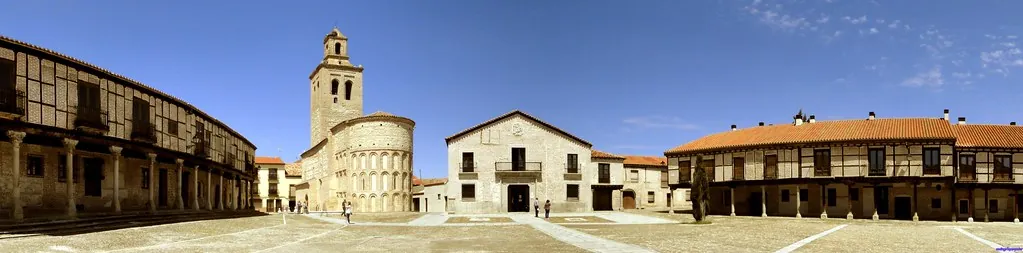
Vista aérea de Villanueva del Aceral
Instituto Geográfico Nacional · CC-BY 4.0 scne.es
Castilla y León · Cradle of Kingdoms

Villanueva del Aceral

The church bells strike noon, their bronze voices carrying across wheat fields that stretch beyond sight. In Villanueva del Aceral, population 86, ...

86 inhabitants · INE 2025
843m Altitude

Why Visit

Mountain Church of San Andrés Cycling routes

Best Time to Visit

summer

San Andrés Festival (November) agosto

Things to See & Do
in Villanueva del Aceral

Heritage

  • Church of San Andrés
  • Crop fields

Activities

  • Cycling routes
  • Rural tourism

Festivals
& & Traditions

Fecha agosto

Fiestas de San Andrés (noviembre), Fiestas de verano

Las fiestas locales son el momento perfecto para vivir la autenticidad de Villanueva del Aceral.

Full Article
about Villanueva del Aceral

Village on the cereal plain; Mudejar church and traditional architecture

Ocultar artículo Leer artículo completo

The church bells strike noon, their bronze voices carrying across wheat fields that stretch beyond sight. In Villanueva del Aceral, population 86, this constitutes the day's main event. The bells haven't changed their rhythm since 1953, when the current mechanism was installed. They ring whether anyone's listening or not.

At 840 metres above sea level, this Castilian outpost sits high enough to escape the worst of Spain's summer heat, yet low enough to avoid the harsh winters that grip the Gredos mountains visible on clear days. The altitude creates a particular quality of light that photographers attempt to capture but rarely succeed—something about how the endless sky meets the infinite plain, with only the occasional holm oak to break the horizon.

The Architecture of Absence

Walking the village's three streets takes precisely twelve minutes, assuming you pause to read the stone plaque dedicated to local boys who fought in Cuba, 1898. The houses demonstrate medieval building techniques that disappeared elsewhere in Spain decades ago: adobe walls thick enough to keep interiors cool during August's 35-degree afternoons, stone foundations quarried from nearby fields, timber beams cut from forests that no longer exist.

Many dwellings stand empty. Their wooden doors, once painted municipal blue, have weathered to the colour of storm clouds. Through broken shutters, you glimpse hand-loomed bedspreads still covering rope-strung beds, ceramic bowls stacked on dressers, family photographs fading in their frames. The departed owners—mostly children who left for Madrid, Barcelona, or London's construction sites—never returned to claim these fragments of their parents' lives.

The church tower, visible from every approach road, contains six bells cast in Toledo during the 18th century. The largest weighs 426 kilograms and requires two men to ring properly. On festival days, when extra hands materialise from surrounding villages, the bells create a cascade of sound that makes local dogs howl and sends flocks of pigeons wheeling above the terracotta roofs.

What the Fields Remember

The surrounding landscape operates on agricultural rhythms that predate smartphones. From February through April, winter wheat emerges as green shoots across the red earth. By June, everything turns golden. Harvest happens in July, when combine harvesters work through the night, their headlights creating alien constellations across the darkness.

These fields once supported twenty times the current population. Medieval tax records, preserved in Ávila's provincial archive, show Villanueva del Aceral paying more grain tribute than nearby towns now considered more significant. The soil remains fertile—locals claim you can grow anything except bananas—but industrial agriculture requires fewer hands. One farmer with modern equipment can manage what previously needed forty families.

Walking paths connect to neighbouring villages: Piedrahíta lies 7 kilometres northwest, with its ducal palace and Saturday market; El Barco de Ávila waits 12 kilometres south, where the Tormes river provides proper swimming. These aren't hiking trails in the British sense—more dirt tracks used by hunters and the occasional dog walker. The going remains flat, but carry water. There's no café culture here, no pub garden waiting at journey's end.

The Gastronomy of Making Do

Food reflects what grows locally and what people could preserve before refrigeration. Chickpeas from last autumn's harvest appear in every household, transformed into thick stews with wild mushrooms foraged from the nearby dehesa. Local lamb, grazed on mountain pastures, develops a flavour distinct from New Zealand imports—gamier, more complex, requiring slow cooking with plenty of garlic.

The village contains no restaurants. None. For meals, you drive to Piedrahíta's Mesón El Fogonazo, where £16 buys three courses including wine, or to El Barco's Asador Casa Macario for chuletón—beef chops the size of dinner plates, cooked over oak fires. Breakfast means coffee and toast in any provincial town's bar, where farmers discuss rainfall statistics with the seriousness Londoners reserve for house prices.

Cheese arrives from neighbouring goat farms: semi-curado varieties aged three months, developing a nutty flavour that pairs surprisingly well with local red wines. The region's extreme temperature variations—40 degrees in summer, minus 10 in winter—create ideal ageing conditions. One producer, Quesería La Nogala, welcomes visitors who telephone first. They speak no English, but cheese appreciation transcends language barriers.

Seasons of Silence

Spring brings the most dramatic transformation. March storms sweep across the plain, delivering rain that turns tracks to mud and fills ancient stone troughs. By late April, wildflowers create patches of colour—yellow, purple, white—against the green wheat. Temperatures hover around 18 degrees: perfect walking weather, though pack layers. Mountain weather changes faster than British rail services.

Summer hits hard. July and August mean 35-degree days with minimal shade. The village empties further as remaining residents flee to coastal family homes. This constitutes the worst time to visit—everything closes, nobody answers doors, and the landscape resembles burnt toast. If you must come, rise early. Dawn at 6:30 am provides the day's only comfortable walking hours.

Autumn delivers the region's finest moments. September maintains 25-degree afternoons while mornings require jackets. October paints the landscape ochre and rust. The harvest festival, usually the second weekend of September, sees the village's population temporarily quadruple. Emigrants return with city-raised children who stare wide-eyed at animals they've only seen in picture books.

Winter brings proper cold. January temperatures regularly drop below freezing. Snow arrives perhaps once yearly, transforming the brown landscape into something resembling the Scottish Highlands—briefly. When it happens, children appear from houses you assumed abandoned, building snowmen using carrots pilfered from winter gardens. The silence becomes almost supernatural; sound carries for miles across the frozen plain.

Practical Realities

Getting here requires commitment. Madrid's Barajas airport sits 130 kilometres east—ninety minutes on excellent motorways, then twenty minutes on roads where encountering another vehicle constitutes social event. Car hire becomes essential; public transport involves buses that run thrice weekly, if the driver's mother-in-law isn't ill, connecting through Ávila where trains reach Madrid in 90 minutes.

Accommodation means either the mysterious hotel with spa pool (location undisclosed, possibly imaginary) or rental houses booked through Spanish websites. English isn't widely spoken—phrasebook Spanish helps, though gestures and goodwill suffice. Mobile phone coverage varies by provider; Vodafone works, O2 doesn't. Bring cash—cards remain foreign concepts in villages where banking means driving to the provincial capital.

The nearest petrol station lies 15 kilometres away. Fill up whenever possible. Sunday means everything shuts, including garages. Medical emergencies require the 061 ambulance service—response times average 25 minutes, faster than some British rural areas. Tap water tastes mineral-heavy but won't cause illness.

The Weight of Emptiness

Villanueva del Aceral won't change your life. You won't discover yourself, find spiritual enlightenment, or post Instagram content that makes friends jealous. Instead, you'll witness something increasingly rare: a place continuing its centuries-old rhythm despite modernity's assault, where silence contains multitudes and the landscape's vastness makes human concerns appear appropriately small.

The village's greatest gift might be perspective. Standing in that enormous sky, surrounded by fields that fed Romans, Moors, and Franco's armies, you understand how brief our individual stories remain against this backdrop of continuous human habitation. The bells will keep ringing long after we've gone, marking time for whoever remains to listen.

Come if you're curious about what's being lost as Europe homogenises into coffee chains and identical high streets. Don't expect entertainment—bring patience, sturdy shoes, and willingness to appreciate subtlety over spectacle. The reward lies in experiencing a Spain that package holidays never reached, where every crumbling wall contains more genuine history than most museums, and where the stars remain visible because nobody thought to install streetlights.

Just remember to fill up with petrol before you arrive.

Key Facts

Region
Castilla y León
District
La Moraña
INE Code
05259
Coast
No
Mountain
Yes
Season
summer

Livability & Services

Key data for living or remote work

2024
HealthcareHospital 18 km away
Housing~5€/m² rent · Affordable
Sources: INE, CNMC, Ministry of Health, AEMET

Planning Your Visit?

Discover more villages in the La Moraña.

View full region →

More villages in La Moraña

Traveler Reviews