Full Article
about Vita
Town in western Moraña; noted for its church and quiet.
Hide article Read full article
A village shaped by the plain
Any look at tourism in Vita starts with a map of La Moraña. This region lies in the north of the province of Ávila and stretches out as a high, open plain where cereal farming has set the pace of life for centuries. Vita, now home to just over eighty residents, sits within this landscape at around 1,000 metres above sea level. Wind and wide horizons define the place as much as its houses and fields.
Most of the villages in La Moraña took shape between the 11th and 13th centuries, when the area became part of the Comunidad de Villa y Tierra de Ávila after the Christian expansion southwards. Exact founding dates are often unclear, yet Vita belongs to that same medieval repopulation process. Small settlements were organised around cereal cultivation and livestock, and that origin still explains the village layout and its direct connection to the surrounding land.
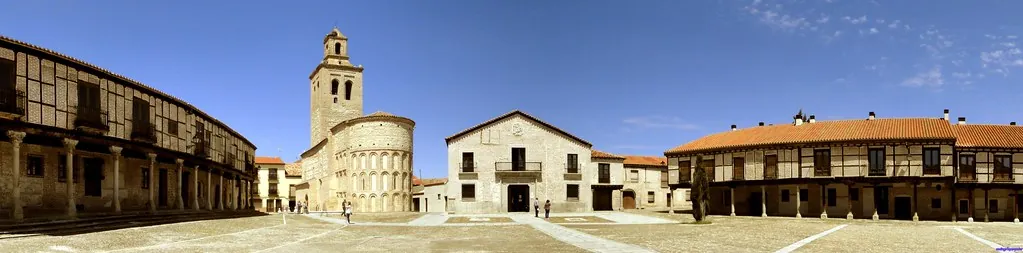
Vita’s character does not depend on major monuments. It shows itself in scale and everyday form. Streets are short. Yards sit behind houses. The architecture responds to the climate of the plateau. Stone appears in walls and base courses, often combined with brick or rammed earth, materials typical of this part of Ávila. These are practical buildings, designed to withstand winter conditions and make use of what the land could provide.
Church, fields and built heritage
The parish church, dedicated to San Miguel, stands at the centre of the village. The current structure appears to reflect layers of alteration over several centuries, which is common in rural churches across La Moraña. Its masonry base and restrained lines recall buildings from the late Middle Ages into the early modern period, when many villages replaced earlier hermitages with permanent parish churches.
Beyond the church, Vita’s heritage is closely tied to its agricultural surroundings. La Moraña forms one of the major cereal-growing plains in Castilla y León. The fields around the village show this continuity clearly. Large plots extend across the landscape, straight tracks cut through them, and there is very little tree cover. In June, as the wheat ripens, the colour of the land shifts completely. Winter brings a different scene, with the plain more exposed and the wind far more noticeable.
Within the village itself, elements of traditional rural architecture remain easy to spot. Large gateways built for carts, small internal courtyards, and agricultural outbuildings attached to homes all reflect a way of life closely tied to farming. These features are not decorative. They speak directly to a domestic economy organised around work in the fields.
Routes across La Moraña
Travel around Vita means crossing the plains of La Moraña. The terrain is gentle, which makes it suitable for walking or cycling along agricultural tracks that link one village to another. There are no major slopes to contend with. The dominant impression is one of open space.
This type of landscape also supports birdlife associated with steppe environments, which find a natural habitat here. Light plays an important role in how the land is experienced. Early morning and late afternoon tend to offer the most striking conditions, as shadows stretch across the ground and emphasise its lines.
Those interested in landscape photography will find constant material in these horizons. The light of the plateau changes markedly with the seasons. Spring brings green tones. Summer turns the fields gold. Colder months introduce more muted colours.
Vita does not operate as a destination with its own developed tourist services. It is usually explored as part of a broader route through La Moraña, with stops in several villages to understand how this agricultural territory is organised.
Traditions and the summer calendar
Local celebrations in Vita follow patterns seen in many small towns across the province. Patron saint festivities tend to take place in summer. At that time of year, people who live elsewhere often return, and the village briefly regains a higher level of activity.
Across La Moraña, the festive calendar moves from one municipality to another throughout the summer months. This circulation between villages forms part of the region’s social life and has done so for generations. The rhythm of these events reflects longstanding connections between communities spread across the plain.
Getting there
Vita lies about 45 kilometres north of the city of Ávila, within the flat expanse of La Moraña. Access is via local roads that run through farmland. Planning the route in advance is advisable, as distances between villages can feel long and services are limited. Travelling by car remains the most practical way to reach and move around this area.