Full Article
about Astorga
Capital of the Maragatería and crossroads; a monumental city with outstanding Roman and Modernist heritage.
Ocultar artículo Leer artículo completo
The clock strikes twelve, and two wooden figures in traditional maragato dress emerge from the baroque town hall. They chime the hour while tourists and locals alike glance up from their café con leche. It's a small moment, but one that captures Astorga's peculiar magic: a place where even the timekeeping comes with a side of local theatre.
Perched at 869 metres in the rolling hills of León's Maragatería region, Astorga has spent two millennia watching travellers pass through. The Romans founded Asturica Augusta here, making it one of northwest Spain's most important settlements. Today, those same roads bring pilgrims on the Camino de Santiago, their rucksacks a modern echo of the merchant caravans that once stopped to trade silver and wool.
The altitude makes a difference. Summer mornings arrive fresh, even in August, and winter can bring proper snow that lingers on the red-tiled roofs. The surrounding countryside folds into gentle mountains, their oak and chestnut woods turning gold each October. It's proper walking country, though the paths can be muddy after rain and the signposting occasionally assumes you already know where you're going.
Gaudí's Castle and Other Architectural Oddities
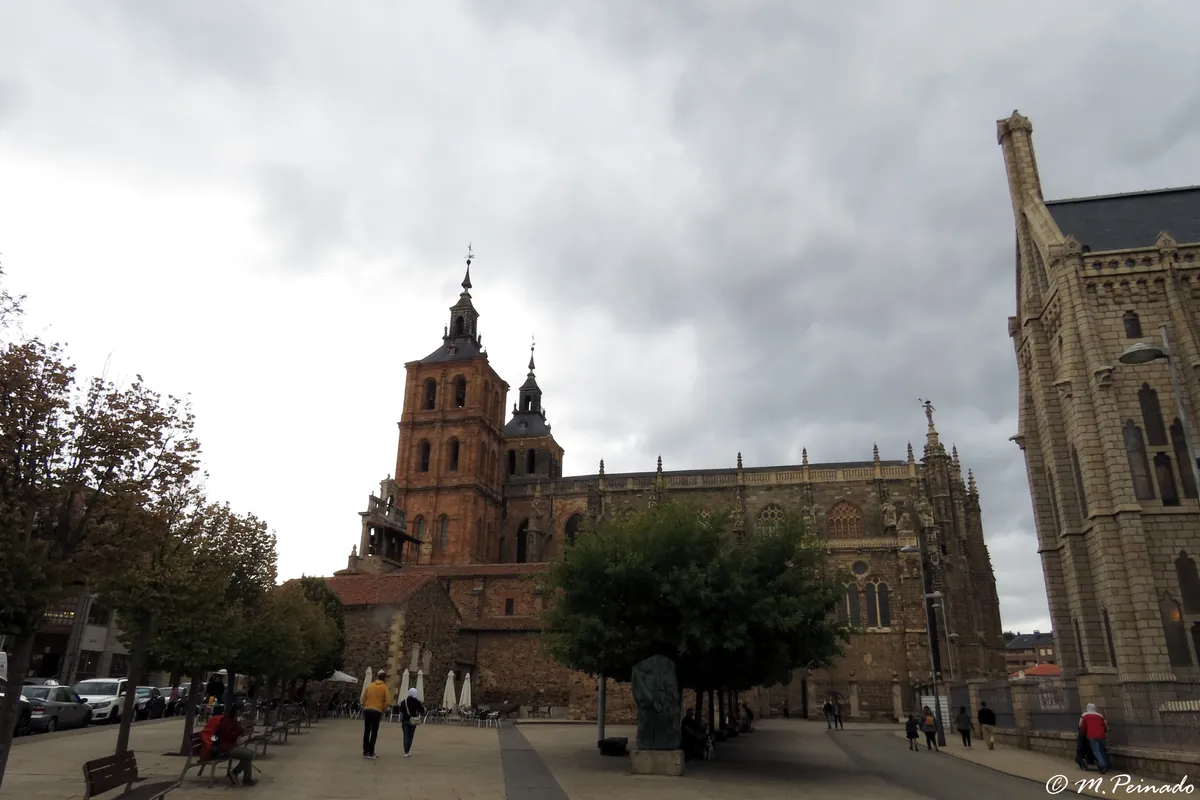
Antoni Gaudí's Episcopal Palace stops most visitors in their tracks. Built between 1889 and 1913, its honey-coloured stone rises like a fairytale fortress, all pointed towers and Gothic flourishes. Inside, the Museum of the Caminos traces the pilgrimage routes that converge here, though the real draw is Gaudí's architecture itself. The £5 entrance fee includes access to the upper floors, where the views across the red-roofed old town justify the climb.
Next door, the Cathedral of Santa María presents a different face to each century. Its baroque façade, completed in the 1700s, gives way to a Gothic interior where sunlight filters through stained glass onto elaborate choir stalls. The joint ticket with Gaudí's palace saves a couple of euros and covers the cathedral museum's collection of medieval goldwork. The Renaissance cloister offers a quiet escape from the plaza's bustle, particularly during the lunch-hour lull when tour groups disperse.
The Roman walls, dating from the 3rd century AD, still encircle much of the historic centre. A complete circuit takes about twenty minutes, passing through medieval gates and past sections where original stonework sits beside later repairs. The walk provides orientation and some decent photographs, though the interpretation boards assume a level of Latin that may have faded since school.
Beyond the Chocolate Box
Astorga's chocolate heritage surprises many visitors. The industry took root in the 18th century, when merchants returning from the Americas brought cacao up the Camino. The Chocolate Museum occupies a former factory where the machinery still works, though the displays are Spanish-only. Staff will produce English information sheets if asked, and the tasting at the end makes up for any linguistic confusion. The museum shop offers generous samples before purchase; the dark chocolate with almonds travels particularly well.
The Roman Museum provides better context for Astorga's classical past. Its mosaics, including a striking Medusa floor, illustrate daily life in Asturica Augusta. The adjacent archaeological site shows partial excavations of Roman baths, though opening hours vary seasonally and it's worth checking before making a special trip. The underground Ergástula galleries, once Roman prison cells, add a darker note to the classical tour.
Food here means the cocido maragato, served in reverse order to most Spanish stews. First comes the meat—chorizo, chicken, pork belly—followed by chickpeas and vegetables, with soup last. El Rincón del Arriero on Plaza San Francisco does a reliable version, though portions challenge even hearty appetites. Better to share and save room for hojaldres, puff-pastry parcels filled with pork or tuna that appear in most bar displays alongside the more familiar tortilla.
Walking the Maragatería
The Camino de Santiago cuts straight through town, its yellow arrows leading past albergues and specialist pilgrim shops. Even a short stroll along the marked route provides insight into the city's rhythm, particularly in early morning when walkers set out before the heat builds. The municipal albergue, modern and clean, fills quickly during peak walking months—May and September see the most foot traffic.
For proper hill walking, the Maragatería villages offer half-day routes through countryside that feels properly remote. Castrillo de los Polvazares, six kilometres west, preserves its stone houses and cobbled streets in careful conservation. The walk takes ninety minutes each way, following an old drove road that rises gently through oak woodland. Drivers should note the narrow lanes; larger hire cars struggle with the final approach to some villages.
Santa Colomba de Somoza, fifteen minutes by car, provides a taste of proper mountain terrain. Its 1,100-metre altitude means snow possible from November to March, and the village makes a good base for exploring the higher peaks of the Montes de León. The GR-84 long-distance path passes through, connecting to day circuits that reach 1,500 metres—proper boots essential, particularly after rain when the granite paths turn slippery.
Practicalities and Timing
Astorga works as a day trip from León, forty minutes by regular bus, though staying overnight allows for quieter morning exploration before the coaches arrive. The underground car park opposite Hotel Gaudí charges €12 for 24 hours—essential for anyone with a larger hire car, as the old-town streets narrow alarmingly beyond the main squares.
Most monuments close 2pm-5pm, making the Spanish siesta less negotiable than in bigger cities. Plan morning visits to Gaudí's palace and the cathedral, saving museums and wall walks for late afternoon when the light improves and temperatures drop. August brings fiestas honouring Santa Marta; expect processions, fireworks and bars open until dawn. It's livelier but still manageable compared to coastal resorts—book accommodation ahead, particularly for weekend nights.
The chocolate shops along Calle de la Sinagoga offer tastings and decent English service. Their drinking chocolate, thick enough to stand a spoon in, provides winter warmth when the altitude bites. Summer visitors should try the iced version, less common elsewhere in Spain and surprisingly refreshing after hot pavement exploration.
Astorga doesn't shout for attention. Its pleasures reveal themselves slowly: the way afternoon light catches Gaudí's stone, the smell of chocolate drifting from an open workshop door, the sound of Galician bagpipes as pilgrims pause in the main square. It's a working town that happens to contain remarkable things, rather than a museum piece preserved for display. That authenticity, increasingly rare on the tourist circuit, makes the climb to these highland streets worthwhile—whether you're heading for Santiago or simply seeking somewhere that Spanish daily life continues regardless of who's watching.