Full Article
about Trespaderne
Crossroads in Las Merindades and confluence of rivers; area of great archaeological value
Hide article Read full article
The Town That Makes You Pull Over
You know that feeling on a long drive, when you need to stop just to move your legs? You pick a random town off the highway, expecting a five-minute break. In Trespaderne, that pit stop has a habit of stretching into an hour. Maybe two. It happened to me. I was following the Ebro north, crossed the bridge, and saw the water glinting. Next thing I knew, I was walking along the bank with no real plan.
This isn't a grand entrance. Trespaderne is a junction. Literally. Roads from Burgos, the Basque Country, and Cantabria all meet here where the Nela river flows into the Ebro. For about 700 people, it’s home. For everyone else, it’s historically been a place you pass through. That’s its vibe: functional, unpretentious, a proper working town.
A Walk That Becomes The Plan
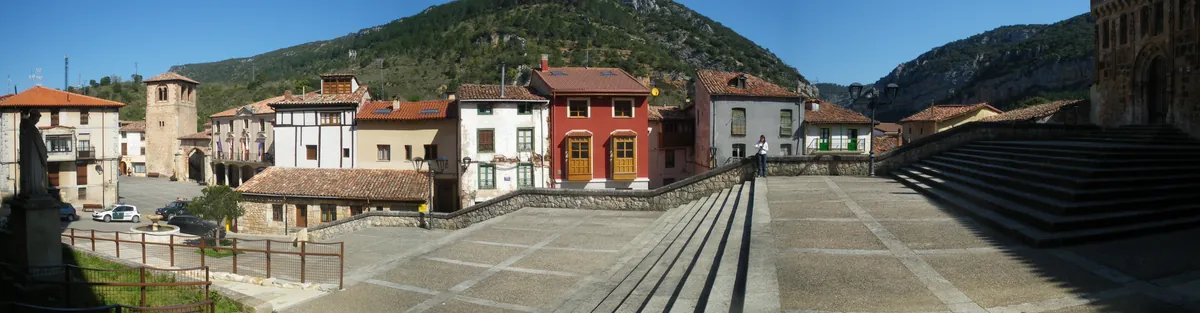
Don’t come with a sightseeing list. Come with time to kill. The centrepiece is the Iglesia de San Vicente Mártir, a stone church in the main square that feels more like a community anchor than a tourist attraction. It’s closed more often than not, which tells you everything about its real purpose.
The streets are a mix of old stone houses and modern builds. It’s not manicured. You’ll see laundry on balconies and tractors parked next to cars. The real move is to follow any street downhill until you hit water.
The spot where the Nela meets the Ebro isn’t marked with a fancy mirador. It’s just there, behind some houses. You can hear it before you see it: that low rush of two currents merging. On a hot day, the shade from the poplar trees by the bank is better than any terrace. It’s the kind of place where you sit on a rock and just watch the water move.
Your Basecamp for Getting Lost
Let's be honest: you're not here just for Trespaderne. You're here because it's smack in the middle of Las Merindades, and it's one of the most practical spots to sleep if you want to explore this region properly.
From here, you can reach gorges like La Horadada or medieval villages like Oña in under half an hour. The beauty of this area is in the accidental finds: you take a minor road because it looks interesting and stumble upon a tiny Romanesque hermitade or a waterfall no one bothered to signpost.
There are local paths along the rivers too, easy walks through poplar groves that feel miles away from any road. And if you're into fishing, ask locally about permits for the Ebro; you'll usually see someone casting a line.
Eating Like It's Winter All Year
The food here doesn't do subtlety. This is Castilla y León interior cooking, built for cold weather and physical work. Think cocidos and potajes (hearty stews), cordero asado (roast lamb) from nearby pastures, and robust embutidos from local butchers.
Menus are short and to the point. They serve what they know, and they've known it for generations. It's filling, straightforward fuel.
When The Square Comes Alive
Local life peaks during the fiestas for San Vicente Mártir, usually around late January or early summer depending on tradition (check dates locally). We're talking processions that probably use the same route they always have, music in the plaza mayor, and long communal meals.
It's not a spectacle built for outsiders; it's just everyone who lives here getting together because they always have done so these days each year.
So yeah, Trespaderne won't blow your mind with its beauty or history alone. But as somewhere to land after driving those winding Burgos roads? As somewhere quiet by two rivers where your only plan is deciding which valley to explore next? It works. It works really well. Just be ready for that quick pit stop to turn into something longer