07 - Sebastián Ágreda (CROPPED).png
Miguel. A. Gracia · Flickr 4
Castilla y León · Cradle of Kingdoms

Ágreda

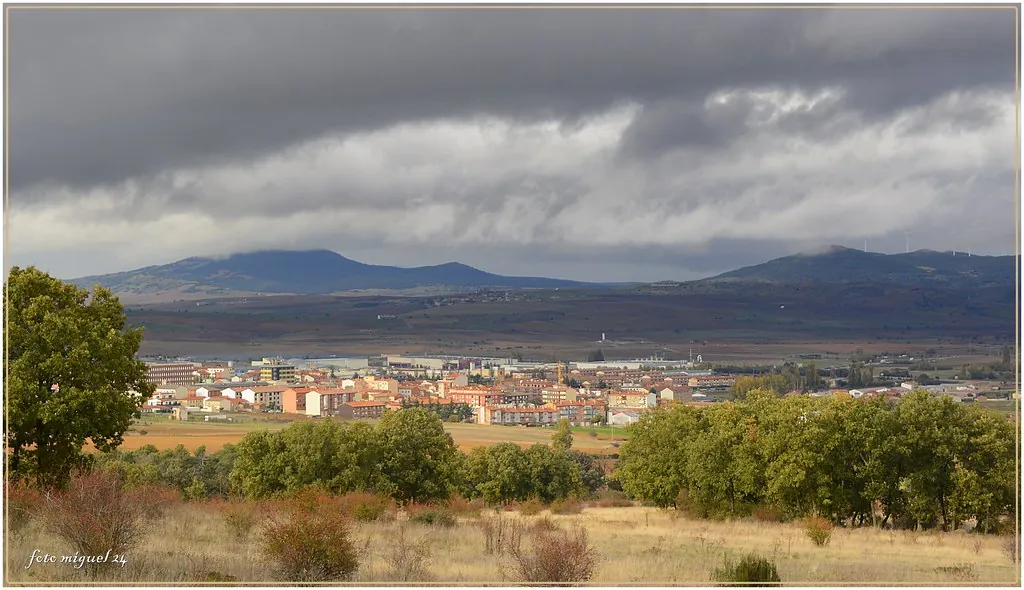
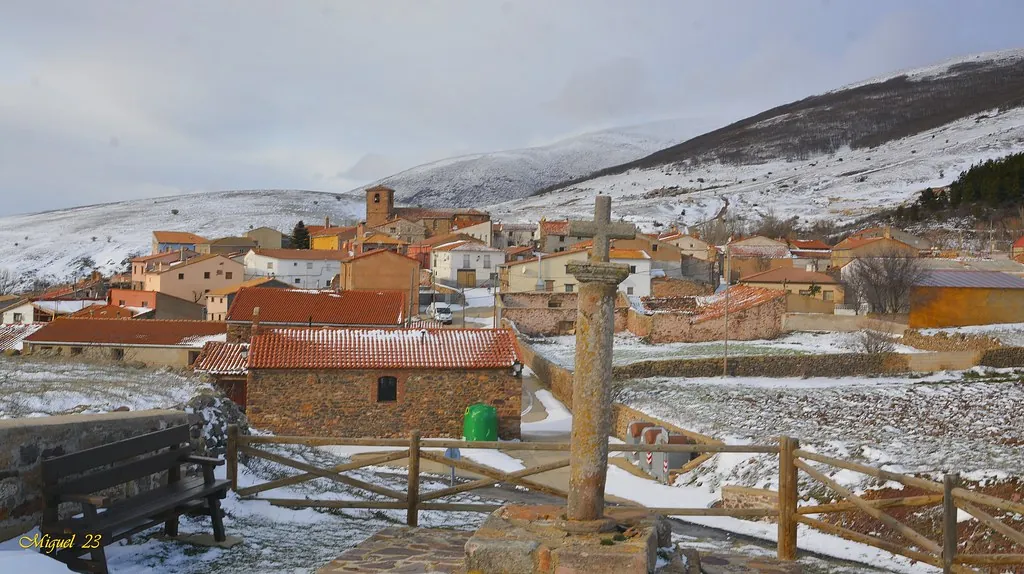
At 929 metres above sea level, Ágreda's stone houses appear to grow directly from the mountain rock. The morning mist often sits below the village,...

3,133 inhabitants · INE 2025
929m Altitude

Why Visit

Mountain Renaissance Garden of Don Diego de Castillejo Routes through Moncayo

Best Time to Visit

spring

Virgin of the Miracles (June) junio

Things to See & Do
in Ágreda

Heritage

  • Renaissance Garden of Don Diego de Castillejo
  • Church of San Miguel
  • Synagogue

Activities

  • Routes through Moncayo
  • Guided cultural tours

Festivals
& & Traditions

Fecha junio

Virgen de los Milagros (junio), San Miguel (septiembre)

Las fiestas locales son el momento perfecto para vivir la autenticidad de Ágreda.

Full Article
about Ágreda

Town of the Three Cultures at the foot of Moncayo, rich in history and monuments.

Ocultar artículo Leer artículo completo

At 929 metres above sea level, Ágreda's stone houses appear to grow directly from the mountain rock. The morning mist often sits below the village, making the medieval walls look like the ramparts of some impossible sky fortress. It's the sort of sight that makes you understand why this frontier settlement mattered so much – and why the drive up from the A-2 motorway takes a good forty minutes of switchbacks.

The altitude isn't just scenery. Even in late May, mornings can be nippy enough for a proper jacket, while August nights drop to comfortable sleeping temperatures without air conditioning. This climatic quirk shaped everything here: the thick stone walls, the small windows, the way locals still shutter their houses against afternoon heat that would feel mild down in Madrid.

Three Cultures, One Street Pattern

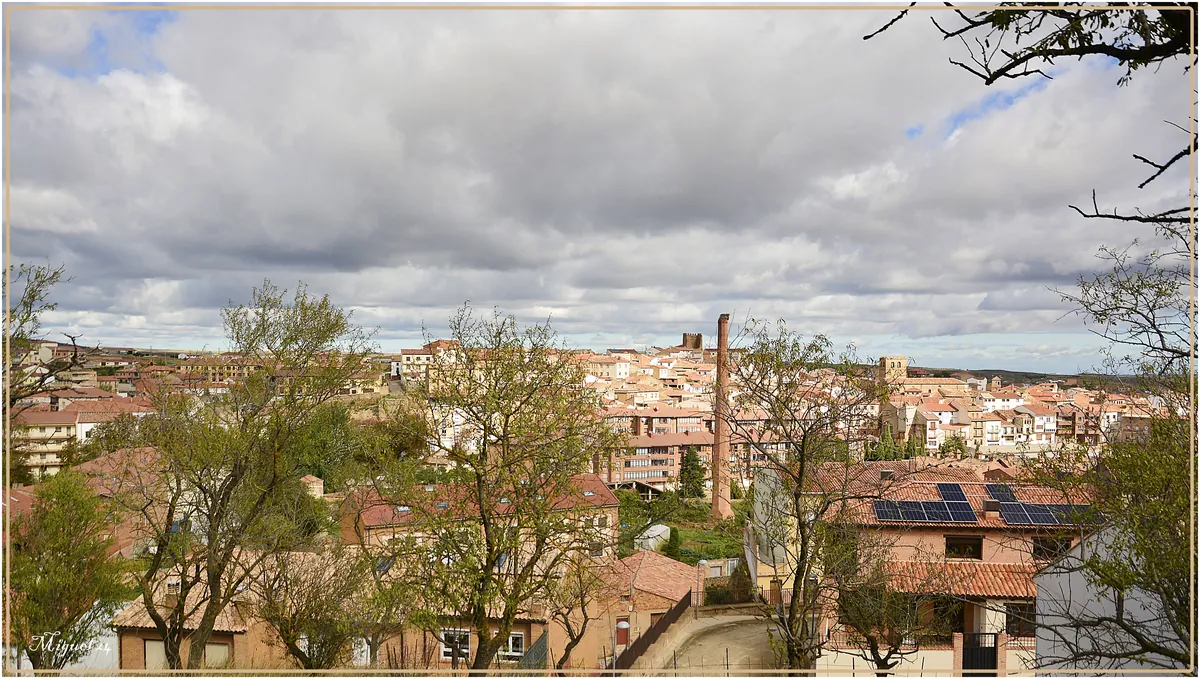
Ágreda's nickname – "city of three cultures" – could sound like tourism office packaging. The reality is more interesting. Walk from the Plaza Mayor up Calle del Arco and you're literally moving through centuries of religious coexistence. The Barrio Moro's alleyways twist like a North African medina, just wide enough for two mules to pass. Two minutes away, the Barrio de la Muela's rectangular grid marks where Jewish merchants laid out their quarter in the 13th century. Neither neighbourhood is a museum piece. Laundry hangs from balconies, kids kick footballs against 800-year-old walls, and the bakery on Calle de los Moros sells both baguettes and traditional anise-flavoured huecas.

The Iglesia de Nuestra Señora de la Peña squats at this cultural crossroads like a referee. Built in the 1100s, its square tower served double duty as both bell tower and defensive keep. Inside, the stone floors are worn smooth by centuries of pilgrims following the Camino de Santiago – Ágreda sits on an alternative route that skirts the Moncayo massif. The church usually opens around 11am, but don't bank on it. Local volunteers unlock doors when they feel like it, which tends to be when the weather's decent and they've finished coffee.

The Convent That Wrote to a King

Sister María Jesús de Ágreda would've been a bestselling author had she lived four centuries later. Her Mystical City of God circulated through 17th-century Europe's courts, and Philip IV wrote to her repeatedly for political advice. The Convent of La Concepción still houses her writing desk, though getting close requires timing. Visits run Wednesday to Sunday, 10:30am to 2pm and 4pm to 6:30pm. Miss that window and you're staring at closed Baroque doors.

The convent's real treasure might be its sweets shop, run by the remaining nuns. They sell marzipan de Ágreda and yemas (egg-yolk confections) through a revolving wooden hatch, monastery-style. Stock routinely sells out before lunch – British visitors regularly mention this as their biggest planning mistake. Bring cash. The sisters don't do contactless payments and they've no intention of starting.

Mountain Weather, Mountain Food

Altitude changes appetite. The local migas del pastor – fried breadcrumbs with garlic, chorizo and grapes – makes more sense when you've been walking uphill at nearly a thousand metres. Portions are substantial. Couples routinely split a half-ración and still struggle to finish. The cordero asado (roast suckling lamb) arrives in metal trays designed for sharing; solo diners should probably order something else.

Local menus shift with the Moncayo's seasons. Spring brings wild asparagus and morel mushrooms. Autumn means setas gathered from the beech forests covering the lower slopes. Winter dishes – hearty lentil stews, chestnut soups – reflect the fact that Ágreda sits closer climatically to northern Spain than to Madrid's plateau. Snow isn't unusual from December through February, and the village's steep lanes become properly treacherous. Summer visitors escape the meseta's heat, though afternoons can still touch 30°C. The difference is the breeze – constant, dry, and carrying the scent of pine from the mountain.

Walking the Frontier

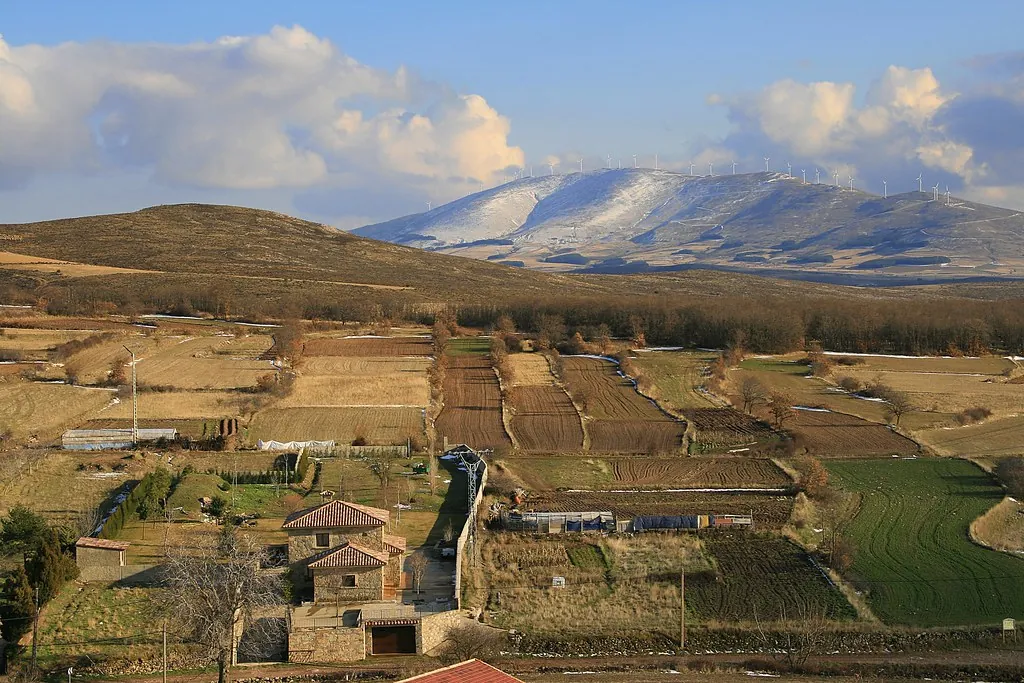
The Moncayo massif dominates every horizon, its 2,314-metre peak visible from every street corner. The mountain creates its own weather system; clouds often stack against its northern face while Ágreda stays clear. Several walking routes start directly from the village, though the signage assumes you read Spanish and own a proper map. The path to the Santuario de la Virgen del Moncayo takes three hours uphill through beech forest – manageable for anyone reasonably fit, but bring water and start early. Afternoon thunderstorms build quickly in summer.

Shorter options exist. The Castilviejo gorge loop runs five kilometres on decent tracks, offering views back toward Ágreda's walls without serious climbing. Spring wildflowers peak in late April; autumn colours fire up through October. Neither season draws crowds – most visitors pass through en route elsewhere, staying just long enough for coffee and convent sweets.

Practicalities Without the Brochure

Getting here requires commitment. Ryanair's Zaragoza route from Stansted puts you 90 minutes away by hire car, but the final stretch involves mountain roads that Google Maps chronically underestimates. The alternative – Madrid to Soria by coach, then local bus – works only if you're not carrying serious luggage. That bus runs twice daily, three times if you're lucky.

Parking sits outside the walls for good reason. The old town's lanes were designed for medieval traffic; your rental VW Polo barely fits, and meeting a delivery van requires creative reversing. Hotel Villa de Ágreda offers the best compromise – pool, parking, family rooms – though the 16th-century Hospedería Porta Coeli provides more character if you don't mind stairs. Both fill up during local fiestas: Easter week and the September medieval market transform quiet streets into something approaching bustle.

Credit cards remain theoretical in many bars. Cash machines exist – there's one in the Plaza Mayor – but Monday morning queues suggest half the village failed to plan ahead. Lunch service runs leisurely; the menú del día isn't designed for anyone catching transport. Budget ninety minutes minimum, more if the restaurant's busy.

Ágreda won't change your life. It's not trying to. What it offers instead is something increasingly rare – a Spanish mountain town that functions for its residents first, visitors second. The walls aren't floodlit for effect, the museums close when volunteers have other plans, and the best bar might be shut because someone's granddaughter has a school play. That's precisely the point. Come prepared for altitude, bring cash, and abandon any schedule that assumes prompt service. The mountain's been here longer than your itinerary, and it has no intention of hurrying.

Key Facts

Region
Castilla y León
District
Moncayo
INE Code
42004
Coast
No
Mountain
Yes
Season
spring

Livability & Services

Key data for living or remote work

2024
ConnectivityFiber + 5G
HealthcareHealth center
EducationHigh school & elementary
Housing~5€/m² rent · Affordable
Sources: INE, CNMC, Ministry of Health, AEMET

Official Data

Institutional records and open data (when available).

  • LA VILLA DE AGREDA
    bic Conjunto Histã“Rico ~0.1 km
  • TORRE DE LA MUELA
    bic Castillos ~0.2 km
  • PALACIO MUNICIPAL
    bic Monumento ~0.1 km
  • PUERTA ARABE
    bic Monumento ~0.2 km
  • TORRE DEL ROLLO
    bic Castillos ~0.4 km

Planning Your Visit?

Discover more villages in the Moncayo.

View full region →

More villages in Moncayo

Traveler Reviews