Full Article
about Beratón
The highest village in the province, set on the slopes of Moncayo.
Ocultar artículo Leer artículo completo
The sheep outnumber people in Beratón by roughly ten to one. At 1,400 metres above sea level, this Sorian hamlet is one of the highest settlements on the Iberian Peninsula, where winter arrives in October and lingers until Easter. Mobile phones lose signal before you've finished parking, and the nearest cash machine is a 40-minute drive down hair-pin bends that would make a Alpine driver wince.
Stone Walls Thicker Than Your Winter Coat
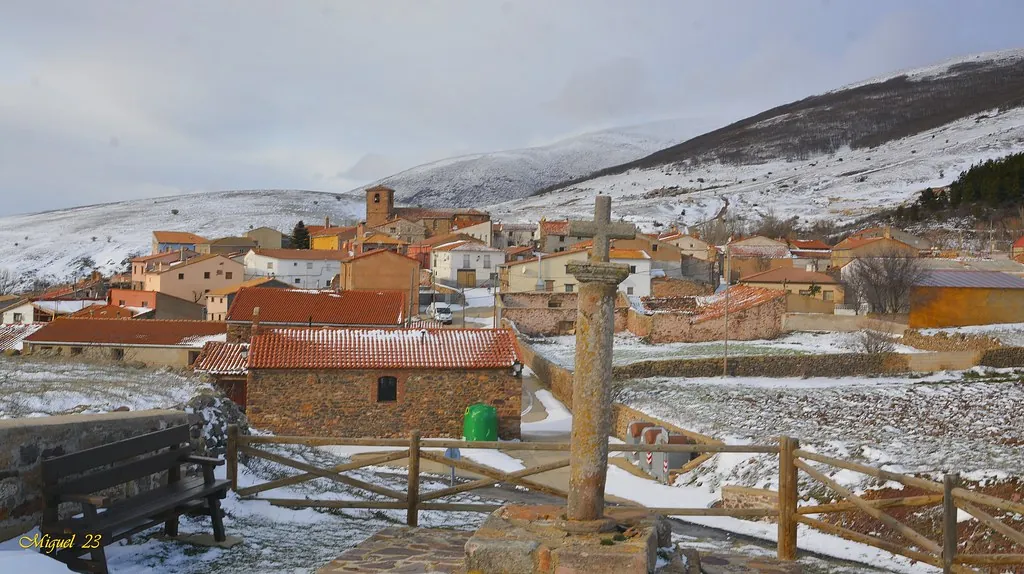
Beratón's houses weren't built to impress. They were built to survive. Walls of local limestone, sixty centimetres thick, keep interiors cool during brief summers and trap heat when temperatures plummet to minus fifteen. Windows are small and strategically placed—enough to let light in, not enough to let the Moncayo wind rob you of every degree of warmth. Roofs slope steeply, tiled in dark Arabic ceramic that sheds snow before it becomes a problem.
Walk the single main street at dusk and you'll notice every front door faces south-east, away from the prevailing wind. It's medieval passive design, worked out centuries before architects started talking about orientation. The church tower, the tallest structure for miles, doubles as a lightning conductor and a landmark for shepherds bringing flocks down from summer pastures. Inside, pews date from 1683, carved from local pine that still smells faintly of resin when the afternoon sun hits it.
The Mountain That Makes Its Own Weather
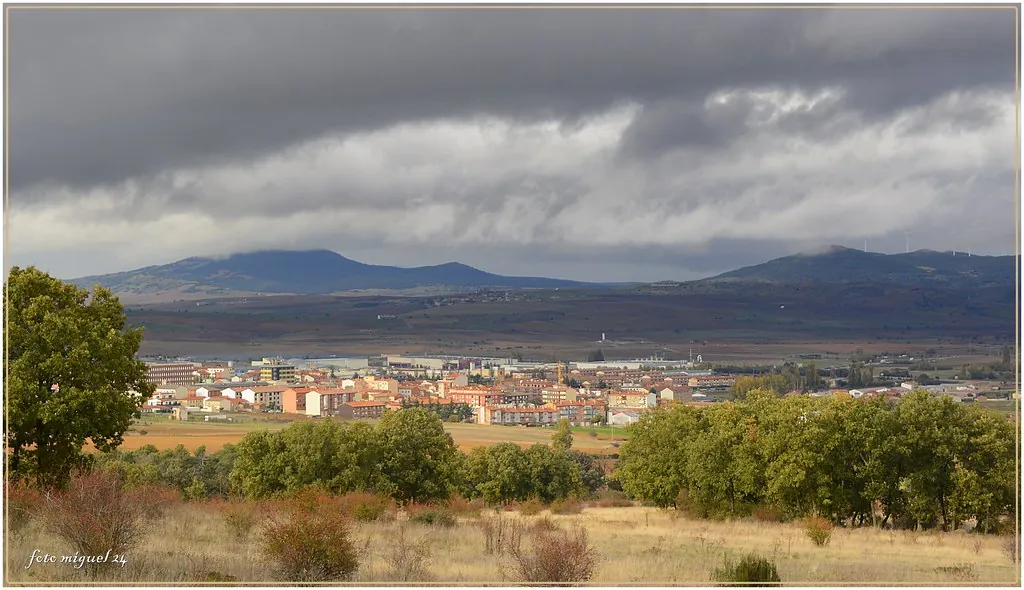
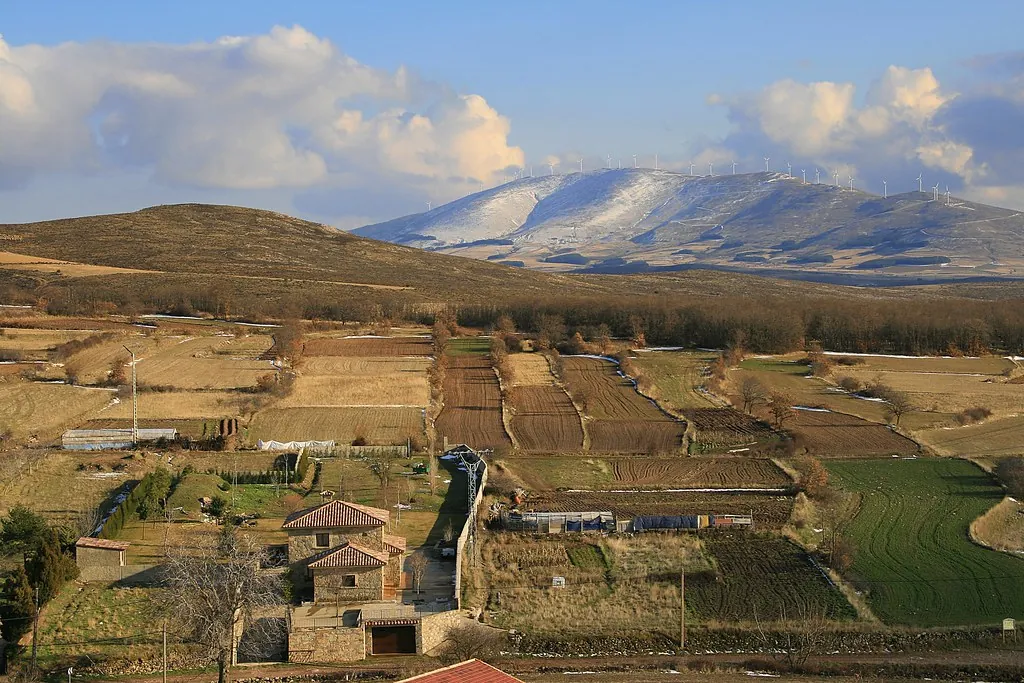
Moncayo dominates everything here. At 2,313 metres, the massif creates its own microclimate—morning fog that burns off by eleven, sudden hailstorms in July, and winds that can flip an umbrella inside out before you've registered the gust. Spring arrives late; wildflowers don't bother appearing until mid-May. Autumn, though, is spectacular. Whole hillsides of beech and oak turn copper and gold, and the air smells of mushrooms and wet earth.
This is walking country, but not the gentle-stroll-and-pub-lunch variety. Trails start directly from the village edge, following old transhumance routes used until the 1970s. The GR-90 long-distance footpath passes within three kilometres—join it eastwards for a stiff six-hour circuit to the San Juan hermitage, or westwards towards the Aragonese border where the landscape drops 800 metres into the Ebro valley. Neither route is way-marked to British standards; you'll need the 1:25,000 Adrados map and the ability to read contour lines.
In winter, the same paths become cross-country ski tracks—though 'track' flatters what are essentially guesses across snowy fields. The local ayuntamiento doesn't groom anything; if you want to ski, you break your own trail. Snowshoes are more practical, and can be hired in Tarazona, 45 minutes away by car. When blizzards close the road, Beratón becomes inaccessible for days. Stock up on milk and wine before the forecast turns.
Where Dinner Depends on What's in the Freezer
There are no restaurants, cafés, or indeed shops in Beratón. The last village store closed when its proprietor died in 2019; neighbours now drive weekly to Ágreda for supplies. What this means for visitors is that self-catering isn't optional—it's essential. The nearest supermarket is a 25-minute drive down the A-1502, a road that ices over quickly after dark.
Food here follows the seasons strictly. In late October, families slaughter a pig; by December every part has been converted into chorizo, salchichón and morcilla that hangs in attics until the following autumn. Lamb comes from animals that grazed the surrounding pastures—you'll taste herb and heather in the meat. Vegetarians face limited options: winter vegetables mean potatoes, onions and cabbage, plus whatever has been preserved during summer. Bring oatcakes. Bring cheese that isn't Manchego. Most of all, bring wine; the local cooperativo in Tarazona sells decent garnacha for €3.50 a bottle, but choice extends to red, white or rosado.
If you're invited into someone's kitchen, accept. Protocol demands you bring a gift—brandy works, so does anything from Harrods' food hall that fits in a suitcase. You'll probably eat cocido, a mountain stew of chickpeas, morcilla and whatever meat needs using up. It's served at 3 pm because that's when shepherds return, and it's substantial enough that you won't need dinner.
Silence You Can Actually Hear
Nights in Beratón are properly dark. Street lighting consists of three lamps on timers that switch off at midnight; after that, the only illumination comes from stars undimmed by light pollution. On clear nights the Milky Way stretches overhead like a river of frost. Sound carries strangely in the thin air—a dog barking three valleys away can wake the whole village, yet your own footsteps disappear into the stone walls.
This silence is increasingly rare in Europe. Walk a kilometre from the last house and you'll experience what acoustic ecologists call 'the baseline'—no traffic, no aircraft, no distant hum. Just wind, birds, and occasionally the clank of a sheep bell. It's unsettling at first; city brains interpret quiet as something wrong. After two days you'll start to hear your own heartbeat, and realise how much urban life is built on ignoring constant noise.
Getting There, Getting Away
The practicalities are straightforward if you have a car. From Madrid, take the A-2 to Zaragoza, exit at Almazán, then follow the N-122 towards Soria. Turn off at Ólvega onto the A-1502 towards Ágreda; after 12 kilometres, watch for the unmarked left turn signposted "Beratón 7 km". The road climbs 600 metres in those seven kilometres—keep in low gear and ignore the temperature gauge climbing. Public transport exists in theory: twice-daily buses from Soria to Ágreda, then a taxi for the final stretch. In practice, taxi drivers often refuse when weather looks doubtful.
Accommodation is scattered across private houses, rented out when families aren't using them. Expect stone floors, wood-burning stoves, and bathrooms retro-fitted into former stables. Heating is by butane bottles that need changing every three days in winter; you'll learn to judge the weight by lifting. Wi-Fi is theoretical—most houses have routers, but the village's 4G mast relies on solar power that dies during prolonged fog. Download maps before you arrive.
Beratón isn't trying to please tourists. It offers something simpler: a place where Spain's rural past survives because geography made leaving difficult. Come prepared for self-reliance, bring Spanish phrases because no-one speaks English, and accept that the mountain makes the rules. If that sounds like effort, stay in the valley. If it sounds like freedom, the road up is clearer on Tuesdays when the rubbish lorry isn't blocking it.