Full Article
about Trévago
Village with a medieval tower and views of Moncayo
Ocultar artículo Leer artículo completo
The church bell strikes eleven and the sound rolls across the valley like a slow wave. From the stone bench outside the shuttered bakery, you can watch it travel—first through the narrow lanes of Trévago, then down the escarpment until it fades somewhere among the junipers. No one looks up. The two elderly men playing dominoes in the porch continue their game; a woman in a housecoat waters geraniums on a balcony that has seen better centuries. At 1,100 metres, noise behaves differently. It carries, then vanishes.
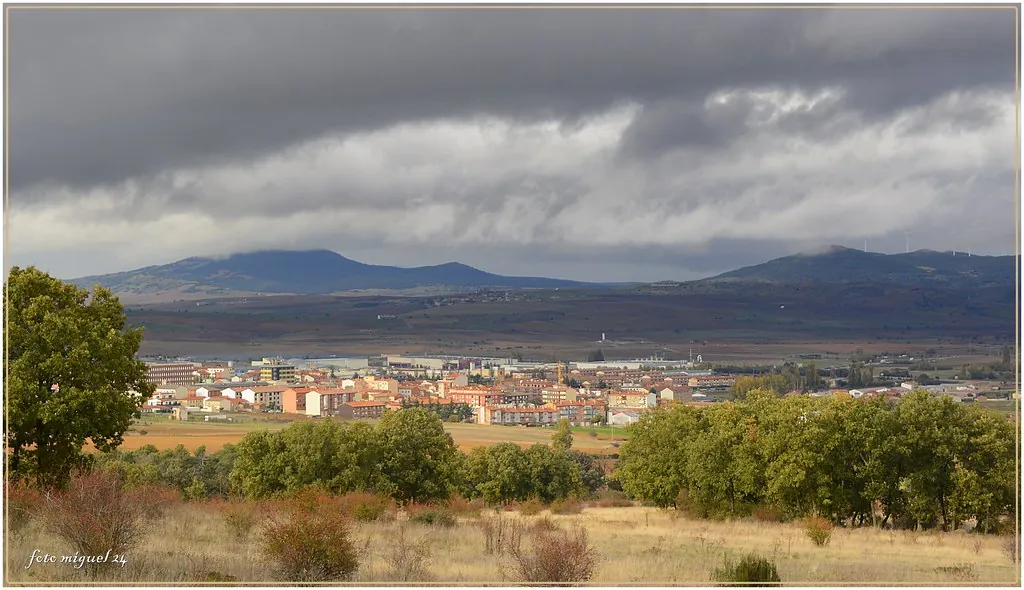
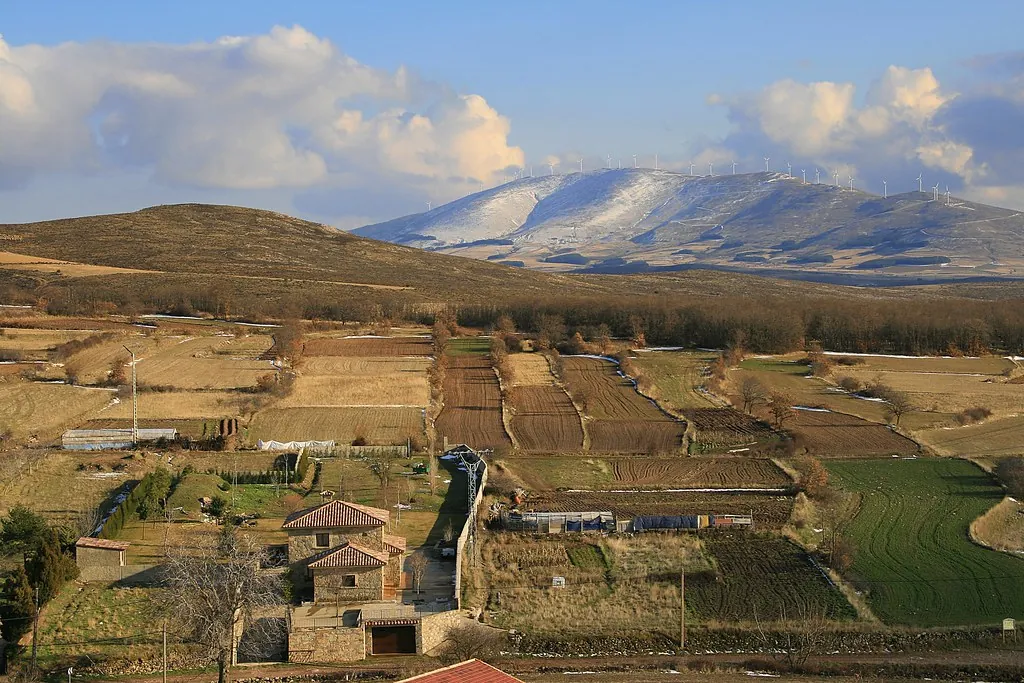
Trévago sits on the northern shoulder of the Moncayo massif, the highest bump in Iberia’s eastern cordillera. The village is technically Castilla y León, but only just: cross the ridge behind the cemetery and you’re in Aragón. The border used to matter when smugglers hauled tobacco and coffee over the snow; now it matters to hikers who want to know whose red tape governs the path. Either way, the mountain makes the rules. In winter it blocks the worst Atlantic storms, so snow falls dry and powdery—rare for central Spain. In July it funnels down hot, resinous air that smells of thyme and sun-baked pine. The altitude means nights stay cool even when midday hits 35 °C, so bring a fleece for the evening walk.
Getting here requires a deliberate foot on the brake. From Madrid, the A-2 motorway spits you out at Medinaceli after two hours; from there it’s another 45 minutes on the SO-160, a road that narrows with every kilometre until the sat-nav gives up and displays a blank grey screen. The last 12 km twist through holm-oak forest; meeting an oncoming lorry is a test of reverse gear and nerve. Buses? One a day from Soria, none on Sundays. The railway station at Arcos de Jalón, 28 km away, has four trains to Madrid—but the taxi driver who meets them retired in 2019. Hire a car, fill the tank at the Repsol in Ólvega and accept that you are now responsible for your own exit strategy.
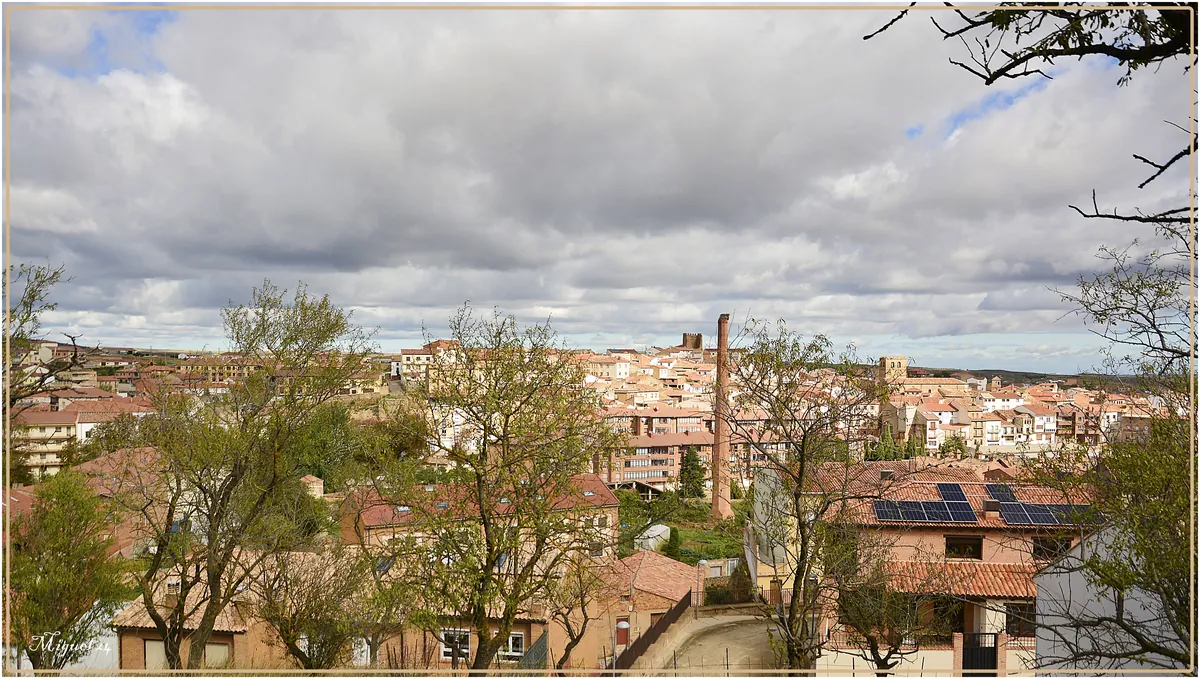
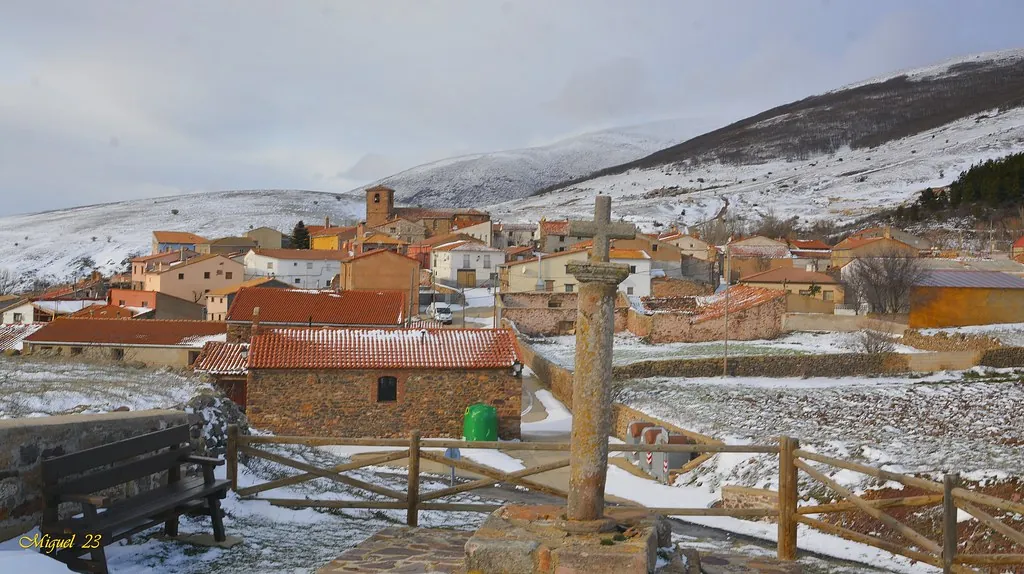
What passes for the village centre is a triangle of sloping lanes converging on the tiny plaza Mayor. The stone trough still carries run-off from the spring; in the 1940s women queued here to rinse sheets while gossiping about Franco’s latest recruitment round. Today the water is drinkable—no chlorine tang—though the council has added a discreet sign warning that it’s “no controlado”. The risk is yours. Architecture buffs will note the slate rooflines: they angle sharper than in neighbouring provinces because snow loads can reach 80 kg per square metre. Timber doors are oak, ironwork hand-forged, walls a patchwork of local limestone and river pebbles dredged from the Jalón. Nothing is “restored” in the pastel boutique style of Segovia or Ávila; Trévago simply mends what breaks and lets the patina speak.
San Martín church keeps watch from the upper terrace. Built in the 16th century on Visigothic footings, it has the squat tower of a frontier fortress and interior frescoes that were whitewashed during the Civil War to save them from burning. The priest arrives only twice a month; the key hangs in the bar—except there is no bar. Ask at number 27, where Concha keeps it behind a tin of lard. Inside, the temperature drops ten degrees. Light filters through alabaster panes onto a Romanesque font where every local since 1532 has been christened. The ledger lies open on a side table; last entry: Lucía, 17 August 2021, parents resident in Zaragoza. Emptiness, written in neat copperplate.
Walk south past the last lamppost and the tarmac turns into a stone-laid drove road. This is the Cañada Real Soriana, still legally protected for sheep traffic even though the last major drove was 1967. Follow it for 25 minutes and you reach the Fuente de la Teja, a spring that never freezes. The water is so hard it furs kettles in a week; geologists love it because it precipitates tufa, building miniature dams no taller than a boot. Keep ascending and the path forks: left to the ruined village of Espejón, abandoned after the 1957 influenza, right onto the Moncayo spur where griffon vultures ride thermals at eye level. Map and compass are sensible: phone signal dies in the first ravine. In May the slopes glow yellow with Spanish broom; in October the beech wood above 1,400 m becomes a copper cathedral. Winter hikers should expect ice on north-facing bends until late morning—micro-spikes recommended, crampons overkill.
Food is the village’s running joke. There is no shop, no bakery, no pintxos trail. The nearest supermarket is in Tarazona, 35 km east. Locals drive to Ólvega on Monday for the weekly market, return with boots full of chickpeas and chorizo, and share bulk buys like contraband. Visitors should stock up in Soria before the mountain road: the Covirán on Avenida Valladolid has decent Manchego and vacuum-packed morcilla that survives a rucksack. If you crave a menu del día, the Mesón de Pascual in Alcubilla de Avellaneda (22 km) serves leek-and-potato soup, roast lamb and a carafe of tempranillo for €14—open weekends only, call 975 32 70 18 to check they’ve fired the oven.
Accommodation is limited to three self-catering houses, all owned by descendants of the original families. Casa Jiménez sleeps four, has a wood-burning stove and charges €80 a night with a two-night minimum. The owner, Javier, works in Valladolid and will meet you at the petrol station because the village lanes are too narrow for his Volvo. Sheets smell of mountain thyme; the hot-water tank holds 80 litres—enough for one conscientious shower or two military rinses. There is no Wi-Fi. If you need to check email, drive to the picnic area above the Ermita de la Soledad where a rogue 4G bubble leaks across from La Rioja. Rain or shine, the connection lasts exactly eleven minutes before the system logs you out.
The annual fiesta shifts with the diaspora. San Martín’s official day is 11 November, but November is sheeting-rain season and half the emigrants are teachers who can’t leave until July. So the village waits, then throws three days of fireworks, mass and open-air dancing on the first weekend of August when the population swells to 200. The bar installs a temporary counter in somebody’s garage; teenagers who speak perfect English with an Almería accent return to drink cider and complain about London rents. At midnight on Saturday the lights cut out, a bonfire of grape cuttings ignites, and someone produces a guitar last tuned in 1978. No one sings “Wonderwall”; they stick to coplas learned from grandparents who once herded goats on this same patch of dust.
Leave early if you must—checkout is ten o’clock sharp because Javier needs to catch the noon AVE—but linger until the bakery van honks its horn around 11:15. It comes up from Berdejo twice a week with fresh baguettes and yesterday’s newspapers sold at cover price plus twenty cents for diesel. Buy two sticks of bread, tear the crust on the church steps and consider the mileage required to deliver them. Then start the engine, engage first gear and begin the long descent back to signal, queues and the lowland hum. Behind you the bell will strike again, though you probably won’t hear it over the crunch of gravel. Trévago will return to its own breathing; the mountain will file the village under “still here” until next time.