Full Article
about Vozmediano
Known for the source of the Queiles River and its border castle
Hide article Read full article
A village under the mountain
At the north-eastern edge of the province of Soria, close to the border with Aragón, lies Vozmediano. The village sits at the foot of Moncayo, the mountain that defines this whole area. For centuries it has shaped both the landscape and the way people live here. Today, the population has dwindled to around 29 residents, and the settlement still clearly reflects its origins as a mountain farming and livestock community.
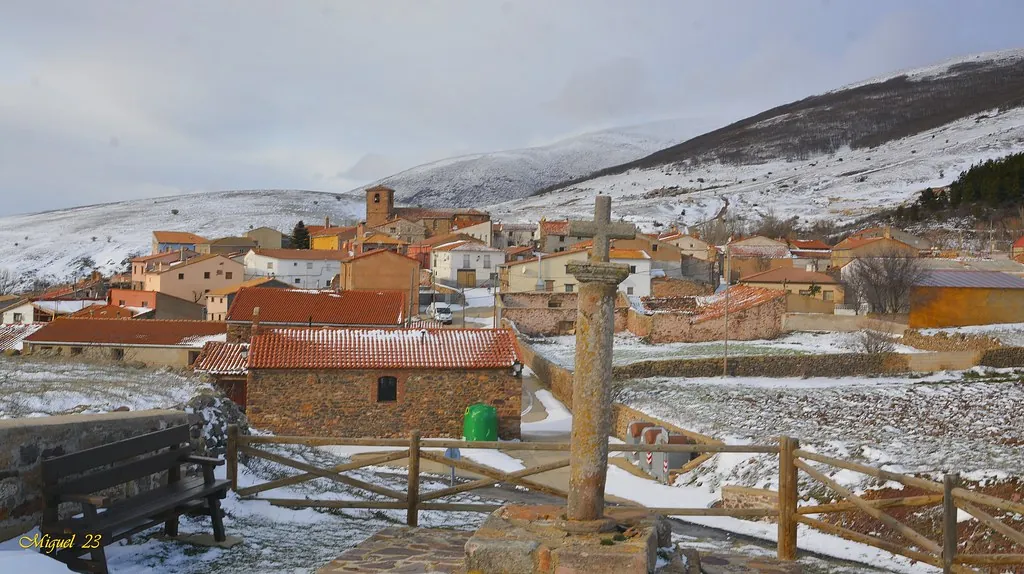
Stone houses cluster around a small square and a handful of short streets that slope gently down towards vegetable plots and meadows. Many of these buildings retain wide wooden gateways and enclosed yards, reminders of a time when carts passed through daily and animals were kept close to home. Tourism has not reshaped Vozmediano. The pace of life follows the rhythm of the few neighbours who remain throughout the year.
Moncayo is always present in the background. Its summit is not as clearly visible from here as from other points in the region, yet its presence is constant. Historically, the mountain has served as both a geographical reference and a natural boundary between territories.
Rural architecture and the remains of a frontier
The parish church, dedicated to Santa María, follows a style found across much of the province. The current building stands on a 16th-century base, although it has been altered over time. It is a restrained structure, with thick stone walls and a simple bell gable rising above the rooftops.
What stands out in Vozmediano is not a single monument but the overall ensemble. Walking slowly through the streets reveals iron balconies, very wide wooden doors designed for carts, and inner courtyards where livestock was once kept. Some of the old enclosures still contain structures that point to that everyday agricultural life.
On the outskirts of the village, a small rise holds the castle of Vozmediano. This medieval fortress formed part of the defensive system along the frontier between the kingdoms of Castilla and Aragón. Today it survives in a ruined state, yet sections of wall and parts of its towers remain visible. These fragments are enough to suggest its original role, overseeing the valley and controlling movement through the area.
Paths, pasture and the slopes of Moncayo
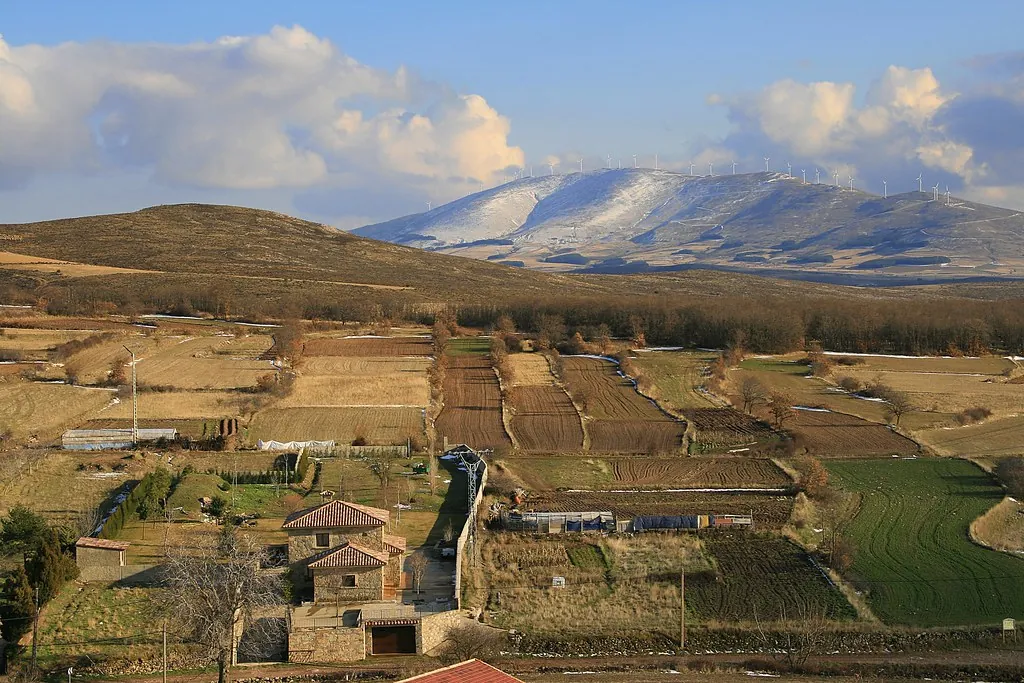
The landscape around Vozmediano blends meadows, holm oak, quejigo oak and scrub typical of the lower slopes of Moncayo. It is not a harsh or dramatic setting, but rather a gradual transition between mountain terrain and the more open lands stretching towards Aragón.
Several old paths lead out from the village, once linking it to nearby settlements. Some are still used, whether for walking or agricultural work. One of the more common routes connects Vozmediano with San Martín de la Cuesta, crossing meadows and small patches of woodland along the way. These paths are not always signposted, so it is wise to carry a map or a digital track when exploring them.
Wildlife here is typical of these low mountain ranges. Wild boar and foxes move through the area, while birds of prey circle overhead, taking advantage of the air currents that form along the slopes of Moncayo.
Traditions shaped by land and season
For generations, life in Vozmediano has been tied to dryland farming, livestock and the use of surrounding woodland. Although the population is now very small, some traditions continue on a domestic scale. These include making cured meats, gathering wild mushrooms in season, and family gatherings centred around the matanza, the traditional pig slaughter that historically provided food for the year.
Festivities tend to revolve around the parish and the agricultural calendar. On these occasions, the village becomes livelier as people return from elsewhere to spend time in their family homes. Even with so few permanent residents, these moments keep a sense of continuity with the past.
When to go and what to expect
Spring and autumn are generally the most pleasant times to walk the paths around Vozmediano. In spring, the meadows turn bright green, while autumn brings changing colours to the woodland and a more varied landscape. Winter can be cold, and snowfall is not unusual in this part of Moncayo. Summer is dry, although nights often cool down.
Vozmediano is a very small village, easy to explore in a short time and without its own tourist infrastructure. It is usually visited as part of a wider route through the Moncayo region or while travelling along the border between Soria and Zaragoza.
Rather than focusing on individual landmarks, the interest lies in the whole setting. The castle overlooking the terrain, the compact cluster of stone houses, and the constant presence of Moncayo together offer a clear sense of how communities once organised their lives in the shadow of the mountain.