Full Article
about Burón
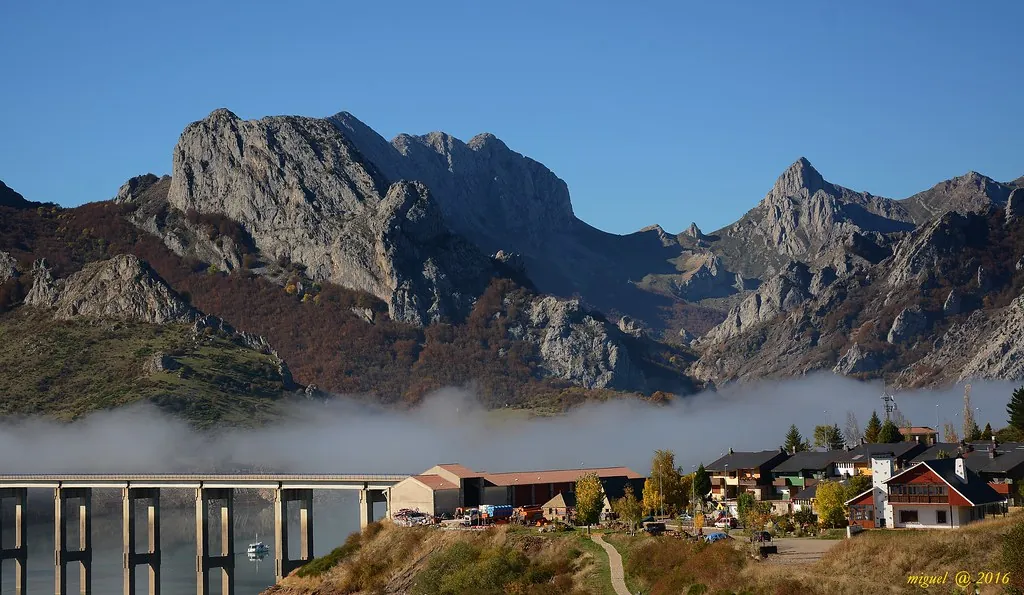
Set at the tail of the Riaño reservoir; it offers spectacular views of Pico Burín and the flooded valley.
Hide article Read full article
You know those places that feel like they’ve been paused? Burón is one of them. You pull up, get out of the car, and the first thing that hits you is the quiet. It’s not an empty quiet, more like a waiting one. That’s your welcome here.
The drive in from Riaño tells you most of what you need to know. The map says it's twenty kilometres. The road says otherwise. It’s a proper mountain road, all bends and narrow stretches with meadows spilling down the sides. You don't rush this bit. You also get a sudden understanding of why the houses look so sturdy.
The road from Riaño to Burón
That twenty-kilometre stretch is the only way in by car. It winds its way up into the Montaña de Riaño, and there are no shortcuts. Your average speed drops, your window goes down, and you start looking at things properly. It sets the pace for everything that follows.
A village made for mountain life
Burón isn't dressed up for you. It’s dressed for winter. The houses are built of local stone, low and solid against the wind. Some have been fixed up recently, others show their age. The whole place follows a simple rule: function first.
At its heart is the church of San Miguel. It's not a cathedral. It's the sort of village church that's been patched and changed over generations because it had to be useful. Inside, you'll find the kind of straightforward religious art that speaks more about daily life than grand art.
With around two hundred people living here, things move slowly. You'll see small vegetable gardens, stone barns, and sheep in the fields just outside town. This isn't scenery; it's someone's Tuesday. Livestock and small plots are still part of how this place works, not something put on for show.
A walk through Burón means stone underfoot, the sound of a stream somewhere close, and those big mountains sitting at the end of every street. There's no marked tourist trail because the point is just to see a mountain village going about its business.
Walking out from the village
The best thing to do here is put on some boots and head out on one of the paths behind the houses. You don't need a big plan or a guidebook route.
Most paths started as tracks for animals or people going up to higher pastures. Some are clear, others get fuzzy where the grass grows thick or after heavy rain has turned them muddy. If a path looks uncertain, it probably is. Asking someone before you go too far is always a good idea.
The mountains around you have names like Cueto Pan de Trigo and Cerro Gordo. They're serious pieces of geography that dominate every view. They also make their own weather quickly and without much warning.
The goal isn't always to reach a summit though sometimes you might want to try it if conditions are right with proper gear and preparation). More often than not it's about walking for an hour feeling your legs work watching how Burón shrinks below you into its valley even short walks give you that sense of scale this landscape demands
What you might see
Get moving early and the valley feels alive Roe deer in the meadows birds circling on thermals above the slopes With patience and binoculars you might spot chamois higher up on rocky ledges
Some days you see plenty other days nothing shows itself The land itself is reason enough to be out here In autumn oaks turn gold On misty mornings peaks appear then vanish again Light changes everything here A clear day sharpens every ridge Cloud softens it all into layers Winter snow can erase familiar lines completely making everything new and silent It's stunning but it comes with conditions Ice snow short days they all change what's possible
Finding something to eat
Let's be straight Burón is tiny There aren't multiple restaurants lining a plaza That's just how it is
What you will find in local shops or sometimes from houses in the area are products from this part of León Cecina that air-cured beef is everywhere along with good sausages and mountain cheeses For a hearty stew or spoon dish designed to fix a day in the cold you typically look towards Riaño or other nearby villages Burón itself is more about where you eat your picnic than being a food destination
Timing your visit
Summer sees more life Families with roots here return for holidays The fiestas for San Miguel fill the square with neighbours music that starts spontaneously It feels connected
For walking though spring and autumn usually win Temperatures are kinder colours are good whether it's new green or autumn gold The roads are quieter too
Winter is its own thing It can be breathtakingly beautiful with snow covering everything It can also be severe with ice on roads and deep snow up high You come prepared or you don't come at all
So Burón isn't about checking sights off a list It's for when you want to spend a few hours somewhere that moves at mountain time where walking without much plan is enough Often it really is