Full Article
about Crémenes
Municipality crossed by the Esla River and the Roman road; setting of high ecological value with juniper forests.
Ocultar artículo Leer artículo completo
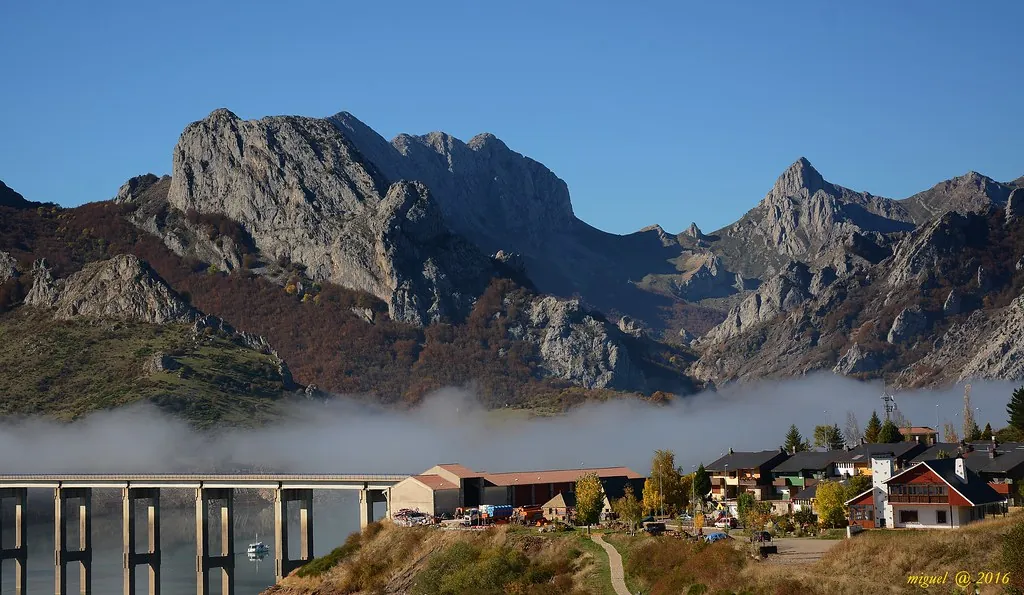
The church bell tolls at noon, but nobody checks their watch. In Crémenes, a thousand metres above sea level in northern León, time moves to a different rhythm—one dictated by the limestone peaks that cast long shadows across slate roofs, and by the hay meadows that turn from emerald to gold with the seasons. This isn't one of those Spanish villages where souvenir shops outnumber residents. It's a working mountain community where the butcher still knows every customer by name, and where the evening news travels faster by neighbourly chat than by television.
Stone, Slate and the Art of Staying Put
Crémenes squats stubbornly on a steep hillside, its stone houses clinging to the slope like barnacles on a ship's hull. The architecture makes no concessions to convenience—streets pitch upwards at angles that would give health-and-safety officers nightmares, and front doors open directly onto gradients that turn icy come December. Yet there's method in this apparent madness. The builders who constructed these homes generations ago understood their terrain intimately. They oriented houses to catch the winter sun, used slate quarried from nearby hillsides, and created a warren of passageways that channel rainwater away from foundations.
The village centre reveals itself gradually. There's no grand plaza here, just a series of irregular spaces that have been carved from the hillside over centuries. The parish church anchors everything, its modest proportions belying its importance as the community's spiritual and social heart. Around it, houses stack up in seemingly random fashion—some restored with sympathetic stone work, others retaining their original wooden balconies that sag with the weight of decades. A handful have been converted into holiday lets, though you'd be hard-pressed to identify them without local knowledge. There are no gaudy signs or English breakfast offers here.
Walking through Crémenes requires a certain mountain mentality. The altitude means even fit visitors find themselves breathing harder on the steeper sections. The air carries the scent of woodsmoke and wild herbs, punctuated by the occasional whiff of manure from somewhere down-valley. It's honest, unprocessed air—the sort that makes city lungs work overtime and prompts early nights after evening meals.
The Nature of the Beast
The real drama lies beyond the village proper. Crémenes serves as a gateway to the Montaña de Riaño, a landscape where limestone crags rise two thousand metres above sea level and where beech forests transform into kaleidoscopes each autumn. The change happens fast here—within weeks, slopes that appeared uniformly green explode into oranges, russets and deep burgundies that would make a Cotswolds autumn look positively monochrome.
Wildlife viewing requires patience and appropriate expectations. You're not going to spot wolves lounging by the roadside (despite their presence in the wider region), but dawn walkers might catch sight of roe deer picking their way across meadows, or wild boar snuffling through undergrowth. Golden eagles ride thermals above the higher ridges, their distinctive silhouettes visible to those who know where to look. The key is to move quietly, rise early, and accept that nature operates on its own schedule.
Several walking routes radiate from the village, though the quality of waymarking varies considerably. The path towards Puerto de Crémenes offers perhaps the best introduction to local terrain—a steady climb through mixed forest that opens onto hay meadows where traditional stone huts still provide shelter for farmers during summer grazing. The round trip takes three to four hours, longer if you succumb to the temptation of stopping every few minutes to absorb the views back towards the village and across to the higher peaks beyond.
Winter transforms everything. Snow can arrive as early as October on the highest ground, and when it comes properly, Crémenes becomes effectively cut off from the outside world. This isn't necessarily a problem—locals stock up on provisions and treat heavy snowfall as an annual holiday from the demands of the outside world. Visitors during these months need proper winter equipment and the good sense to check weather forecasts religiously. What appears a gentle stroll on Google Maps can become a serious undertaking when tracks disappear under half a metre of snow.
Food, Festivals and the Rhythm of Rural Life
The village's culinary identity reflects its mountain location and agricultural heritage. Meals tend towards the substantial—think hearty stews designed to fuel bodies after mornings spent outdoors, or cured meats that represent months of careful preparation. Cecina, the air-dried beef that's a speciality of León, appears regularly on local menus, its intensely savoury flavour demanding robust red wines from the Bierzo region to the east. Cheese comes from small-scale producers whose flocks graze the high pastures during summer months, creating flavours that speak directly of mountain herbs and wildflowers.
Autumn brings mushrooms into sharp focus, though foraging requires both knowledge and permits. The local pharmacist doubles as an expert mycologist during mushroom season, happy to identify specimens brought in by hopeful foragers. It's a sensible system that prevents poisoning while encouraging sustainable harvesting—one that more developed tourist destinations might usefully emulate.
The annual fiestas in August see the village population temporarily quadruple as former residents return for several days of celebration. These aren't events staged for tourist benefit—they're family reunions that happen to include processions, music and communal meals. Visitors are welcome, but the programme remains resolutely local. Expect late nights, abundant food, and the kind of community spirit that Britain's village fetes attempt to replicate but rarely achieve with such authenticity.
Getting There, Getting By
Reaching Crémenes requires commitment. The nearest major airport at León lies ninety minutes away by car, with Bilbao offering a slightly longer but more scenic route through the Cantabrian mountains. Public transport exists but operates on a timetable that seems designed to discourage casual visitors—one bus daily from León on weekdays, none at weekends. A car becomes essential, preferably one with decent ground clearance for the final approach road that narrows alarmingly in places.
Accommodation options remain limited. Two houses offer rooms on a bed-and-breakfast basis, both restored with sensitivity to original features while incorporating modern necessities like proper heating and hot water. Prices hover around €60 per night including breakfast—typically thick hot chocolate with churros, or toast rubbed with tomato and garlic topped with local olive oil. Neither establishment accepts credit cards, and mobile phone reception remains patchy throughout the village. This is deliberate rather than neglectful—the community values its tranquillity and sees no reason to invite the digital intrusions that accompany mass tourism.
Crémenes won't suit everyone. Those seeking boutique hotels, Michelin-starred restaurants or sophisticated nightlife should look elsewhere. The village offers instead an authentic glimpse of mountain Spain, where traditional ways persist not as museum pieces but as living practices. Come prepared for early nights, simple food, and weather that can change faster than British forecasts. Bring walking boots, a decent map, and the flexibility to adapt plans according to conditions. Leave expecting anything, and you might just discover what Spain looks like when nobody's watching.