Full Article
about Maraña
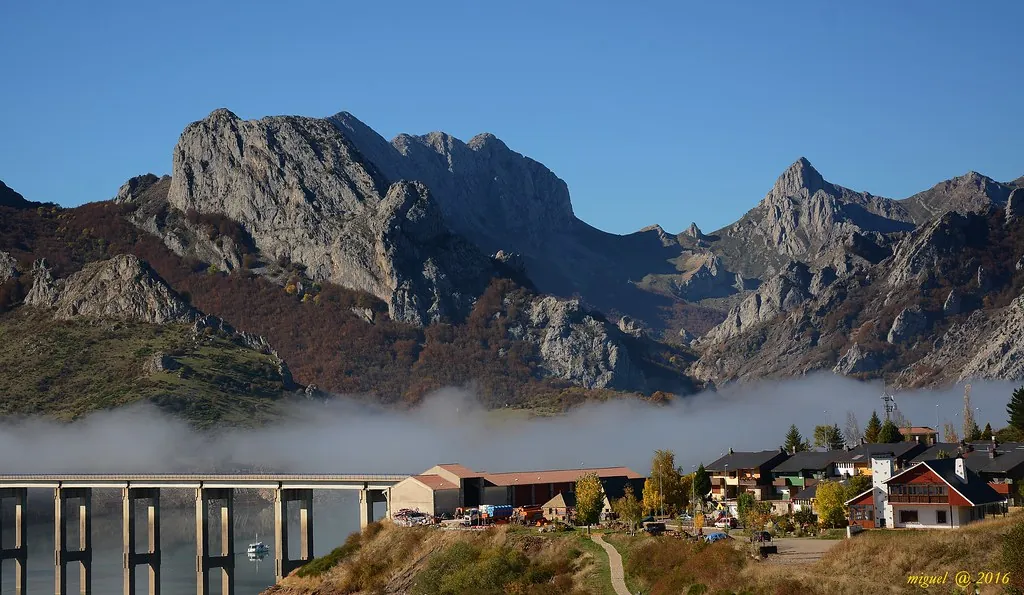
High-mountain village at the foot of the Mampodre massif; a paradise for hikers and nature lovers.
Ocultar artículo Leer artículo completo
The road to Maraña climbs so steeply that even local tractors sound breathless. At 1,246 m the engine finally gives up its whine and the valley drops away behind you, revealing a scatter of slate roofs, a single church tower and, more often than not, a herd of tawny cows crossing the only street. One hundred and ten residents, one bar, zero cash machines: that is the ledger of this Leonese mountain hamlet, set high on the lip of the Cantabrian massif.
Stone, slate and silence
Every house is built for winter. Walls are a metre thick, balconies are narrow enough to keep out the wind, and chimneys start smoking the moment the thermometer slips below 10 °C. Granite and slate were hauled from nearby quarries; timber came down from the beech woods that still cloak the northern slopes. The result is monochrome, hard-wearing and entirely unphotogenic in the rain—which is exactly why photographers love it. You will not find cherubic ceramic frogs or geranium pots; instead there are wood-stacked porches, feed sacks hung on nails and the occasional rusted harrow left in a yard as if tomorrow’s ploughing might still happen.
The village’s small size means sights announce themselves quickly. The Iglesia de San Juan Bautista squats at the top of the main lane, its espadaña bell-wall patched with mismatched stone after an 18th-century lightning strike. Inside, the air smells of beeswax and damp hymn books; the only splash of colour is a faded banner embroidered for the 1988 fiesta and never taken down. A five-minute stroll further brings you to the last houses, the last street lamp, and then the pasture: no gift shop, no interpretive panel, just a wooden gate asking you to fasten it so the cows don’t wander.
Boots, not flip-flops
Maraña sits in the hinge between two mountain ranges: the Mampodre massif to the south and the limestone Ports of Maraña to the north. The result is a fistful of way-marked paths that start directly from the village fountain. The easiest is the loop through the Puertos de Maraña, five kilometres of grassy track that rolls like a lumpy quilt and gives big-sky views back towards León. Spring brings clumps of wild narcissus; July turns the turf gold and crunchy underfoot.
If you prefer your walking vertical, the Pico Yordas (2,282 m) leaves directly from the upper pasture. It is 750 m of ascent, no water en route, and the cairns disappear in cloud more often than the tourist office admits. Treat it like a British fell in winter: map, compass, waterproof and an early start to beat the afternoon storms. On clear days the reward is a saw-blade horizon stretching from the Picos de Europa to the distant plains of Palencia.
Come snow, the same paths switch to ski-mountaineering. There are no lifts, no piste markers, no patrollers—just a Bluetooth beacon pole at the trailhead that updates avalanche risk. Locals skin up at dawn, drop a sinuous line through the beech glades, and are back in time for coffee and churros before the bar closes at two. If that sounds cavalier, it is; hire gear in León and go with a guide unless you really know your snow science.
Where to sleep, what to eat
Accommodation is thin on the ground. Cabañas Patagónicas offers six pine cabins on the south ridge, each fitted with a kitchen sharp enough to fillet a trout and a wood-burner that eats an improbable number of logs (€90 a night for two, minimum two nights in winter). Inside, wool blankets smell faintly of smoke; outside, the only night-light comes from Orion. Closer to the church, Casa Rural El Tío Urban has three bedrooms, stone floors and Wi-Fi that flickers whenever the microwave turns on—book through Spain-Holiday.com and bring slippers.
Food culture is stubbornly seasonal. Bar Calleja, opposite the church, opens at seven for coffee, shuts at three, reopens if the owner feels like it. The menu is chalked daily: cecina (air-dried beef) sliced see-through thin, cocido stew thick enough to stand a spoon in, and trout that was swimming that morning in the River Eria. Vegetarians get grilled piquillo peppers drizzled with local honey; vegans receive the same, minus the honey, plus a shrug. A three-course lunch with a carafe of house red rarely breaks €14, and you will not be offered a laminated dessert card—choice is flan, or flan.
Sunday is culinary roulette. The bar closes, the tiny shop shuts at noon, and you will see neither kettle nor kettle-shaped utensil anywhere else. Self-cater on Saturday or be prepared to drive 25 minutes down the pass to Boñar, where a garage forecourt dispenses surprisingly acceptable jamón bocadillos.
When to go, how to get here
Spring and early autumn deliver the kindest light and the fewest biting flies. Late May layers the puertos with narcissus and the first cattle; mid-September brings crimson beech leaves and morning mists that photographers dream of. August is fiesta time: brass bands, communal paella, and a street dance that ends when the generator runs out of diesel. Rooms disappear a year in advance; if you must come then, book before Christmas and expect neighbours to party until the cows—literally—come home.
Public transport is almost mythical. There is one weekday bus from León at 15:30, returning at 06:45 next day, which works only if you enjoy 14-hour walks or intend to write your novel in one sitting. Fly to Madrid or Santander with Ryanair or EasyJet, collect a hire car, and allow two and a half hours on the A-6 and AP-66. Petrol stations thin out after Astorga; fill the tank and your stomach there. Sat-nav occasionally confuses Maraña (León) with an identically named hamlet in Cantabria—set your waypoint as “Puerto de Maraña, 24949” and you will arrive from the south, which saves a white-knuckle detour across a single-track gorge.
The fine print
Mobile reception is patchy enough to make teenagers weep; download offline maps before you leave the motorway. ATMs do not exist: draw cash in León or Astorga, and bring small notes—the bar owner may accept cards, but the contactless machine lives behind a curtain and works only when Jupiter aligns. Finally, pack for four seasons in one day even in July; the village’s own weather station once recorded sleet on the summer solstice.
Maraña will not entertain you. It offers height, hush, and the occasional cow bell instead of a soundtrack. If that feels like a fair swap for souvenir shops and poolside Wi-Fi, head uphill.