Full Article
about Prioro
Mountain village with a strong pastoral and transhumance tradition; setting of great beauty
Hide article Read full article
A slow rhythm in the Montaña Oriental
By mid-morning, light filters through the windows of the church of San Martín and settles on the pale stone inside. Silence dominates at that hour. A door closes somewhere, a car passes slowly along the main street, and little else disturbs the air. In Prioro, in the Montaña Oriental of León, time seems to move at a gentler pace, shaped by church bells and by what happens beyond the village itself: livestock, weather, the turning of the seasons.
The church tower rises above the rooftops and acts as a clear reference point when approaching from the valley. Finding your way around is straightforward. The village gathers around a small network of streets where stone defines almost everything in view.
Stone streets and houses turned towards the sun
Prioro invites unhurried wandering without a map. Streets run narrow, and in places the old cobbled surfaces remain, uneven underfoot. Many houses are built from stone darkened by long winters, and they face south whenever possible. Winter sunlight matters here.
Wooden balconies still appear on some façades, alongside heavy ironwork gates and the occasional carved coat of arms. Behind the houses, small plots of land hold vegetable gardens, chicken coops or sheds stacked with dried grass. Everyday sounds travel easily: a tractor in the distance, or the soft clinking of cowbells as livestock returns to the barns towards the end of the day.
The church of San Martín
At the centre of the village stands the parish church of San Martín, a sober building that has formed part of the valley landscape for centuries. Its exterior stone bears the marks of time and of the harsh winters typical of this part of the Leonese mountains.
Inside, everything is restrained. There is a modest altarpiece, wooden pews and an old baptismal font. The bells still ring at certain hours, and their sound spreads across nearby houses before echoing back from the slopes that enclose the village.
Valley views and mountain paths
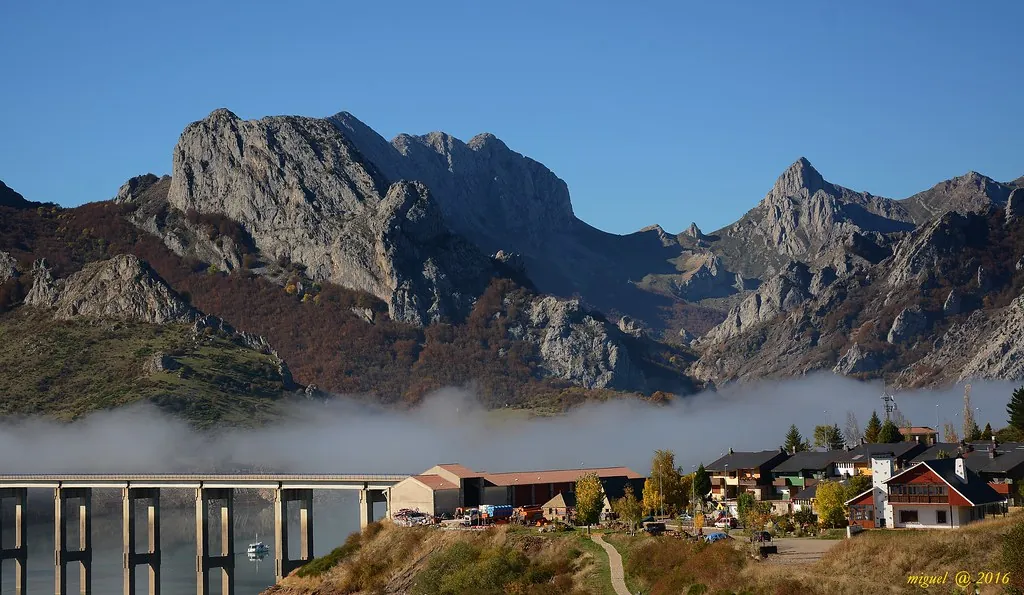
The landscape opens quickly as soon as you leave the built-up area. Meadows surround Prioro, and higher up the terrain gives way to woodland where oak, beech and holly grow together. On clear days, several peaks of the Cantabrian range stand out sharply. In winter they are often snow-covered, while autumn brings slopes filled with ochre and reddish tones.
Paths begin at the edge of the last houses. Some follow old livestock routes and cross grazing land enclosed by stone walls. Others climb gradually towards mountain passes, from which the whole valley comes into view, the village reduced to a cluster of rooftops.
Walking here calls for proper footwear. Loose stones appear on certain stretches, and mud can make the ground slippery after rain. In winter, ice forms quickly in shaded areas.
Quiet routes and discreet wildlife
The surroundings of Prioro tend to remain peaceful. Large groups of walkers are uncommon, and on many days it is possible to walk for long stretches without encountering anyone.
Wildlife is more active early in the morning and towards dusk. A roe deer may emerge briefly from the undergrowth, or the beat of wings might break the stillness as a bird of prey crosses a clearing. Vultures are also easy to spot, circling high once warm air begins to rise from the valley.
Mountain cooking and everyday life
Food here reflects the needs of a mountain setting. Dishes are substantial, designed for long days in cold conditions. Cured meats are common, along with stewed or roasted cuts, and hearty pots where potatoes and pulses play a central role.
Some households still prepare cheese and preserves using traditional methods. Conversations with local people often turn to familiar subjects: pig slaughtering, vegetable plots, or how the grass has grown in a particular year.
When to visit Prioro
Late spring and early autumn are usually the most comfortable times for walking in the area. In May and June, the valley turns intensely green and streams run strong. September and October bring a shift in colour across the forests, and the air feels clearer after summer.
Winter can be severe, with frequent frosts, yet clear days offer sharp views of the mountains that are hard to match at other times of year.
August brings a slight change in atmosphere. Many residents who live elsewhere return during those weeks, and the village regains a sense of liveliness that echoes earlier decades, when homes were fully occupied throughout the summer.