Full Article
about Barruelo de Santullán
Historic mining town in the heart of the Montaña Palentina; its industrial heritage remains intact and it opens onto spectacular mountain trails.
Hide article Read full article
A Mining Town Above 1,000 Metres
Barruelo de Santullán sits in the Montaña Palentina, at just over 1,000 metres above sea level in the north of Castilla y León. It lies between the Castilian plateau and the Cantabrian slope, a transition that shapes both the landscape and the climate. Around the town there are oak and beech woods, and the scenery shifts noticeably with the seasons. In autumn, the valley often wakes under a layer of mist while the hills turn ochre. In spring, the greens are brighter and the streams run full.
Parking is usually straightforward outside the summer months, with space along several wide streets. Barruelo is not large. If the plan is to see the essentials, allow one or two hours. The Museo de la Minería largely sets the pace of a visit, so it is worth checking in advance whether it is open, especially out of season when opening days are reduced.
This is not a place that lives off tourism. Barruelo works better as a stop to understand what coal mining meant in this part of Spain, or as a base for exploring the wider Montaña Palentina and nearby areas such as Alto Campoo.
A Landscape Shaped by Coal
Barruelo was a mining town. Coal is no longer extracted here, yet that past remains highly visible. There are workers’ neighbourhoods, industrial sheds, and brick buildings erected when mining provided jobs for much of the surrounding area. The layout and architecture reflect function rather than decoration.
Do not expect a carefully restored stone village. Instead, there are slopes, apartment blocks, older houses and industrial remains sharing the same streets. The mix can feel abrupt at first, but it tells the story of how the town grew around the pits.
The centre is easy to walk around. Streets are straight, with rows of houses and several buildings linked to former mining activity. Former company shops, known in Spain as economatos, can still be recognised, along with housing built specifically for workers and their families. There is no particularly polished historic quarter. What matters here is the way the settlement was organised around industry.
The Iglesia de San Lorenzo has undergone several renovations over time. It retains some older elements, although the overall appearance is simple rather than monumental. It forms part of the town’s fabric rather than dominating it.
Museo de la Minería and the Castillete
The key stop in Barruelo de Santullán is the Museo de la Minería. It is housed in former mining facilities and focuses on how the operations worked and what daily life was like for miners. Inside, there is machinery, tools, photographs, as well as real structures recovered from the mining complex. The displays help make sense of what can still be seen outside in the streets.
Because the museum operates with reduced opening outside peak season, it is sensible to check beforehand whether it will be open on the day of a visit. For anyone with an interest in industrial history, it provides essential context.
The mining castillete is visible from various points in town. This metal headframe was used to lower miners down the shaft. Today it remains as a symbol of the coal era. Spending a few minutes near it helps connect the museum displays with the physical setting. The structure may no longer be in use, but it is one of the clearest reminders of what sustained Barruelo for decades.
Walks Around Barruelo
The area surrounding Barruelo offers straightforward walking routes that require little planning. Some follow former railway lines once used to transport coal. These are now wide tracks, generally comfortable underfoot and easy to follow.
Other paths climb towards nearby hills through pine, oak and beech woodland. Distances are not especially long, though there is noticeable ascent. Anyone bringing a bicycle will feel it, as the forest tracks rise steadily rather than in short bursts.
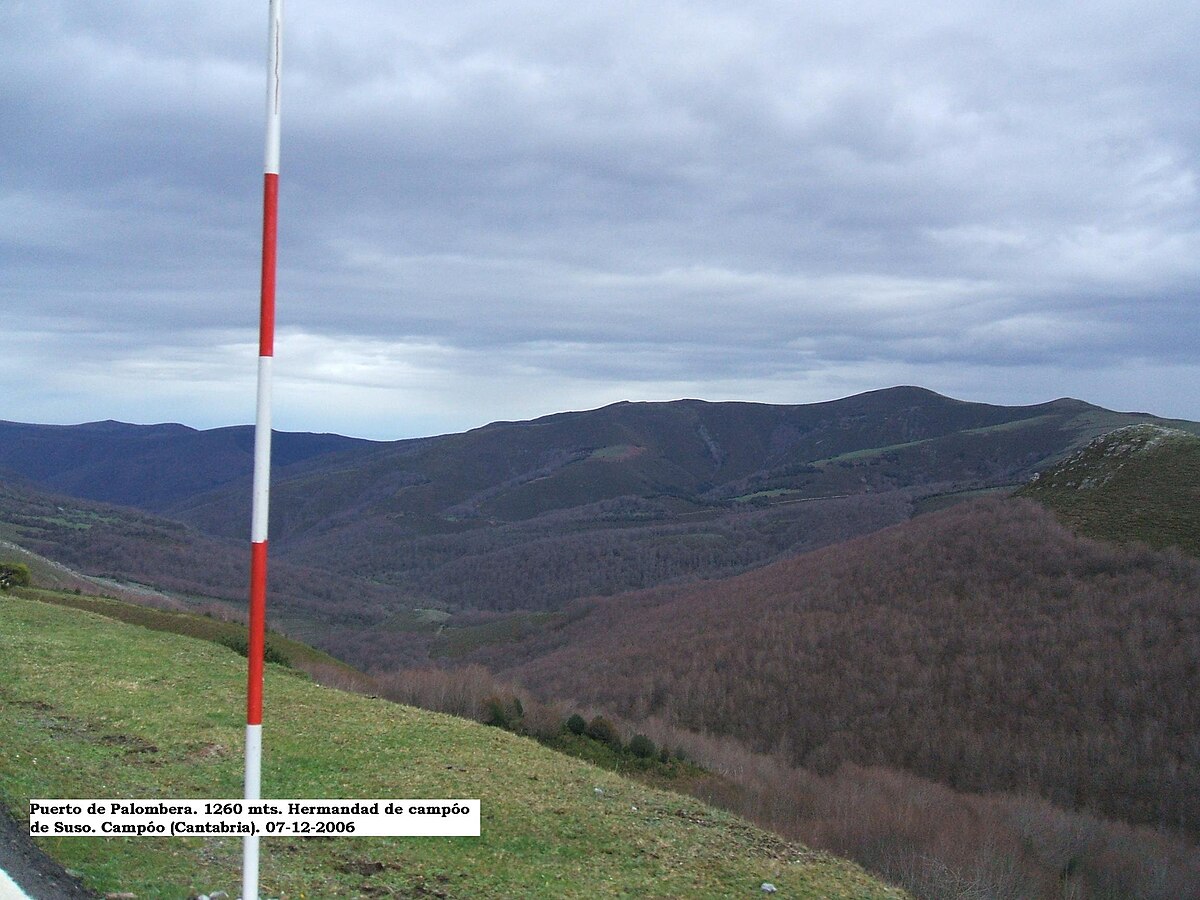
The town’s position between plateau and mountain gives variety to the views. On a clear day, the outlook across the valley is worth the short drive to nearby vantage points in the Montaña Palentina or towards Alto Campoo. The broader landscape helps place Barruelo within its geographical setting, where industry once met forest and upland terrain.
Fiestas and Mining Memory
The main local celebrations are the fiestas of San Lorenzo, held in August. These are traditional village festivities, with open-air dances, local activities and a lively atmosphere in the streets. They are community-focused rather than large-scale events.
At other times, gatherings and events linked to mining memory take place. These may include talks, exhibitions or cultural activities that recall the role coal played across the area. They serve as reminders that the story of mining here is relatively recent and still present in collective memory.
Before You Go
Barruelo de Santullán does not fit the image of a conventionally pretty village. Its interest lies in what it reveals about a recent industrial past that remains visible in the landscape and the structure of the town.
Those drawn to that history should begin with the Museo de la Minería, then walk through the former mining neighbourhoods to see how the community was laid out. That combination offers a clear sense of place. Visitors seeking a more decorative setting may find that, in under an hour, they have seen most of what Barruelo presents on the surface.