Full Article
about Brañosera
Spain’s first town council, founded by charter in 824; set amid rugged mountains with dramatic scenery and stone architecture.
Hide article Read full article
A place that resists the quick visit
Some villages seem built for a quick stop and a photo from a viewpoint. Brañosera is not like that. Time here feels closer to spending a weekend at a friend’s house in the mountains: there is no fixed plan, yet hours pass easily between walks, quiet moments and brief conversations with whoever happens to be around.
It sits deep in the Montaña Palentina, more than 1,200 metres above sea level, with roughly 250 residents. It is genuinely small. Around the village you will notice repeated references to its claim as the first municipality in Spain, linked to a medieval fuero, or charter, granted in the 9th century. The story appears on plaques and signs, and locals speak about it with clear pride, even if it sounds like something lifted straight from a history book.
A village that doesn’t try to impress
Arriving in Brañosera, nothing feels arranged to catch the eye. There is no grand square, no carefully staged historic centre. Instead there are solid stone houses, some with wooden balconies, former barns converted into homes, and the kind of quiet typical of mountain villages where a cowbell is more likely than the sound of traffic.
The area around the town hall and the church acts as a small centre. Everything is close together, easily covered in a short walk that slows itself down. A garden, a detail on a façade, or someone chatting in a doorway tends to interrupt any sense of purpose.
It is the sort of place where sitting on a bench for a while means eventually seeing most of the village pass by.
The fuero and Santa Eulalia
Brañosera often appears in historical references because of its medieval fuero, traditionally dated to the year 824 and attributed to Count Munio Núñez. The idea behind it was to attract settlers to this mountainous area by granting certain rights to those willing to live here.
Today that origin is marked by a small monument dedicated to the fuero, located in a square next to the church.
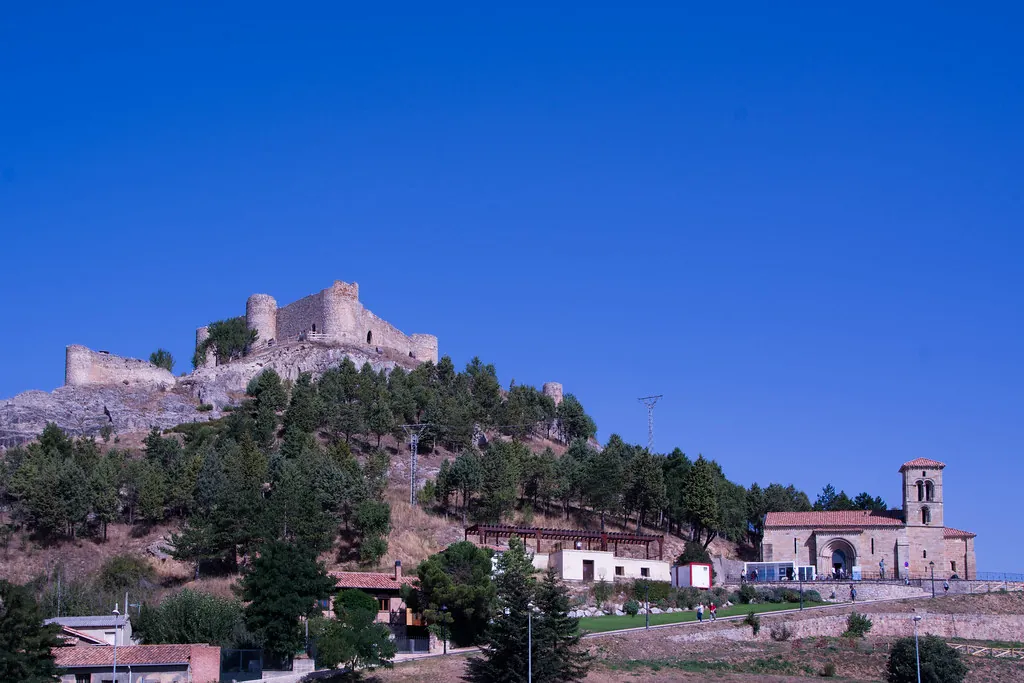
The church of Santa Eulalia is the most visible building in the village. Its foundations are Romanesque, although it has been altered over the centuries. It is not large or heavily decorated, yet it fits naturally into its surroundings: thick stone walls, a simple tower, and an interior that keeps things restrained.
Walking without a plan
Brañosera makes more sense on foot, without a map or schedule. The village has only a few streets, and it takes very little time before they give way to meadows or paths leading up towards the hills.
Along the way there are old haylofts, vegetable plots, dry stone walls, and fields where cattle graze for most of the year. This is not a place defined by monuments. What stands out is the atmosphere of a working livestock village that continues to function much as it always has.
It does not take long to notice the absence of noise. Ten minutes can pass with nothing but the wind and the occasional cowbell. For anyone coming from a city, that quiet registers quickly.
Paths through the Brañosera valley
Several walking routes begin directly from the village, heading into the surrounding valley. Many follow small streams or trace old livestock paths that have been used for generations.
These are generally straightforward routes, suitable for walking without technical difficulty. Expect dirt tracks, paths across open meadows, and stretches of woodland that offer welcome shade in summer. The landscape shifts with the seasons. In spring and early summer, the greens are more intense and water runs strongly through the streams.
For longer walks, some routes link Brañosera with nearby villages such as Salcedillo or Barruelo. These are mid-mountain routes, with steady climbs but no need for specialised equipment.
Open views and mountain air
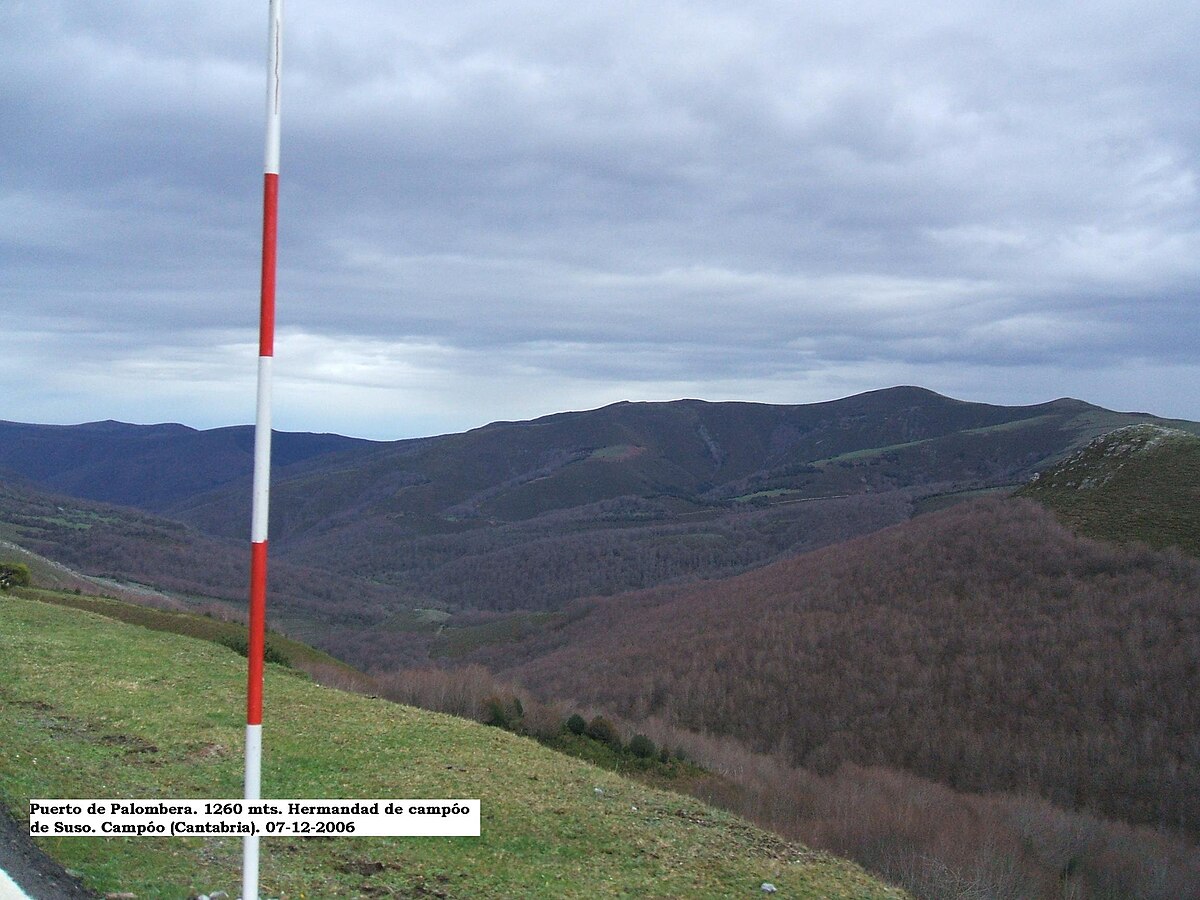
The character of the Montaña Palentina becomes clearer as soon as you move away from the centre of the village. From nearby rises, views open out over the valleys around Brañosera and towards several peaks in the area.
On clear days, limestone ridges appear along the horizon, almost suspended above the landscape. Reaching a good viewpoint does not require a long trek. Sometimes half an hour along a livestock path is enough.
With a bit of patience, it is also possible to spot birds of prey using the air currents above the valley.
A slower kind of stop
Brañosera is not a destination built around a packed itinerary. The rhythm here is simple: walk for a while, return to the village, sit in the square, and let the afternoon unfold without urgency.
Those looking for major attractions may find it underwhelming. For anyone interested in spending time in a mountain village that still functions on its own terms, with livestock, familiar faces and paths that begin at the last house, it makes sense to come.
Travel does not always need constant activity. Sometimes it is about small places where very little happens, and that is precisely why it feels right to stay a little longer.