Full Article
about Castrejón de la Peña
Set at the foot of the Sierra del Brezo; spectacular mountain setting with rocky peaks and green valleys; ideal for hikers.
Hide article Read full article
Getting there and arriving
Castrejón de la Peña sits about 100 kilometres from Palencia, in the Montaña Palentina area of northern Castilla y León. The most direct route usually heads north along the N‑611 before turning onto narrower local roads. The final stretch includes bends, and in winter it can become tricky if there is snow.
Parking is informal. There are no designated car parks, so visitors tend to leave the car on a wider street near the church or in small open plots. In summer or on public holidays, it helps to arrive early and then forget about the car for the rest of the visit.
A village that keeps its rhythm
Tourism in Castrejón de la Peña is low-key. There is very little in the way of visitor infrastructure, and the place functions first and foremost as a working village. It is small, with everyday life unfolding around residents, livestock nearby, and a pace that does not change much for outsiders.
The layout centres on a main square and a handful of streets that slope down towards meadows. Stone houses dominate. Some have been restored, while others remain much as they were, with enclosed yards and large gateways once used for carts or agricultural machinery. This is not a polished historic quarter designed for strolling. It feels lived-in, with buildings still tied to practical use.
Iglesia de Santa Águeda
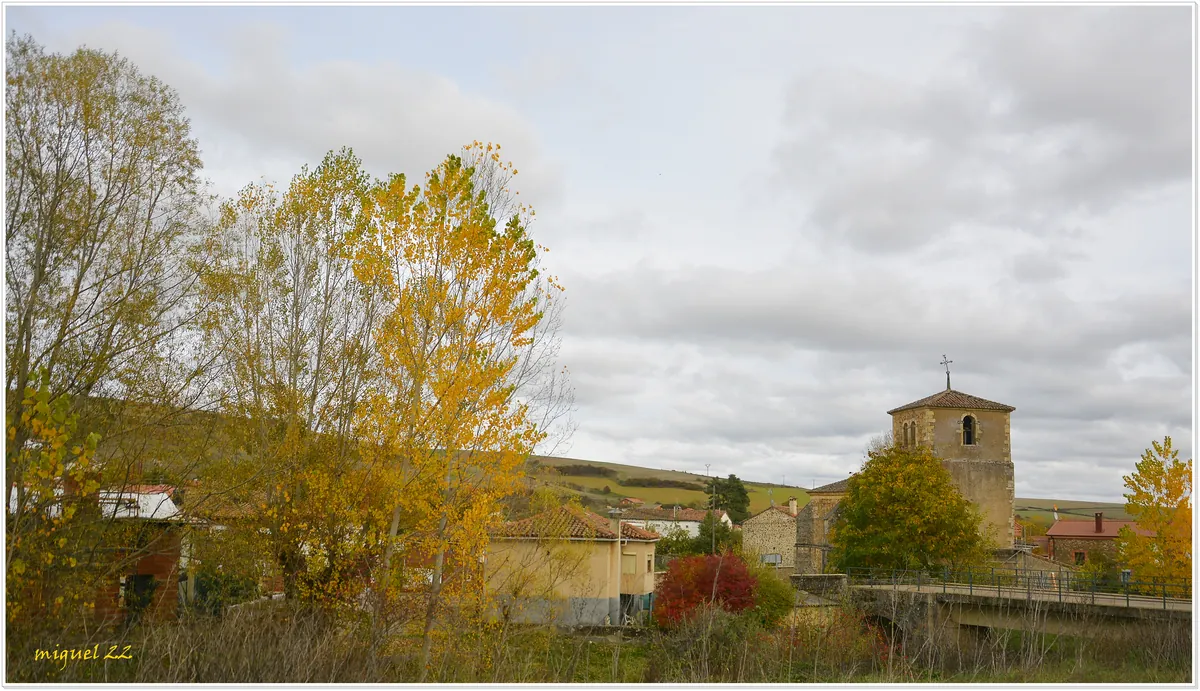
The most recognisable building is the parish church of Santa Águeda. It is simple in form, with a single nave, stone walls and a small tower.
Inside, the atmosphere is restrained. There are no major artistic highlights, and the interior reflects that same simplicity. Around the church is a small open space where a few old gravestones can be seen. It also acts as a gathering point for local celebrations or for people meeting after mass.
Streets and traditional buildings
Walking through the village reveals details of its agricultural past and present. Thick stone walls, haylofts, stables and smaller auxiliary buildings appear throughout. Many of these structures are still in use rather than preserved as heritage pieces.
On a weekday, there is often more day-to-day activity than visitors. This is not a curated setting, and that shapes the experience. What you see is part of ongoing rural life rather than a reconstruction of it.
Walking beyond the village
The surrounding area tends to be more engaging than the centre itself. From Castrejón de la Peña, agricultural tracks and paths lead out into meadows and small patches of oak and beech woodland.
These are not marked hiking routes. They are working paths used by local people, so anyone heading out for a walk should be prepared to navigate without signposts. For a short wander they work well, but going further usually means bringing a map or using an app to avoid getting lost.
The landscape shifts noticeably with the seasons. Spring brings very green fields. Autumn adds colour to the trees. In winter, snow is not unusual, which changes both the appearance and the conditions underfoot.
Mushrooms and woodland
During mushroom season, it is common to see people in the nearby woods searching for níscalos and other species typical of the area. As in many parts of Castilla y León, collecting mushrooms may require permission depending on local regulations or land ownership. It is worth checking the rules before filling a basket.
Local festivities
The main village celebrations are the patronal fiestas in honour of Santa Águeda, usually held in August. At that time, many people who have moved away return for a few days. The programme includes a procession, music in the evening and simple activities organised by the residents themselves.
Other religious celebrations take place during the year, linked to the traditional calendar. These are small-scale events, largely attended by locals rather than visitors.
A simple place to pause
Castrejón de la Peña is quick to explore. The village itself does not take long to walk through, and there are few services aimed at visitors. Anyone looking for a busy atmosphere or a wide range of facilities will need to look towards larger towns in the Montaña Palentina.
What it offers instead is space and quiet, along with the chance to walk out into open countryside. Expectations matter here. With a bit of time and a willingness to wander the surrounding paths, the appeal lies in the landscape and the calm pace of life.