Full Article
about Cervera de Pisuerga
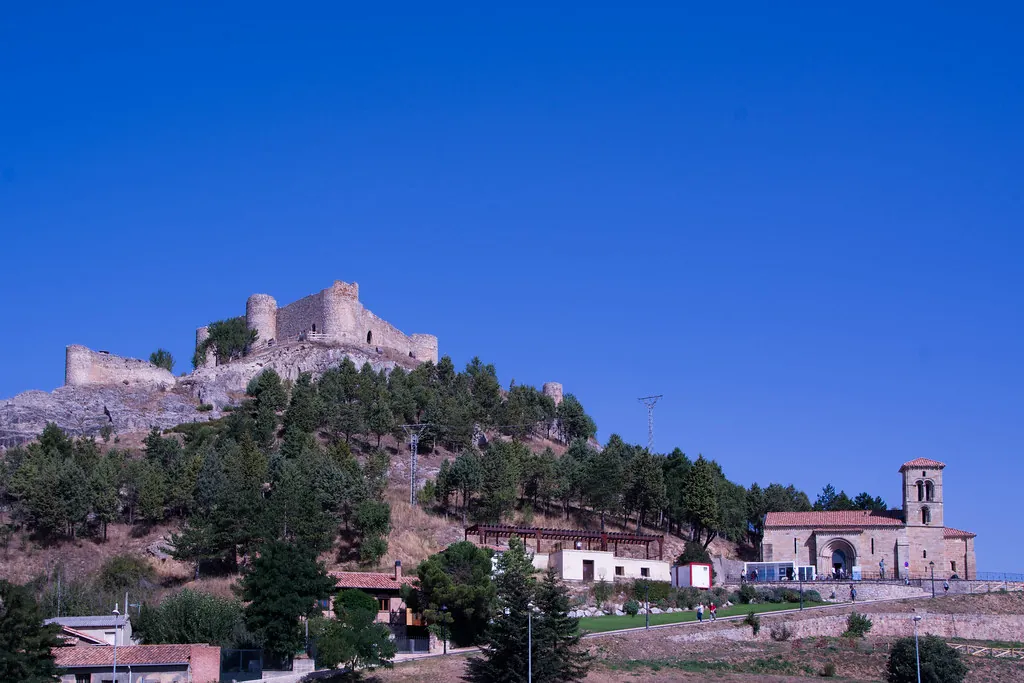
Heart of the Montaña Palentina; a manor town ringed by reservoirs and peaks; gateway to the Natural Park.
Hide article Read full article
A Working Village at 1,000 Metres
In Cervera de Pisuerga, the sensible thing is simple: leave the car at the top of the village or near the entrance. The centre has narrow streets and the odd short incline. It is not extreme, but manoeuvring inside tends to be more trouble than it is worth. From higher up you can walk down to the river in a few minutes.
With around two thousand residents, Cervera de Pisuerga acts as the hub for this part of the Montaña Palentina, a mountainous area in the north of the province of Palencia, in Castilla Leon. It stands at roughly 1,000 metres above sea level, and you feel it. Winters are long, summers are mild, and humidity rises when mist drifts down from the mountains.
This is not a place built for mass tourism. People live here throughout the year and daily life follows the pace of a functioning village rather than that of a resort. Shops and services are there because locals need them, not because visitors do.
What You Will Find in the Village
The most recognisable building is the Casa de los Leones. It usually houses information about the Parque Natural de Fuentes Carrionas y Fuente Cobre, the protected area that begins to the north. It is a useful first stop if you want to understand the landscape before heading out on foot.
The iglesia de Santa María del Castillo holds a painted panel attributed to Juan de Flandes within its altarpiece. Juan de Flandes was a painter linked to the court of the Catholic Monarchs, so the attribution gives the piece a certain weight. Viewing is not always straightforward. It depends on whether the church is open and whether someone is available to show it.
The stone bridge over the Pisuerga connects the two sides of the village. It has ancient foundations and remains in everyday use. It is not a grand monument, yet it forms part of the daily scenery, the kind of structure that locals cross without thinking about it.
The centre itself provides the basics: small shops, a bank, services for people who live in the area. It is not a monumental old quarter, nor is it lined with visitor-focused boutiques. What you see is what supports the surrounding comarca.
Food from the Montaña Palentina
Cooking in the Montaña Palentina is solid and filling. Expect legumes, slow-cooked stews and locally sourced meat, particularly lamb. These are dishes built for cold weather and long days outdoors.
Morcilla de arroz appears frequently. This rice-based black pudding from nearby villages is dense and substantial. It is the sort of food that stays with you after a morning walk. Blue cheese is also common, usually brought from the Leon side of the mountain range, such as Valdeón.
In winter, or whenever the temperature drops, hot plates dominate. There is nothing elaborate about it. The focus is warmth and substance rather than presentation.
Paths, Forests and High Ground
Cervera works better as a base for exploring the Montaña Palentina than as an urban sightseeing stop. You can see the village itself quickly. The wider landscape is the real draw.
To the north lies the Parque Natural de Fuentes Carrionas y Fuente Cobre. This is mountain country, with long routes that climb towards glacial lagoons and higher areas where the weather can shift quickly. Conditions at altitude are not the same as those in the village. If heading out on these trails, set off early and carry water and an extra layer, even if the day begins bright and calm below.
Closer to Cervera there are paths through oak and beech woods, including the route that connects with Arbejal. These walks are gentler than the high mountain routes, yet the terrain is still mountainous. Expect mud after rain and stretches of shade for much of the year. Proper footwear makes a difference.
The Cantabrian brown bear is often discussed in the area. It forms part of the wider wildlife of the mountains. Actually seeing one is another matter.
Local Festivals and Seasonal Gatherings
The night of San Juan, around the summer solstice in late June, brings movement to the village. Bonfires are lit near the river and many people from the surrounding comarca gather. It is a communal moment rather than a spectacle designed for outsiders.
At the end of summer, the romería of the Virgen del Otero draws neighbours and families who return to the village for those days. A romería is a traditional pilgrimage or rural festivity, usually with a religious focus and a strong social side. In Cervera, it centres on meeting up and marking the season together.
Autumn tends to bring activities linked to mountain produce: mushrooms, cheeses and other seasonal goods. The atmosphere remains regional rather than tourist-driven. Visitors are welcome, but these events are rooted in local rhythms.
Using Cervera Well
Cervera de Pisuerga makes sense as a starting point for travelling around the Montaña Palentina. The village itself does not take long to explore, and that is part of its appeal. Life here is not arranged as a series of attractions.
If you come to walk, bring boots and a jacket even if the sky is clear at breakfast. Weather changes quickly in this landscape. Mist drops from the mountain passes without much warning, and what looks settled can shift within an hour.
One more practical note: avoid taking a car onto forest tracks after heavy rain. The mud in this area is unforgiving.
Cervera de Pisuerga does not promise spectacle. It offers something steadier: a lived-in mountain village with access to oak woods, high routes and a natural park that begins just beyond the last houses. For anyone interested in the Montaña Palentina, that is reason enough to stop.