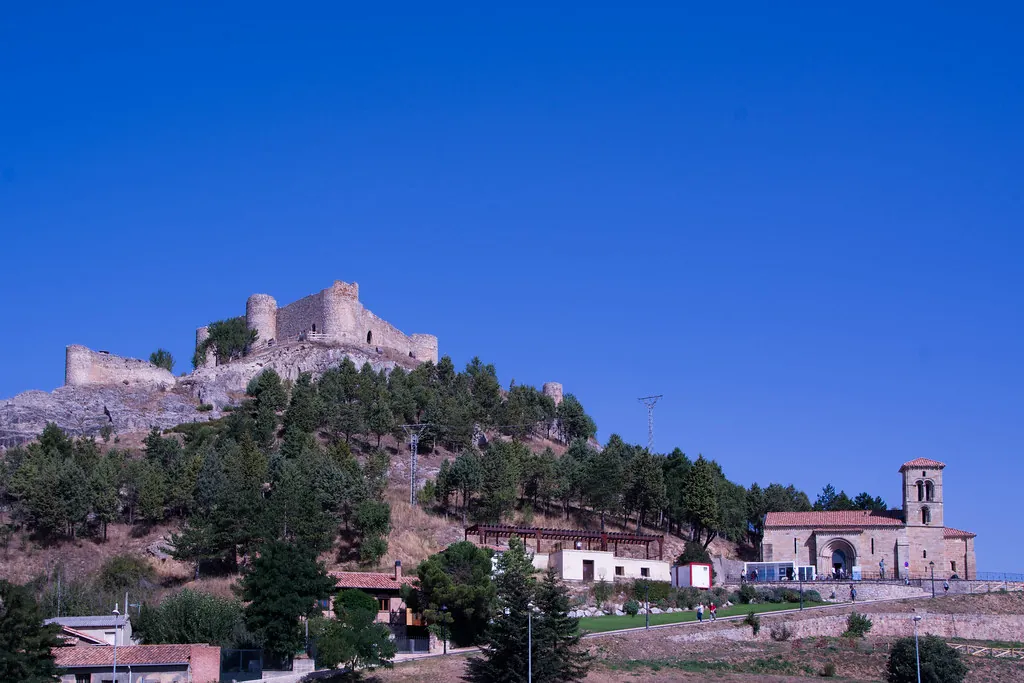
Río Alberche.jpg
No machine-readable author provided. Fev assumed (based on copyright claims). · Public domain
Castilla y León · Cradle of Kingdoms

Fresno del Río

The church bell strikes noon and nobody notices. Not the elderly man methodically sweeping his stone doorstep, nor the woman hanging washing on a w...

169 inhabitants · INE 2025
1020m Altitude

Why Visit

Mountain Church of San Juan Bautista Hiking

Best Time to Visit

summer

San Juan (June) junio

Things to See & Do
in Fresno del Río

Heritage

  • Church of San Juan Bautista
  • Hermitage of Santo Cristo

Activities

  • Hiking
  • Fishing in nearby rivers
  • Mountain-bike trails

Festivals
& & Traditions

Fecha junio

San Juan (junio), Santo Cristo (septiembre)

Las fiestas locales son el momento perfecto para vivir la autenticidad de Fresno del Río.

Full Article
about Fresno del Río

Near Guardo; gateway to the mountains with cool, green scenery; perfect for summer outdoor activities.

Ocultar artículo Leer artículo completo

The church bell strikes noon and nobody notices. Not the elderly man methodically sweeping his stone doorstep, nor the woman hanging washing on a wooden balcony that's been bleached silver by a century of mountain sun. At 1,020 metres above sea level, Fresno del Río sits in that liminal zone where Castilla y León's endless wheat fields finally surrender to proper mountains, and time operates differently.

This isn't a village that announces itself. The road from Palencia climbs gradually, then suddenly you're there: stone houses clustered around the squat tower of San Esteban Protomártir, vegetable plots wedged between buildings, and the Rubagón river threading through the valley below. With 180 permanent residents, it's the sort of place where strangers get noticed immediately, then promptly ignored once the novelty wears off.

The Architecture of Everyday Life

Forget grand monuments. Fresno del Río's appeal lies in its completeness as a working mountain village, not a museum piece. Granite walls rise directly from narrow lanes, their irregular stones held together with lime mortar that's been patched and repatched over decades. Wooden balconies—solanas in local parlance—project from upper floors, still used for drying peppers and herbs despite the convenience of modern kitchens.

The church tower dominates, though calling it a skyline would be generous. Built from the same grey stone as everything else, San Esteban squats rather than soars, its modest proportions reflecting a community that never had surplus wealth to squander on ecclesiastical showing-off. Inside, recent renovations have left it clean but characterless; the real interest lies in details like the stone font carved with barely decipherable medieval script, or the way afternoon light filters through plain glass windows onto lime-washed walls.

Traditional granaries—hórreos—stand in various states of repair throughout the village. These stone and wood structures, raised on pillars to keep rodents at bay, once stored grain and cured meats through harsh winters. Few remain functional, but their weathered stone and lichen-covered wooden beams provide texture against newer concrete constructions that have crept in despite local resistance.

Walking Into Nothing Much

The best walks start from the village edge, where asphalt gives way to dirt tracks that follow the Rubagón's tributaries. These aren't epic hikes requiring technical gear and fitness apps. They're something better: proper wandering country where paths peter out in mountain meadows, and the only sounds are river water and cow bells drifting across valleys.

Spring brings wildflowers to the lower slopes—purple foxgloves, yellow broom, white asphodel—that appear in such profusion they seem almost vulgar. By late June, the serious flowers retreat uphill, replaced by thyme and rosemary that release aromatic clouds when brushed against. Autumn transforms the oaks into a muted palette of rust and bronze, though timing is crucial: arrive too early and it's merely brown, too late and winter storms have stripped everything bare.

The serious mountains lie westward. Curavacas peak, at 2,524 metres, dominates western views on clear days, its limestone cliffs catching evening light in ways that make amateur photographers believe they're actually talented. Brown bears and wolves roam these higher reaches, though seeing either requires patience, local knowledge, and considerable luck. More realistic wildlife encounters involve griffon vultures circling overhead, or the sudden explosion of partridges from roadside scrub that makes British birdwatchers nostalgic for driven shoots.

When to Bother Turning Up

Access defines the Fresno del Río experience. Winter brings genuine isolation: snow can block mountain passes for days, temperatures drop below -10°C, and the village contracts into itself. Services that operate on reduced schedules in summer simply stop. This isn't picturesque winter wonderland territory—it's hard work, and visitors expecting cosy pubs with open fires will find only shuttered houses and the occasional tractor battling through drifts.

Spring and autumn provide the sweet spot. May delivers green valleys without summer crowds (not that crowds ever really arrive), while late September offers crisp air and the possibility of those perfect light conditions that make ordinary landscapes extraordinary. Summer suits walkers who prefer their hiking without hypothermia risk, though afternoons can reach 30°C in the valleys. Evenings require jumpers year-round—that's mountain weather for you.

The village's altitude means weather changes fast. Morning fog can transform into brilliant sunshine by lunchtime, then thunderheads build over the mountains by late afternoon. Local wisdom suggests carrying waterproofs regardless of forecast, though this being rural Spain, nobody actually bothers unless they're guiding tourists.

Practicalities for the Determined

Getting here requires commitment. The nearest substantial town, Aguilar de Campóo, sits twenty minutes away by car—no public transport reaches Fresno del Río itself. From London, it's a flight to Bilbao or Santander, then three hours driving through increasingly empty landscapes. The final approach involves narrow mountain roads where meeting a timber lorry requires reversing skills and considerable nerve.

Accommodation options within the village hover between limited and non-existent. One casa rural operates sporadically, its availability depending on whether the owner's daughter has exams in Valladolid. Better bases exist in Aguilar or Cervera de Pisuerga, though this rather defeats the purpose of experiencing mountain village life. Wild camping remains technically illegal but widely tolerated if you're discreet and remove evidence.

Food presents similar challenges. The village shop—really a room in someone's house—opens unpredictably and stocks basics: tinned tuna, rubbery cheese, beer kept cool in a chest freezer. Proper meals require forward planning or willingness to drive. Regional specialities worth seeking include cocido montañés (hearty bean and meat stew) and queso de Valdeón, a blue cheese matured in limestone caves that puts most British efforts to shame.

The Anti-Destination

Fresno del Río won't change your life. It offers no Instagram moments, no life-affirming encounters with wise locals, no spiritual awakenings facilitated by mountain air. What it provides is something increasingly rare: a place that simply exists without reference to tourism, where daily rhythms continue unchanged whether visitors appear or not.

The village's greatest gift might be permission to do nothing. Sit on the church steps and watch shadows move across stone. Follow a walking track until it disappears, then retrace your steps. Drink coffee that's more bitter than any London roastery would dare serve, in a bar that hasn't updated its décor since the 1970s, surrounded by men who've been wearing the same flat caps for decades.

Leave before you start finding this normal. Mountain villages exert a gravitational pull—stay too long and the outside world begins seeming excessive, unnecessary. Three days provides sufficient time to understand the appeal without risking permanent damage to your urban sensibilities. Take the long road back down to the plains, and Fresno del Río will shrink in the rear-view mirror until it's just another cluster of stone buildings clinging to a hillside, indistinguishable from countless others across northern Spain.

Except now you'll know better.

Key Facts

Region
Castilla y León
District
Montaña Palentina
INE Code
34073
Coast
No
Mountain
Yes
Season
summer

Livability & Services

Key data for living or remote work

2024
Connectivity5G available
TransportTrain nearby
EducationHigh school & elementary
Housing~6€/m² rent · Affordable
Sources: INE, CNMC, Ministry of Health, AEMET

Planning Your Visit?

Discover more villages in the Montaña Palentina.

View full region →

More villages in Montaña Palentina

Traveler Reviews